
About Nan Huai-Chin
Lived 1918 – 2012 (aged 94). Nan Huai-Chin was a Chinese writer, philosopher, university teacher and thinker.
Nan Huai-Chin (March 18, 1918 – September 29, 2012) was a Chinese Buddhist monk, religious scholar, and writer. A well-respected spiritual teacher in contemporary China, he was considered by many to be the major force in the revival of Chinese Buddhism. While Nan was regarded by many in China as one of the most influential Chan Buddhist teachers and Vajrayana teachers, particularly in the Cundī practices, he was little known outside the Chinese cultural sphere. Nan died at the age of 94 on Sept. 29th, 2012 in Suzhou, China.
Early life and military career
Nan Huai-Chin was born March 18, 1918, to a scholar-official family in Yueqing county, Wenzhou city, Zhejiang province. In his youth, Nan received a classical education that included various Confucian and Daoist works, as well as traditional Chinese medicine, literature, calligraphy, poetry, and other subjects. In his youth at the age of 18, he became the provincial martial arts champion after studying several Chinese martial arts including swordsmanship with the jian.
Nan studied social welfare at Jinling University (now merged with Nanjing University), and later went on to teach at the Republic of China Military Academy in Nanjing. In the late 1930s at the age of 21 years, Nan became a military commander at the border regions of Sichuan, Xikang, and Yunnan during the Second Sino-Japanese War. There, he led a local group of 30,000 men against the Japanese invasion.
Buddhist practice
While still young, Nan left his military career so that he could commit himself fully to his study of Buddhism and to meditation. In 1942 at age 24, he went on a three-year meditation retreat in the Emei Mountains. It is said that it was there that he verified his experiences against the Chinese Buddhist canon. During this time, Nan's primary teacher was Yuan Huanxian (袁煥仙; 1887 – 1966).
In 1945, Nan went to seek out the teachings of Tibetan Buddhism. The 9th Gangkar Rinpoche (貢噶活佛; 1893 – 1957), a high-ranking tulku of the Kagyu school, also verified Nan's experiences, giving him the title "Vajra Master." Nan was one of the few multidisciplinary experts in the world to be versed in the cultivation schools of Confucianism, Daoism, Tibetan Buddhism, and Chan Buddhism.
Nan's Dharma name was Tōngchán (通禪).
Academic and personal life
Following the revolution in China, Nan later moved to Taiwan in 1949 where he became a well-known university professor and author, teaching at National Chengchi University, Chinese Culture University, and Fu Jen Catholic University. His first book, The Sea of Chan (禪海蠡測), was published in 1955, and was the first in a line of over 40 books and related materials published in his name.
Nan's books have achieved a great deal of popularity in mainland China and Taiwan. In total, more than 20 million copies of his books have been sold in Chinese-speaking countries. Some of his more popular works have gone to a 20th printing in Taiwan and his works on Confucianism such as Another Critical Review of Confucius Analect (論語別裁) are used as standard university references in the mainland and Taiwan.
In the late 1980s and early 1990s, Nan mediated secret cross-strait communications between the mainland China and Taiwan. Two of Nan's students were close confidants of Taiwan's President Lee Teng-hui, and Nan was approached by his student Jia Yibin about creating a communication channel between Lee Teng-hui and mainland China's President Yang Shangkun. The name of the school is in reference to the Great Learning, one of the "Four Books" of Confucianism.
Books in English This is a list of translations of Nan Huai-Chin's books. The vast majority of books written by Nan have not been translated into the English language from the original Chinese.
1984 Tao & Longevity: Mind-Body Transformation, Paperback. 1984 1986 Grass Mountain: A Seven Day Intensive in Ch'an Training With Master Nan Huai-Chin, Paperback. 1986 1993 Working Toward Enlightenment: The Cultivation of Practice, Paperback. 1993 1994 To Realize Enlightenment: Practice of the Cultivation Path, Paperback. 1994 1995 The Story of Chinese Zen, Paperback. 1995 1997 Basic Buddhism: Exploring Buddhism and Zen, Paperback. 1997 2004 Diamond Sutra Explained, Paperback. 2004
Don’t just read it —
keep it.
Full-length biographies made to live with: read them, listen on the way to work, watch them tonight.
- E-book
- Audio
- Video
Instant download · yours to keep · every purchase keeps this site free
Important facts
People in Nan Huai-Chin's life
Named in this biography and alive at the same time

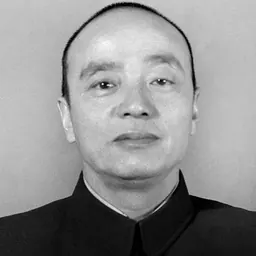

Related people
Same field, nearest in time



Contemporaries
People whose lives overlapped Nan Huai-Chin's



Frequently asked questions
Who was Nan Huai-Chin?
Buddhist teacher
When was Nan Huai-Chin born?
Nan Huai-Chin was born on 18 March 1918 in Yueqing.
When did Nan Huai-Chin die?
Nan Huai-Chin died on 29 September 2012 in Suzhou.
What was Nan Huai-Chin's occupation?
Nan Huai-Chin was a writer, philosopher, university teacher and thinker.
What nationality was Nan Huai-Chin?
Nan Huai-Chin was Chinese.
Sources & further reading
Cite this page
APA: Biography.guide. (2026). Nan Huai-Chin. https://biography.guide/nan-huai-chin/
MLA: "Nan Huai-Chin." Biography.guide, https://biography.guide/nan-huai-chin/.
Chicago: "Nan Huai-Chin." Biography.guide. https://biography.guide/nan-huai-chin/.
Data last updated: 2026-09-22 · Spot an error? Report a correction.
Page generated 2026-09-27 05:21 UTC