
About Nakajima Kumakichi
Lived 1873 – 1960 (aged 86). Nakajima Kumakichi was a Japanese businessperson, politician and diplomat.
Baron was an entrepreneur, politician and cabinet minister in the pre-war Empire of Japan.
Biography Nakajima was born in Yokohama. His father Baron Nakajima Nobuyuki was from Kōchi Prefecture, was the first Speaker of the House of Representatives of Japan and Japanese ambassador to Italy.
Nakajima initially entered Meiji University, but left without graduating, and obtained a degree from the Higher Commercial School (the predecessor to Hitotsubashi University) in 1897, obtaining a position at the Tokyo Stock Exchange on graduation. In 1899, he became secretary to Prime Minister Katsura Tarō and in 1906 served as secretary to Prime Minister Saionji Kinmochi.
In 1907, Nakajima went to work for the mining consortium Fukukawa Kogyo. He helped establish Josai University in 1918. In 1920, Nakajima was instrumental in joining Furukawa Electric, Fuji Electric, Yokohama Rubber and a number of smaller companies into the Furukawa Consortium, one of the 15 largest zaibatsu in pre-war Japan. In 1927, he was an influential member of the Deliberation Council within the Ministry of Commerce and Industry, pushing for increased compilation of industrial statistics, loans to small and medium businesses and export industries, and the adoption of the metric system. In 1932, Nakajima joined the Saitō Cabinet as Minister of Commerce and Industry.
In 1921, on viewing a wooden statue of Ashikaga Takauji at the temple of Seiken-ji in Shimizu-ku, Shizuoka, Nakajima had contributed a haiku poem to a literary magazine. He commented that the official educational policy vilifying Ashikaga Takauji as a traitor to the nation for his betrayal of Emperor Go-Daigo should be re-evaluated. The article was discovered by ultra-rightists and militarists eager to find leverage to embarrass and to bring down the Saitō Cabinet. Nakajima was called before the House of Peers, where he was browbeaten by retired General Baron Takeo Kikuchi and others, who forced his resignation on 2 February 1934, a date making the 600th anniversary of the Kemmu restoration.
In 1937, Nakajima was one of 16 officials arrested on trumped-up charges of corruption in the Teijin Incident. He was subsequently cleared of all charges after a lengthy trial, but withdrew from public service after this event.
After the surrender of Japan, Nakajima emerged from seclusion to become chairman of the Japan Trade Association in 1950. In 1955, he became president of the radio company, Nippon Cultural Broadcasting. He died at his villa in Hayama, Kanagawa in 1960. He was posthumously awarded the Order of the Rising Sun, 1st class.
Don’t just read it —
keep it.
Full-length biographies made to live with: read them, listen on the way to work, watch them tonight.
- E-book
- Audio
- Video
Instant download · yours to keep · every purchase keeps this site free
Important facts
People in Nakajima Kumakichi's life
Named in this biography and alive at the same time
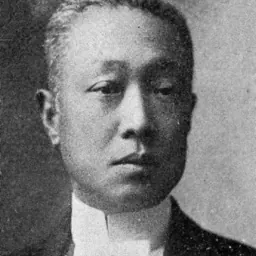
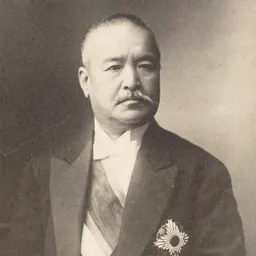

Related people
Same field, nearest in time


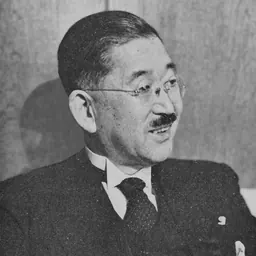
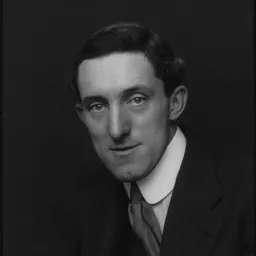
Contemporaries
People whose lives overlapped Nakajima Kumakichi's


Frequently asked questions
Who was Nakajima Kumakichi?
Japanese politician (1873–1960)
When was Nakajima Kumakichi born?
Nakajima Kumakichi was born on 24 July 1873 in Yokohama.
When did Nakajima Kumakichi die?
Nakajima Kumakichi died on 25 April 1960 in Hayama.
What was Nakajima Kumakichi's occupation?
Nakajima Kumakichi was a businessperson, politician and diplomat.
What nationality was Nakajima Kumakichi?
Nakajima Kumakichi was Japanese.
Sources & further reading
· Wikipedia: Nakajima Kumakichi
Cite this page
APA: Biography.guide. (2026). Nakajima Kumakichi. https://biography.guide/nakajima-kumakichi/
MLA: "Nakajima Kumakichi." Biography.guide, https://biography.guide/nakajima-kumakichi/.
Chicago: "Nakajima Kumakichi." Biography.guide. https://biography.guide/nakajima-kumakichi/.
Data last updated: 2026-09-22 · Spot an error? Report a correction.
Page generated 2026-09-27 05:22 UTC