
About Najati Sidqi
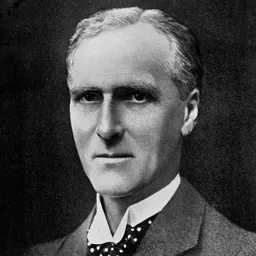
Lived 1905 – 1979 (aged 73–74). Najati Sidqi was a Turkish politician, writer, translator and communist.
Muhammad Najati Sidqi (, , 19 May 1905 – 17 November 1979) was a Palestinian public intellectual and activist, trade unionist, translator, writer, critic and erstwhile communist. Though almost forgotten as a figure in the Palestinian movement for independence, he played an important role in it, and witnessed many momentous moments in the early history of the 20th century. Aside from his native Arabic, he was fluent in French, Russian and Spanish.
He was present with his father when Sherif Hussein launched the Arab Revolt against the Ottoman Empire in 1916; the beginning of Zionist immigration to Palestine; the early years of the establishment of communism in the Soviet Union, and was one of the few Arabs who fought on the Republican side against Franco in the Spanish Civil War. At the outbreak of World War II, he wrote a book in which the thesis of the incompatibility of Nazism with Islam was passionately argued.
Biography Sidqi was born into a middle-class Palestinian family in Jerusalem in May 1905. His father Bakri Sidqi was a teacher of Turkish ancestry and "aficionado of art and classical music," the first person to bring a phonograph to Palestine. He sometimes wrote under the pseudonym "Mustafa Sa'du" or "Sa'du" as well as "Mustafa al-'Umari."
Analysis of the incompatibility of Islam with Nazism From his Soviet years, Sidqi was primarily interested in the problem of how one might bring about the transformation of Muslim societies into modern industrialised countries without damaging their traditional social fabric. In his 1940 work "The Islamic Traditions and the Nazi Principles: Can They Agree/Do They Match?" (al-Taqālid al-islāmiyya wa-l-mabādiʾ al-nāziyya: hal tattafiqān?), published in early May of that year, Sidqi argued that Nazism was not only diametrically opposed to Islam, and that there could be no accommodation of the Islamic world to the kind of world advocated by Nazi Germany, but that indeed Nazism was antagonistic to Islam. The interaction of the two could only end in a zero-sum game. He thus declares that: There is no doubt that the spirit of Islam is totally antithetical, in each and every aspect, to all the principles of Nazism: the political regime, society, family, economic, education and personal freedom.
Though Sidqi took a distinctive approach – he was not a typical Islamic thinker – his book's argument was not unique but reflected a widespread trend in Arab rejections of Nazism. His polemic was based on a thorough familiarity with Hitler's Mein Kampf, the writings of Alfred Rosenberg, and broadcasts of Nazi propaganda by Joseph Goebbels. He compares the ideological material in these sources with Islamic classical texts ranging from the Qur'an and the Hadith collections to modern writings, including works by Muhammad Abduh, Jamal ad-Din al-Afghani and Mustafa Kamil. The fundamental element that renders Nazism not only incompatible with, but inimical to, Islam, Sidqi argued, lies in the former's concept of racism (al-'unṣuriyya/al-'irqiyya).
Nazism was wedded to the idea of German racial purity and dedicated to weeding out or destroying "inferior" races, among which the Jews, and then the Russians, Negroes, Arabs, Egyptians, and Turks were classified. Nazi imperialism demanded a Lebensraum/masāḥa ḥayyawiyya, and sought to conquer territory for Greater Germany. Islam, to the contrary, was devoid of racist feelings: Muslims enjoyed only one advantage over others, the worship of the Creator, which affirms that "all the believers are brothers". Glossing over an Islamic perception that Islam is a superior religion, something which both Judaism and Christianity have also claimed, he insists that Islam is tolerant. Islam, like the sister monotheisms, is universal, and revolutionary. "Judaism was a revolution against the Pharaohs, Christianity was a revolution against Roman injustice and Islam was a revolution to abolish ignorance:jāhiliyya. Only faith, not blood, soil or race, informs Islam's notion of man's essential identity."
Whereas Nazism is materialistic, bestial and pagan, and accentuates the physical sensual nature of man, Islam embodies, for Sidqi, the ideational human side. The function of Nazism is therefore to extirpate what is spiritual in order to prioritise the supremacy of animalistic materialism. The one constitutes a real revolution (thawra), Nazism sows disobedience (iṣyān) and plunges man back into the degraded pagan state of bestial idolatrous ignorance, which would effectively lead to "social barbarism" (al-hamijiyya al-'ijtimā'iyya). The attack on Judaism in Nazism, he warned, was by the same token, an assault on both Christianity and Islam. Islam's institution of consultation (al-shūrā) was what made it disposed to accept the idea of modern democracy, with its guarantee of freedom.
Sidqi distinguished two kinds of imperialism: the classical, somewhat aged form of colonialism practiced by the English, French and Dutch, and German imperialism (ak-isti'mār al-almānī). The former recognized that the nations they occupied were destined to achieve independence, whereas Nazi imperialism was using unprecedented violence to annihilate smaller nations. A Nazi takeover of Islamic countries would lead only to the people's enslavement ('ubūdiyya), as it had in Austria, Czechoslovakia and Poland. Force, which in Islam was directed against the ignorant who refused the enlightenment of monotheism, had, in Nazism, assumed a cultic value, as an end in itself, directed towards the subjection of people both within territories Germany controlled and beyond. Nazism's Arabic broadcasts with their anti-Semitic propaganda were designed to incite Arabs to turn upon their own minorities. Muslims all over the world must, he concluded, back the fight against Nazism, as indeed hundreds of thousands already were (Indians and Arabs) in combating "shoulder to shoulder with English, French, Polish and Czech soldiers". Such support was anchored in three principles: a shared respect for democracy, a cultural affinity with democratic nations, and the aspiration for independence at war's end.
Nazism also was endeavouring to create a new religion (diyāna), presenting Hitler as a sacred figure, a prophet, to whom blind obedience was owed, and the soul of the believer in this false religion thereby dwarfed. It preached a satanic message (risāla shaytāniyya) and, under the Führer's leadership, Nazism was laying siege to "the fortress of science and civilization".
In an appendix he made a detailed critique of the memorandum delivered by Egypt's Wafd Party to the British Ambassador Miles Lampson in April 1940 which outlined stringent conditions to be attached to any Egyptian contribution to the British war effort. The memorandum had been promptly rejected by Viscount Halifax. Sidqi criticized Mustafa el-Nahhas for an inept reading of the growing threat from Hitler and Mussolini's forces, and called on Egypt to assume its historic responsibilities by siding with "the two noble peoples of England and France". He conceded that while it was true that both Britain and France were colonial powers in the Arab world, with possessions and mandates respectively in Mandatory Palestine, Aden, Egypt, Sudan and Syria and Lebanon, the anti-colonial struggle had to await the outcome of the war, and Muslims had to mobilise to ensure that these two powers came out victors in the conflict. He argued for this notwithstanding the fact that he himself had, in his recollections, been persecuted by the French, and did not enjoy good relations with the British.
Don’t just read it —
keep it.
Full-length biographies made to live with: read them, listen on the way to work, watch them tonight.
- E-book
- Audio
- Video
Instant download · yours to keep · every purchase keeps this site free
Important facts
People in Najati Sidqi's life
Named in this biography and alive at the same time

Related people
Same field, nearest in time






Contemporaries
People whose lives overlapped Najati Sidqi's


Frequently asked questions
Who was Najati Sidqi?
Palestinian writer and national activist (1905–1979)
When was Najati Sidqi born?
Najati Sidqi was born in 1905 in Jerusalem.
When did Najati Sidqi die?
Najati Sidqi died in 1979 in Athens.
What was Najati Sidqi's occupation?
Najati Sidqi was a politician, writer, translator and communist.
What nationality was Najati Sidqi?
Najati Sidqi was Turkish.
Sources & further reading
· DBpedia: Muhammad Najati Sidqi
Cite this page
APA: Biography.guide. (2026). Najati Sidqi. https://biography.guide/najati-sidqi/
MLA: "Najati Sidqi." Biography.guide, https://biography.guide/najati-sidqi/.
Chicago: "Najati Sidqi." Biography.guide. https://biography.guide/najati-sidqi/.
Data last updated: 2026-09-22 · Spot an error? Report a correction.
Page generated 2026-09-27 05:17 UTC