
About Nahnebahwequa
Lived 1824 – 1865 (aged 40–41). Nahnebahwequa was a missionary, writer and spokesperson.
Nahnebahwequay (c. 1824 – 26 September 1865), also known as Catherine Sutton, was an Anishinaabe (Mississauga Ojibwe) political advocate and land rights campaigner in Upper Canada.
Nahnebahwequay grew up at the Credit Mission, where her family moved when she was about two. The settlement held roughly 200 Anishinaabe people from the Mississaugas of the Credit, living alongside Methodist missionaries.
Illness shaped her early years as much as teaching did. Epidemics moved through the Mission regularly, and most of her siblings died in childhood. Only one younger sister, Mary, survived.
Family background Nahnebahwequay was born into two respected Anishinaabe family lines whose connections extended across the western end of Lake Ontario. Her father, Bunch Sunego (Tyatiquob), belonged to the Eagle clan, the largest clan among the Mississaugas of the Credit. Her mother, Mary Polly Crane (Myarwikishigoqua), was from the Otter clan.
Through her father, she was the granddaughter of Osunego, also recorded as Asanagoo, an Eagle clan leader whose name meant Black Squirrel. Through her mother, she was the granddaughter of Otesoo, a war chief of the Otter clan who fought on the side of the British Crown during the American Revolutionary War. These lineages placed her within families deeply involved in diplomacy, treaty relationships, and political decision-making in the region.
Their experiences within the Mission diverged over time. Her father converted early and initially supported Methodist teachings, but after the deaths of several of his young children he became disillusioned with Christianity. Community accounts describe a period of heavy drinking that followed and his gradual withdrawal from Mission life. By the time Nahnebahwequay reached adolescence, he appears rarely in surviving records, suggesting he was no longer a steady presence in the household.
Education Nahnebahwequay received her early schooling at the Methodist day school at the Credit Mission, where she learned reading and writing in English, arithmetic, scripture, and domestic skills under missionary supervision.
At the same time, the Credit Mission school supported a form of bilingual instruction that was unusual for the period. Missionaries developed written orthographies for Anishinaabemowin (Ojibwe), and students learned to read and write in both English and their own language.
Community pressures and political context (1830s–1845) During Nahnebahwequay's early married years, the Credit Mission faced growing instability. In the late 1830s, Lieutenant Governor Francis Bond Head proposed relocating Indigenous communities in southern Upper Canada to Manitoulin Island, a place the Mississaugas regarded as unsuitable for farming due to its rocky terrain and limited resources.
Further uncertainty followed when Samuel Peters Jarvis, Chief Superintendent of Indian Affairs, was dismissed in 1845 after a Bagot Commission investigation found him guilty of misappropriating the Mississauga's funds.
For families at the Credit, including the Suttons, the combination of land insecurity, administrative turmoil, and mounting settler pressure made the community’s long-term future uncertain. These pressures shaped the context in which the Suttons relocated in 1845.
Relocation to Nawash and missionary work (1845–1857) In 1845, the Suttons accepted an invitation from the Nawash community on the Bruce Peninsula to join the settlement developing on the shores of Georgian Bay. Land in colonial Upper Canada was typically granted to men, but Indigenous landholding practices followed family ties and community membership. A Nawash council record confirmed the grant and described the land near the main village on the bay.
The Suttons established a homestead, clearing approximately 35 acres (14 ha) and building a house, barn, and garden. Sarawak lacked the church, school, and medical support available at the Credit Mission; farming was hard, and the thin, stony soils added to the difficulty. Saugeen oral histories note that the region was traditionally used collectively, making the individual land grant unusual.
The winter of 1851 was particularly severe. The Suttons lost their infant son William, the first of their children born at Sarawak, and Nahnebahwequay fell seriously ill and nearly died. With limited support nearby, the family considered leaving Sarawak and planned to return when their surviving son Joseph was old enough to assist with the farm. They spent about two years in Michigan at Ojibwe Methodist missions before returning to Sarawak in 1857, as rising pressures over land rights drew Nahnebahwequay into public advocacy.
Conflict with Indian Affairs (1857–1859) When Nahnebahwequay and William Sutton returned to Sarawak in 1857, they learned that the Nawash lands had been surrendered during their absence. Her grant, confirmed in 1845, was included in the surrender and broken into lots for public sale. This decision ignored the fact that her land had been granted to her and her heirs, not to the community as a whole.
Trying to protect her home, Nahnebahwequay attended the auction and bid successfully on several lots, including 34, 35, and 36 for herself and her husband, lot 31 for her son Joseph, lots 32 and 33 for her mother Mary KaKaKe, and lot 37 for her sister Mary Sunego. In total she paid deposits on nearly , despite the fact that lots 34 and 35 had already been granted to her in 1845.
Although she had paid the required installments and received certificates of sale, Indian Affairs intervened. According to Nahnebahwequay, Indian Affairs representative Bartlett seized the certificates and the money from her minister, Conrad Vandusen, claiming that Indigenous people were not permitted to buy land. She and her husband petitioned Superintendent R. T. Pennefather for reimbursement of the money invested in their house, barn, and improvements, as well as for Nahnebahwequay’s annuity payments for 1852–1857.
Indian Affairs officials refused to recognize her purchases. They argued that because she was married to a non-Indigenous man, she was no longer eligible to hold land as a member of the band. They also claimed she had been absent during the surrender and therefore had no standing to object.
Nahnebahwequay rejected these arguments. She maintained that: The Nawash Band also petitioned on her behalf in 1858, but this petition failed.
In August 1859, Bartlett and Pennefather informed Sutton that she could purchase her land if she met several new conditions, including repaying the initial installments for all the lots. She refused. Another condition required her to surrender her treaty annuities, which would have stripped her and her children of their legal recognition as Indigenous people; she rejected this as well.
Mission to England (1859–1860) In July 1859, at a council meeting in the Anishinaabe community then known as Rama (now the Chippewas of Rama First Nation), Nahnebahwequay was chosen to travel to England to represent the Nawash Band. Her community trusted her judgment and persistence, qualities she had already shown during the struggle over the Nawash land surrender. The decision also followed an established diplomatic tradition, echoing an earlier journey made by her uncle, Rev. Peter Jones.
Nahnebahwequay was pregnant with her fourth child at the time. Her older children, Sophia, Joseph, and Martha, were still young, but the urgency of the land crisis led her to leave her family in order to carry out the mission.
To raise money for the journey, she undertook a speaking tour across New York State. Her talks about the surrender of Nawash land and the challenges facing Indigenous people in Canada West drew strong public interest. Newspapers reported widely on her appearances, and her message resonated with Quaker audiences. With support from these communities and from the Aborigines Protection Society, she gathered enough funds to travel. Early in 1860 she sailed for England aboard the steamship Persia, carrying letters of introduction from Canadian ministers and justices of the peace who supported her work.
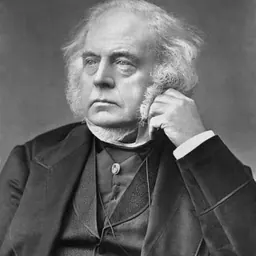
In England, Nahnebahwequay stayed with Robert and Christena Alsop, Quakers active in humanitarian and reform work. Through them she met John Bright, a Quaker Member of Parliament, who became one of her strongest advocates. Bright introduced her to senior officials, including the Duke of Newcastle, Queen Victoria's Colonial Secretary, and arranged opportunities for her to present her case to the Aborigines Protection Society.
On 19 June 1860, Nahnebahwequay was received at Buckingham Palace. Queen Victoria asked her directly about conditions in Canada and instructed the Duke of Newcastle to investigate the matter during his upcoming tour of British North America with the Prince of Wales. Nahnebahwequay later described the Queen as courteous and attentive, and she believed the promise to investigate her concerns was sincere.
News of her reception in England alarmed officials in Indian Affairs. Department correspondence shows efforts to undermine her influence at home. In one letter, Bartlett instructed leaders at Cape Croker to dissuade others from supporting her, writing: "Discourage Mrs. Sutton's actions. You must tell the Indians not to listen to her."
Opposition to the Manitoulin Treaty
In the early 1860s, new political pressures again drew Nahnebahwequay into national debates. In 1861 the Department of Indian Affairs began negotiating a new Manitoulin Island treaty that would open most of the island to non-Indigenous settlement. Many Anishinaabe leaders opposed the plan, including leaders at Saugeen and Odawa chiefs such as Assiginack, who argued that Manitoulin had been set aside in 1836 as a permanent Indigenous homeland. Reopening the island to settlers was widely seen as a violation of earlier commitments.
Toronto editor Charles Lindsey used the Leader to criticize Indigenous resistance. In an 1861 editorial he argued that Indigenous people were "incapable of properly using the land," described resistance as "irrational," and portrayed Indigenous leaders as obstacles to the island's progress.
Nahnebahwequay answered him publicly. In a public letter she wrote that Lindsey's argument rested on the belief that Indigenous people were "not human beings" with rights that the Crown was bound to respect. She rejected Lindsey's claim that Indigenous people were unfit to hold land and condemned what she described as the white man's hunger for territory.
Colonial policy operated differently. Under Indian Department rules, an Indigenous woman who married a non-Indigenous man was treated as if she had lost legal Indian status, regardless of how her own community understood her identity. As a result, Indian Affairs refused to recognize her as the landholder and dealt only with her husband, William Sutton, even though the 1845 grant named her and her alone.
By the early 1860s, this conflict between Indigenous and colonial law became decisive. Nahnebahwequay repeatedly rejected proposals to surrender or sell the land and continued to petition for recognition of her original title.
Following the sale, officials then required Sutton to purchase Crown land if the family wished to remain in the district. Earlier, Nahnebahwequay and her neighbours had been offered land at three dollars per acre, but Sutton had been holding out for a better price. By the time Sutton completed the required purchase, he was charged even more - an additional two dollars, for a total of five dollars per acre.
Sixteen years after she received it, the land intended for Nahnebahwequay and her heirs had been removed from her control through imposed status rules, gendered colonial law, and financial pressure. The family remained in the area, but only after purchasing replacement land at a significantly higher cost. Legal recognition of title determined whether families could remain on their land, and Nahnebahwequay understood these stakes well. Even as her responsibilities grew and her health declined after the birth of her last child in 1864, she continued writing and petitioning. In an earlier letter she wrote, "I am sorry to tell you that the white man has taken all the land that belongs to us Indians. We have no place to call our home except the little spot the government allows us."
Her later petitions kept the same force. Drawing on her own experience of being denied the land she cleared and cultivated, she declared, "I stand before you as a woman wronged. I stand before you for my people, whose lands are taken from them without their consent." Through this she linked her case to the wider pressures facing Mississauga families as settlement advanced.
Burial Nahnebahqua’s final years were marked by exhaustion and declining health. After the birth of her last child in 1864, her strength never fully returned, and the long strain of campaigning for Indigenous land rights in Canada weighed heavily on her. She died of an asthma attack on 26 September 1865 at about forty years of age.
According to family and community accounts recorded by her neighbour Charles Julyan, Nahnebahwequay asked to be buried on Lot 34, part of the original land she had fought to have legally recognized in her name. In an 1871 letter to Joseph Howe, Julyan described her funeral and confirmed that she was buried in the garden on the former grant.
Rather than burial in a churchyard or settler cemetery, she was laid to rest on the parcel she had spent years trying to have legally recognized as her own. The land had been cleared and cultivated by her family and remained closely associated with her efforts to defend Indigenous land rights in the district.
Later accounts remembered the burial site as both a family resting place and a reminder of the wider struggle over Indigenous land tenure in Upper Canada during the mid nineteenth century.
Don’t just read it —
keep it.
Full-length biographies made to live with: read them, listen on the way to work, watch them tonight.
- E-book
- Audio
- Video
Instant download · yours to keep · every purchase keeps this site free
Important facts
People in Nahnebahwequa's life
Named in this biography and alive at the same time



Related people
Same field, nearest in time


Contemporaries
People whose lives overlapped Nahnebahwequa's





Frequently asked questions
Who was Nahnebahwequa?
Ojibwa spokeswoman and Christian missionary
When was Nahnebahwequa born?
Nahnebahwequa was born in 1824 in Credit River.
When did Nahnebahwequa die?
Nahnebahwequa died on 26 September 1865.
What was Nahnebahwequa's occupation?
Nahnebahwequa was a missionary, writer and spokesperson.
Sources & further reading
Cite this page
APA: Biography.guide. (2026). Nahnebahwequa. https://biography.guide/nahnebahwequa/
MLA: "Nahnebahwequa." Biography.guide, https://biography.guide/nahnebahwequa/.
Chicago: "Nahnebahwequa." Biography.guide. https://biography.guide/nahnebahwequa/.
Data last updated: 2026-09-20 · Spot an error? Report a correction.
Page generated 2026-09-27 05:10 UTC