
About Francis Bond
Lived 1856 – 1930 (aged 74). Francis Bond was a military personnel and association football player.
Major-General Sir Francis George Bond, (10 August 1856 – 15 August 1930) was a British Army officer who served with the Royal Engineers in various campaigns in the 19th and early 20th centuries. He was a keen amateur sportsman, who played football for the Royal Engineers in the 1878 FA Cup Final.
Family and education Bond was born at Marlborough, Wiltshire, on 10 August 1856, the eldest son of Revd. Frederick Hookey Bond (1821–1897) and his wife, Mary Isabella née Delafosse (1833–1916). His father was the headmaster of Marlborough Royal Free Grammar School from 1853 to 1876. His paternal grandfather was Francis Godolphin Bond (1765–1839), who was a Rear-Admiral in the Royal Navy. With his parentage, Bond was originally intended for a career as a naval chaplain, before opting for a military career. Bond was baptised at St Mary the Virgin Church, Marlborough on 21 September 1856.
Bond was educated initially at his father's school, before attending Marlborough College and then joining the Royal Military Academy, Woolwich.
Football career Bond played rugby for Marlborough College, and both football and rugby while at the Royal Military Academy. After the final, Bond was praised for his "good service in the cup-ties, keeping well on the ball and rarely missing a shot".
Military career Bond passed third in his class from the Royal Military Academy at Woolwich, subsequently made permanent with retrospective effect from 2 February 1876. On leaving the School of Mechanical Engineering at Chatham in November 1878, Bond was selected for the Telegraph Troop at Aldershot. He was withdrawn from Egypt on 20 October 1882, and returned to Aldershot. In 1887, he was selected by Lieutenant-Colonel Bindon Blood to join the Bengal Sappers and Miners, based at Roorkee, 115 miles north of New Delhi. and awarded the India Service Medal with clasp. In January 1893, Bond returned to the U.K., spending ten months at Edinburgh and ten months at Aldershot, until November 1894 when he returned to India, where he spent the remainder of his active service, other than a year in South Africa. During this period at "home", Bond (as commander of a pontoon troop) earned the Humane Society's Medal for saving the life of a sapper,
On his return to India, Bond re-joined the Bengal Sappers and Miners, being promoted to major with effect from 29 March 1895. In 1896, he became Superintendent of Instruction at Roorkee. In May 1901, Bond left India to become Deputy Assistant Adjutant General of the 4th Division in South Africa, joining up again with Lieutenant-General Bindon Blood. On Blood's return to India in September 1901, Bond remained as Chief Staff Officer in the Eastern Transvaal. with this rank being made permanent on 7 July 1902, shortly before his return to India. As well as receiving the Queen's South Africa Medal with three clasps, Bond was also appointed Companion of the Bath for his services during the Boer War.
Bond returned to India on 19 July 1902, where he served for nearly six years. In late 1905, following manoeuvres around Rawalpindi, Bond was responsible for ensuring that the four divisions of troops were ready and in the correct positions to take part in the parade in the city on 8 December 1905 to honour the Prince and Princess of Wales. based at Simla, On 18 April 1908, Bond was promoted to the temporary rank of brigadier-general,
On 7 February 1911, Bond was promoted to succeed Major General Francis Kelly as commander Southern Brigade with HQ at Wellington, Madras, under Sir O'Moore Creagh.
Service during the First World War Following the outbreak of the First World War, on 26 August 1914 Bond was recalled, and was appointed Assistant Director (Quartering) by his former colleague in India, General Sir John Cowans, now Quartermaster-General to the Forces. On 3 June 1916, Bond was promoted to the rank of temporary major-general, and appointed Director of Quartering in October 1917, retaining this post for the duration of the war. a Knight of Grace of the Order of the Hospital of St. John of Jerusalem on 31 October 1918, and a Knight Commander of the Order of the British Empire in the 1919 Birthday Honours, and was awarded the United States Army Distinguished Service Medal.
Leisure and civic activities Bond was an accomplished artist and is known to have made two coloured sketches of the scene at Rorke's Drift and the Buffalo River during the Zulu War.
On 4 February 1890, Bond was initiated into Freemasonry joining Beauchamp Lodge at Roorkee. He remained a Freemason throughout his time in India, achieving high office in the District Grand Lodge of Freemasons of the Punjab,
The couple had four sons: Lionel Vivian Bond (16 June 1884 – 4 October 1961), who followed his father into the Royal Engineers, becoming GOC Malaya Command from 1939 to 1941. Richard Lawrence Bond (10 June 1890 – 13 May 1979), who also served in the Royal Engineers, becoming GOC, Sierra Leone & Gambia, and was a senior Freemason in Hampshire. Frederick Hamilton Bligh Bond (8 April 1894 – 13 May 1915), who served with the Royal Artillery in the First World War and was killed in action near Ypres. He is buried at White House Cemetery, St Jean-les-Ypres.
Death and tributes Bond suffered a severe heart attack in February 1928, and remained unwell until his death at home in Camberley on 15 August 1930.
General Sir Bindon Blood said of Bond: I have watched Frank Bond's progress and his many important and brilliant services to the country, including his work in the Great War. To the end, he was the same as always: a soldier and a gentleman, a pattern to us all.
Don’t just read it —
keep it.
Full-length biographies made to live with: read them, listen on the way to work, watch them tonight.
- E-book
- Audio
- Video
Instant download · yours to keep · every purchase keeps this site free
Important facts
People in Francis Bond's life
Named in this biography and alive at the same time




Related people
Same field, nearest in time

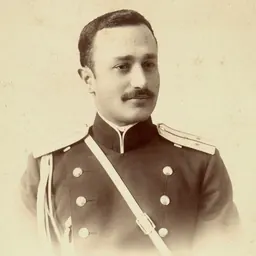
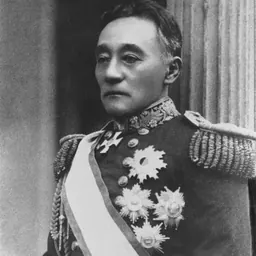
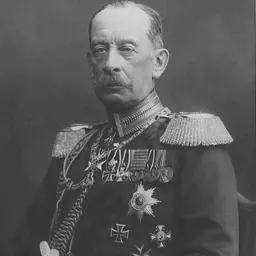
Contemporaries
People whose lives overlapped Francis Bond's
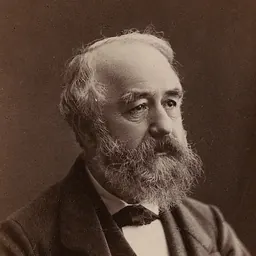



Frequently asked questions
Who was Francis Bond?
British Army general
When was Francis Bond born?
Francis Bond was born on 11 August 1856 in Marlborough.
When did Francis Bond die?
Francis Bond died on 15 August 1930 in Camberley.
What was Francis Bond's occupation?
Francis Bond was a military personnel and association football player.
Sources & further reading
· DBpedia: Frank Bond (British Army officer)
Cite this page
APA: Biography.guide. (2026). Francis Bond. https://biography.guide/francis-bond/
MLA: "Francis Bond." Biography.guide, https://biography.guide/francis-bond/.
Chicago: "Francis Bond." Biography.guide. https://biography.guide/francis-bond/.
Data last updated: 2026-09-20 · Spot an error? Report a correction.
Page generated 2026-09-27 05:06 UTC