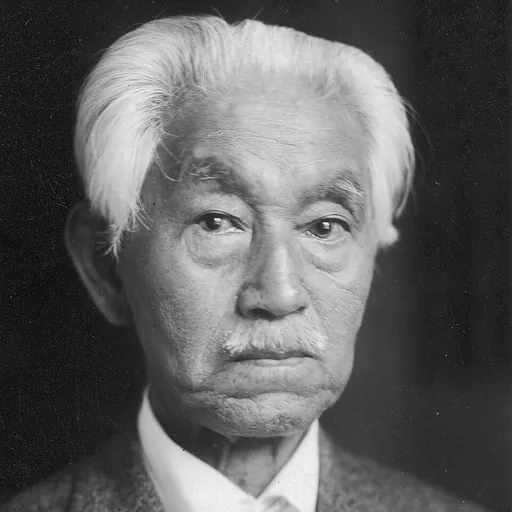
About Nagai Nagayoshi
Lived 1844 – 1929 (aged 84). Nagai Nagayoshi was a Japanese chemist, university teacher, organic chemist and pharmacologist.
was a Japanese doctor of pharmacy and chemist. He is best known for the discovery of ephedrine and methamphetamine.
Early life Nagai was born in Myōdō District, Awa Province in what is now Tokushima Prefecture, as the son of a doctor and started studying rangaku medicine at the Dutch Medical School of Nagasaki (Igaku-Denshujo) in 1864. While in Nagasaki, he made the acquaintance of Ōkubo Toshimichi, Itō Hirobumi, and other future leaders of the Meiji government.
Career Nagai continued his studies at Tokyo Imperial University and became the first doctor of pharmacy in Japan. He was sent under government sponsorship to Prussia in 1871 to study at the University of Berlin. He was the only civilian in a group of military students sent to study in Great Britain and France, and he traveled by way of the United States and Great Britain. While in Berlin, he resided at the home of Japanese diplomat Aoki Shūzō. He was influenced by the lectures of von Hofmann, and received a doctorate with a study on eugenol while working as an assistant at von Hofmann's laboratory. He decided to take up organic chemistry in 1873.
Nagai returned to Japan in 1883 to take up a position at the Tokyo Imperial University, and became Professor of Chemistry and Pharmacy there in 1893. His research centered on the chemical analysis of various Japanese and Chinese traditional herbal medicines.
While in Germany, Nagai married Therese Schumacher, the daughter of a wealthy lumber and mining magnate. On their return to Japan, she became a professor of German language at Japan Women's University, and was active in introducing German foods and culture to Japan. In 1923, Nagai and his wife hosted Albert Einstein and his wife during their visit to Japan.
His son, Alexander Nagai, served as a diplomat at the Embassy of Japan in Berlin until the end of World War II.
As first president of the Pharmaceutical Society of Japan (PSJ, founded in 1880); Nagai had an important impact on the propagation of chemistry and pharmaceutical sciences in an industrializing Japan.
Death Nagai died in 1929 in Tokyo of acute pneumonia.
Scientific contributions Isolation of ephedrine from Ephedra vulgaris in 1885. Nagai recognized it to be the active component of the plant. Synthesis of methamphetamine from ephedrine in 1893. Methamphetamine was later synthesized in crystalline form in 1919 by Akira Ogata. Isolation of rotenone from Derris elliptica in 1902. Nagayoshi named the substance after the Japanese name for the plant, roten. Synthesis and structural elucidation of ephedrine in 1929.
Don’t just read it —
keep it.
Full-length biographies made to live with: read them, listen on the way to work, watch them tonight.
- E-book
- Audio
- Video
Instant download · yours to keep · every purchase keeps this site free
Important facts
Family & relationships
People in Nagai Nagayoshi's life
Named in this biography and alive at the same time


Related people
Same field, nearest in time

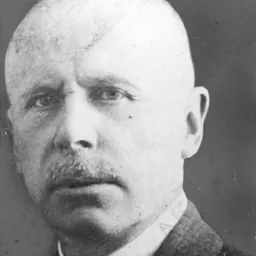

Contemporaries
People whose lives overlapped Nagai Nagayoshi's
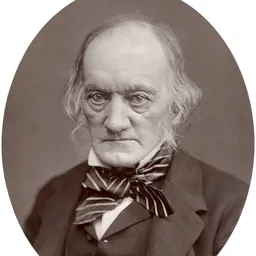
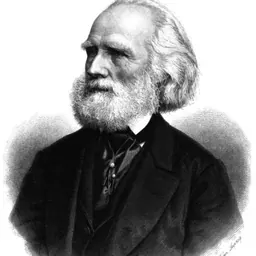
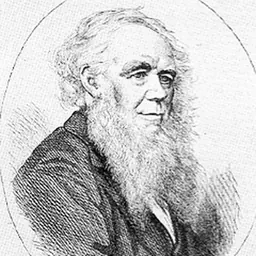

Frequently asked questions
Who was Nagai Nagayoshi?
Japanese pharmacologist
When was Nagai Nagayoshi born?
Nagai Nagayoshi was born on 8 August 1844 in Awa Province.
When did Nagai Nagayoshi die?
Nagai Nagayoshi died on 10 February 1929 in Tokyo.
What was Nagai Nagayoshi's occupation?
Nagai Nagayoshi was a chemist, university teacher, organic chemist and pharmacologist.
What nationality was Nagai Nagayoshi?
Nagai Nagayoshi was Japanese.
Sources & further reading
Cite this page
APA: Biography.guide. (2026). Nagai Nagayoshi. https://biography.guide/nagai-nagayoshi/
MLA: "Nagai Nagayoshi." Biography.guide, https://biography.guide/nagai-nagayoshi/.
Chicago: "Nagai Nagayoshi." Biography.guide. https://biography.guide/nagai-nagayoshi/.
Data last updated: 2026-09-23 · Spot an error? Report a correction.
Portrait: Wikimedia Commons · author & licence
Page generated 2026-09-27 05:07 UTC