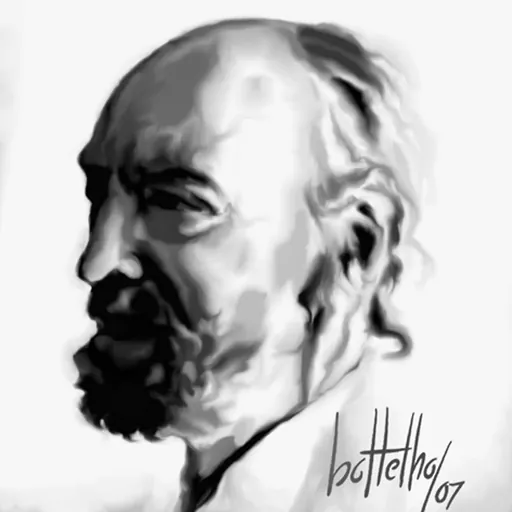
About Nadir Afonso
Lived 1920 – 2013 (aged 93). Nadir Afonso was a Portuguese painter, architect, philosopher and graphic artist.
Nadir Afonso, GOSE (4 December 1920 – 11 December 2013) was a Portuguese geometric abstractionist painter. Formally trained in architecture, which he practiced early in his career with Le Corbusier and Oscar Niemeyer, Nadir Afonso later studied painting in Paris and became one of the pioneers of Kinetic art, working alongside Victor Vasarely, Fernand Léger, Auguste Herbin, and André Bloc.
As a theorist of his own geometry-based aesthetics, published in several books, Nadir Afonso defended the idea that art is purely objective and ruled by laws that treat art not as an act of imagination but of observation, perception, and form manipulation.
Nadir Afonso achieved international recognition early in his career and many of his works are in museums. His most famous works are the Cities series, which depict places all around the world. He was known to have painted into his later years and died on 11 December 2013, one week after his 93rd birthday, at a hospital in Cascais. During his life he achieved great honors, representing his country at the finest level.
Biography Formative years Nadir Afonso Rodrigues was born in the rural, remote town of Chaves, Portugal, on 4 December 1920. His parents were Palmira Rodrigues Afonso and the poet Artur Maria Afonso. His very unusual first name was suggested by a gypsy to his father on his way to the Civil Registry, where he was due to be registered as Orlando.
By the age of four, he made his first "painting" on a wall at home: a perfect red circle, which anticipated his life as under the signs of rhythm and geometric precision. His teen years were dedicated to painting, and he won his first national prize at age 17. It was only natural that he was sent to the bigger city of Porto to enroll in the School of Fine Arts to pursue a degree in painting. However, at the registration desk, he took the advice of the clerk, who told him that his high school diploma allowed him to enroll in Architecture, which was then a more promising career. As he later admitted, he made a mistake by listening to that man. Nadir Afonso in his studio in Cascais on February 27 2007, standing next to his oversized canvas Sevilla.
Living in reclusion, Nadir Afonso defined himself in 2006 as "Portuguese and a son of the inner country. I learned from tradition to be humble, to praise the masters, and to live these eighty-six years with the simplicity that my lowly status has always guaranteed me. To do a balance of my existence and of my work now is absurd." He formed a foundation bearing his name, to which he donated his personal artwork collection, and engaged Pritzker Prize-winner architect Álvaro Siza to design its headquarters in his hometown of Chaves.
International recognition The recognition of Nadir Afonso's talent came early in his career, both in his home country and internationally. Aged 24, an oil of his, A Ribeira, had already been purchased by the Contemporary Art Museum of Lisbon and the Portuguese government invited him twice to represent Portugal at the São Paulo Art Biennial. By the age of 50, he was well known and regularly exhibited in New York and Paris.
However, his reclusive personality and the memory of his first attempt in 1946 to show his paintings at an art gallery in Paris, which snubbed him and left him humiliated, caused him to shy from publicity and he did not personally promote his exhibitions. Victor Vasarely, the father of op art, had already noticed it in 1968: "This artist I have known for over 20 years is undoubtedly the most important Portuguese contemporary painter and his work is unjustly little known across the world."
Personal aesthetics theory Art is usually conceived as subjective, but for Nadir Afonso it was purely objective and ruled by laws. "Art is a show of exactitude", "a game of laws in spaces but not of significations in objects". From these axioms, his own personal theory of geometry-based "rational aesthetics within an intuitive art" evolved, which he published in book form, alongside his philosophical thoughts on the Universe and its laws. These works are the key to understanding the artist and his art, and are summarized by himself in a few words:
"Searching for the absolute, for an art language in which shapes possess a mathematical rigorousness, where nothing needs to be added nor removed. The feeling of total exactitude."
Because of his rationalism, Nadir Afonso confronted Kandinsky, the father of abstract art, and criticized him for subduing geometry to the human spirit instead of making it the essence of art. This "geometry of art" is not however the "geometry of geometrists", as it is not about symbols nor anything in particular; rather, it is the spatial law itself, with the four qualities of perfection, harmony, evocation, and originality.
His work is methodical, because "an artwork is not an act of 'imagination' (...) but of observation, perception, form manipulation." "I start with shapes, still arbitrary. I put ten shapes on the frame; I look at it and suddenly a sort of spark ignites. Then the form appears. Color is secondary, used to accentuate the intensity of the form." Nadir Afonso did not renege on his early expressionist and surrealist works: "An individual initially does not see the true nature of things, he starts by representing the real, because he is convinced therein lies the essence of the artwork. I thought that too. But, as I kept working, the underlying laws of art, which are the laws of geometry, slowly revealed themselves in front of my eyes. There was no effort on my part, it was just the daily work what led me to that result, guided by intuition." The illustrations in this article are a chronological representation of the evolution of Nadir Afonso's style and thought towards the original geometric alphabet with which he created his artworks, as explained in his books and seen most prominently in his Cities series.
Artworks
Nadir Afonso produced mainly paintings and serigraphs. His preferred materials were acrylic paint on canvas (bigger works), and gouache on paper (smaller works, often studies for bigger works). His best-known and most distinctive work is the Cities series, each painting usually representing a city from anywhere in the world.
Exhibitions
Only solo international and major exhibitions are shown. 1940 First exhibitions as a student and (until 1946) as a member of artist collective * 1944 (collective) 9th Exhibition of Modern Art of the SNI-National Information Secretariat, Lisbon 1956, 1957 Gallerie Denise René, Paris 1958 (collective) Salon des Réalités Nouvelles, Paris 1959 Maison des Beaux-Arts, Paris 1961, 1969 São Paulo Art Biennial 1970 (anthological) Centre Culturel Portugais, Calouste Gulbenkian Foundation, Paris, then at the Foundation's premises in Lisbon 1970 Centre de Culture TPN, Neuchâtel, Switzerland 1972 Galeria Alvarez, Porto 1974 Selected Artists Galleries, New York 1976, 1978, 1988, 1991, 1994, 1996 Art-Service Gallerie, Paris 1979 Calouste Gulbenkian Foundation, Paris 1985 La Madraza, Granada, Spain 1986 Embassy of Portugal, Brasília 1995 Cooperativa Árvore, Porto. Catalog: Síntese Estética (Po/Fr) features two texts by Nadir Afonso and an interview; ; 2001 Cultural Center of Cascais, Portugal. Catalog features an interview; ; print run: 300 2003 Cultural Center of Orense, Spain (catalog: ) 2003 (anthological) 25th International Biennial of Vila Nova de Cerveira, Portugal 2005 - Nadir Afonso: cidades de um flâneur ou de como um viajante o é, Univ. Lusíada, Lisbon 2007 - Nadir Afonso, Futuro, Galeria Jornal de Notícias, Porto 2007 - Nadir Afonso, Futuro, Galeria Jornal de Notícias, Lisbon 2007 - Nadir Afonso, O Futuro Renascimento Centro de Exposições de Odivelas da Câmara Municipal de Odivelas, Lisbon 2009 - Nadir Afonso: As Cidades no Homem. Assembleia da República, Lisbon 2009 2009 - Nadir Afonso no século XXI, Museu Municipal Edifício Chiado, Galeria de Exposições Temporárias, Coimbra 2010 - Nadir Afonso Sem Limites, National Museum Soares dos Reis, Porto 2010 - Nadir Afonso Sem Limites, Museu do Chiado, Lisbon 2010 - Nadir Afonso: Absoluto 2010, Museu da Presidência da República, Lisbon 2011 - Nadir Afonso: Absoluto, Fundação Eugénio de Almeida, Évora 2011 - Nadir Afonso: Absoluto, Museu do Abade de Baçal, Bragança 2012 - Nadir Afonso, Museo Carlo Bilotti, Rome 2012 - Nadir Afonso, Palazzo Loredan, Venice
An additional 60 solo exhibitions in Portugal were recorded between 1949 and 2012 (last one: Palazzo Loredan, Venice). Additional international collective exhibitions include: 1967 Brussels, 1968 Paris, 1973 Barcelona, 1984 Dublin, 1986 Honolulu and Fall River, U.S.; 1993 Salamanca, Spain.
Written works The following books were written by Nadir Afonso in Portuguese, unless otherwise stated. Additional written works appear in exhibition catalogs and are noted in the list of Nadir Afonso exhibitions.
Theory and philosophy 1958 La Sensibilité Plastique (Fr), Presses du Temps Présent, Paris 1970 Les Mécanismes de la Création Artistique (Fr/En/Ge), Éditions du Griffon, Neuchâtel, Switzerland 1974 Aesthetic Synthesis (En), Ed. Galeria Alvarez, Porto, Collab. Selected Artists Galleries, New York. No ISBN 1983 Le Sens de l´Art (Fr), Imprensa Nacional, Lisbon. Print run: 2,750 + 250 with a numbered and signed serigraph. No ISBN. Translated in 1999 as O Sentido da Arte, Livros Horizonte, Lisbon. 2000 Universo e o Pensamento, Colecção Obras Clássicas da Literatura Portuguesa, Livros Horizonte, Lisbon. 2002 Sobre a Vida e Sobre a Obra de Van Gogh, Chaves Ferreira Publicações, Lisbon. Print run: 980, numbered and signed. Best art book of the 2003 Frankfurt Book Fair. 2003 O Fascínio das Cidades, Câmara Municipal de Cascais, Cascais. 2003 Da Intuição Artística ao Raciocínio Estético, Chaves Ferreira Publicações, Lisbon. Print run: 980, numbered and signed by the author. 2005 As Artes: Erradas Crenças e Falsas Críticas/The Arts: Erroneous Beliefs and False Criticisms (Po/En), Chaves Ferreira Publicações, Lisbon. Numbered and signed by the author. 2008 Nadir Face a Face com Einstein/ Nadir Face to Face with Einstein, Chaves Ferreira Publicações, Lisbon. 2010 Manifesto: O Tempo Não Existe (Po/En), Dinalivro, Lisbon. 2010 Universo e Pensamento, Edições Afrontamento, Lisbon. 2011 - O Trabalho Artístico. Reflexões. Lisboa Athena Editora.
Monographs 1968: Guedes, Fernando. Nadir Afonso, Editorial Verbo, Lisbon 1986: Nadir Afonso (Po/En/Fr), Colecção Arte Contemporânea, Livraria Bertrand, Lisbon. Print run included 200 numbered and signed copies, with a serigraph. 1990: Da Vida à Obra de Nadir Afonso, Livraria Bertrand, Lisbon. Print run included 250 numbered and signed copies, with a serigraph. 1994: Nadir Afonso, Bial, Porto. No ISBN 1998: Nadir Afonso, Livros Horizonte, Lisbon. 1999: Obra Gravada, Edições Coelho Dias. 2000: O Porto de Nadir, Edições Coelho Dias, Porto. 2008: Nadir Afonso: O Futuro Renascimento, Dinalivro, Lisbon. 2008: Nadir Afonso: Itinerário (Com)Sentido, Edições Afrontamento, Porto. 2010: Ginga, Adelaide (coord) Nadir Afonso Sem Limites/Without Limits, Lisboa 2010: Chaves, Mário; Nadir Afonso: arquitecto e pintor, no Mundo. Universidade Lusíada Editora, Lisboa 2012: Nadir Afonso: Conversa com Agostinho Santos, Âncora Editora, Lisboa. 2012: Ferreira, António Quadros, Nadir Afonso: Arte, Estética e Teoria, de Ferreira, Edições Afrontamento, Porto. 2012: Cecchetto, Stephano (coord) Nadir Afonso: Percorsi per una nuova estetica, Carlo CambiEditore, Rome.
Don’t just read it —
keep it.
Full-length biographies made to live with: read them, listen on the way to work, watch them tonight.
- E-book
- Audio
- Video
Instant download · yours to keep · every purchase keeps this site free
Important facts
People in Nadir Afonso's life
Named in this biography and alive at the same time



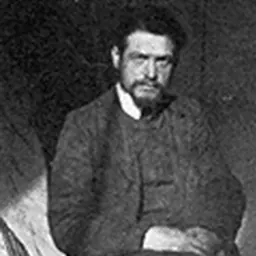
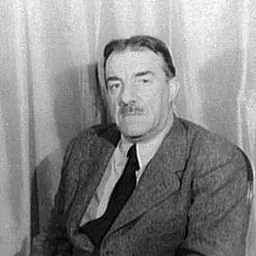
Related people
Same field, nearest in time

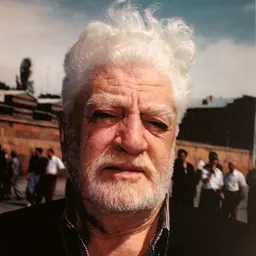
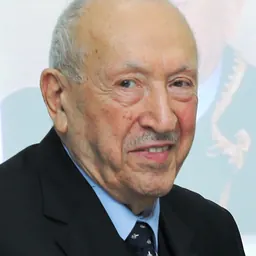

Contemporaries
People whose lives overlapped Nadir Afonso's





Frequently asked questions
Who was Nadir Afonso?
Portuguese painter and architect (1920-2013)
When was Nadir Afonso born?
Nadir Afonso was born on 4 December 1920 in Chaves.
When did Nadir Afonso die?
Nadir Afonso died on 11 December 2013 in Cascais.
What was Nadir Afonso's occupation?
Nadir Afonso was a painter, architect, philosopher and graphic artist.
What nationality was Nadir Afonso?
Nadir Afonso was Portuguese.
Sources & further reading
Cite this page
APA: Biography.guide. (2026). Nadir Afonso. https://biography.guide/nadir-afonso/
MLA: "Nadir Afonso." Biography.guide, https://biography.guide/nadir-afonso/.
Chicago: "Nadir Afonso." Biography.guide. https://biography.guide/nadir-afonso/.
Data last updated: 2026-09-22 · Spot an error? Report a correction.
Portrait: Wikimedia Commons · author & licence
Page generated 2026-09-27 05:04 UTC