
About Nabila Erian
Born 1941. Nabila Erian is an Egyptian singer and actor.
Nabila M. Erian (Arabic: نبيلة عريان, born 1941) is a professor of vocal sciences at the Cairo Conservatoire, Academy of Arts. Her career as a leading soprano opera singer debuted in 1960. She is also an expert on the history of Coptic music. Her latest research revolves around the continuity between the current practiced Coptic music and the Ancient Egyptian tradition. Erian advocates for the construction of a new modern state of the arts opera house at the New Cairo Administrative Capital.
Education Erian obtained her PhD entitled Coptic Music: An Egyptian Tradition in 1986 from the University of Maryland, Baltimore County. Between 1970 and 1973 she obtained several diplomas and a fellowship from the Trinity College London. In 1965, she obtained an M.A. from the Academia di Santa Cecilia, Rome and in 1962, a B.A. in English Literature from the Faculty of Arts, Cairo University. Her school leaving certificate in 1958 was obtained from the English Mission College, Cairo.
Career Erian's career on the stage of the Opera spans half a century. She is known for being the first Egyptian soprano to perform a translated international opera. In 1964, she played the role of Violetta whereby she sang Verdi's La Traviata in Arabic on the stage of the Khedivial Opera House. She was also the Director of the Cairo Opera Company and the Associate Dean of the Cairo Conservatoire.
In 2017, Erian delivered the introductory keynote speech at the La Traviata Met Live transmission at the American University in Cairo.
Repertoire
Her repertoire includes most international composers for whom she sang in Italian, French, German and Russian. Those include among others: Puccini's Madama Butterfly, Tosca and La Bohème, Verdi's La Traviata, Aida and Rigoletto, Mozart's Le Nozze di Figaro, Bastien und Bastienne, and Don Giovanni, Bizet's Carmen, Handel's oratorios, etc.
Erian sang in Arabic for many Egyptian composers including Abu Bakr Khairat, Aziz El-Shawan, Hasan Rashid and Gamal Abdel Rehim among others. She sang the first ever Arabic Opera Anas el-Wugood (أنس الوجود) composed by Aziz El-Shawan based on the One Thousand and One Nights stories in 1994.
Awards
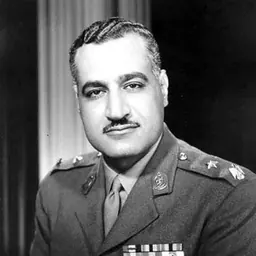
In 1964, Nabila Erian was awarded by President Gamal Abdel Nasser on the occasion of 'Id al-'Ilm" (tr. the Sciences Festival). She was the second Egyptian singer to receive this award after Umm Kalthum.
Between the seventies and the nineties Erian obtained several international music awards from Japan (Butterfly), France, Budapest awards, Bach and Leinberg contests.
Publications
"Speculations on the Artistic Process as Cultural Identity," Bulletin of the 25th Anniversary of the Academy of Arts, Cairo, 1985.
"Aida at the Pyramids", Cairo Today. Monthly Review, Cairo, 1984.
Don’t just read it —
keep it.
Full-length biographies made to live with: read them, listen on the way to work, watch them tonight.
- E-book
- Audio
- Video
Instant download · yours to keep · every purchase keeps this site free
Important facts
People in Nabila Erian's life
Named in this biography and alive at the same time


Related people
Same field, nearest in time





Contemporaries
People whose lives overlapped Nabila Erian's





Frequently asked questions
Who is Nabila Erian?
Egyptian singer
When was Nabila Erian born?
Nabila Erian was born in 1941.
What is Nabila Erian's occupation?
Nabila Erian is a singer and actor.
What nationality is Nabila Erian?
Nabila Erian is Egyptian.
Sources & further reading
Cite this page
APA: Biography.guide. (2026). Nabila Erian. https://biography.guide/nabila-erian/
MLA: "Nabila Erian." Biography.guide, https://biography.guide/nabila-erian/.
Chicago: "Nabila Erian." Biography.guide. https://biography.guide/nabila-erian/.
Data last updated: 2026-09-22 · Spot an error? Report a correction.
Portrait: Wikimedia Commons · author & licence
Page generated 2026-09-27 05:01 UTC