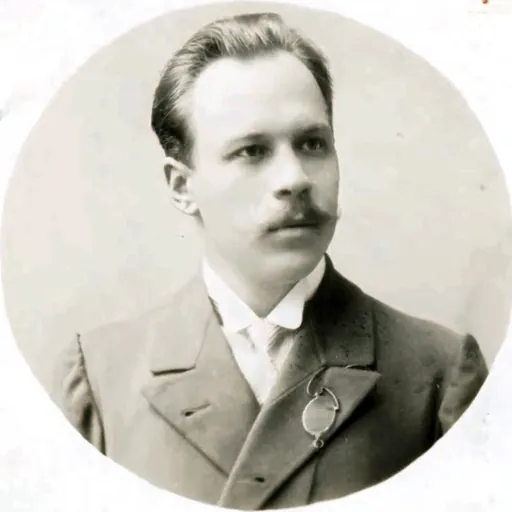
About Mykola Voronyi
Lived 1871 – 1938 (aged 66). Mykola Voronyi was a Ukrainian and Russian poet, translator, theatre director, actor, writer and politician.
Legacy One of the first Ukrainian modernists, Voronyi presented the movement's manifesto in his 1903 article in the . He opposed the realist lyricism of the Narodnik era and enriched Ukrainian poetry with urban and individualistic motives, working to increase its strophical and metrical variety. Voronyi's works were panned by critics for being superficial, promoting a "cult of beauty" and lacking original topics and images.
Voronyi is recognized as one of the founders of theatrical theory and criticism in Ukraine. He made a great contribution to the establishment of Ukrainian-language opera. Among his contributions in this sphere are libretto translations of The Love for Three Oranges by Sergei Prokofiev, Trilby by Aleksandr Yurasovsky and Carmen by Georges Bizet. He also translated into Ukrainian numerous songs, including The Internationale, Marseillaise and Warszawianka.
Among composers to whom Voronyi dedicated his critical works was Ostap Nyzhankivsky. His theoretical and critical oeuvre contributed to the development of Ukrainian theatre, among others exerting great influence on Les Kurbas and his Young Theatre. A collection of Voronyi's works was published in Kyiv in 1989.
Works
Poetry collections Lyrical poems (Ліричні поезії, 1912) In Glow of Dreams (В сяйві мрій, 1913) For Ukraine (За Україну, 1921) Poems (Поезії, Kharkiv, 1929) Critical works Theatre and Drama (Театр і драма, Kyiv, 1913) With Brush and Quill (Пензлем і пером, Prague, 1923) Dramatical Primadonna (Драматична примадонна, Lviv, 1924) - dedicated to L.Linnytska Director (Режисер, Lviv, 1925)
Family Voronyi's son Marko (born in 1904 in Chernihiv) followed his steps as a poet. During the late 1920s his works were published in Lviv (under the pen name Marko Antiokh), and later also in Soviet Ukrainian magazines such as Chervonyi Shliakh. In 1935 Marko was arrested in Kyiv, and eventually sentenced to 8 years of concentration camps. He was executed on 3 November 1937 at Solovki.
Don’t just read it —
keep it.
Full-length biographies made to live with: read them, listen on the way to work, watch them tonight.
- E-book
- Audio
- Video
Instant download · yours to keep · every purchase keeps this site free
Important facts
People in Mykola Voronyi's life
Named in this biography and alive at the same time


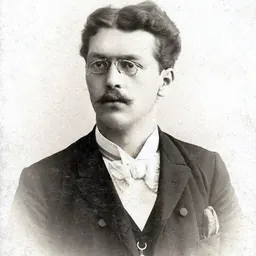


Related people
Same field, nearest in time
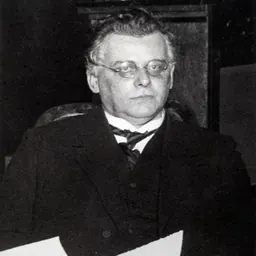
Contemporaries
People whose lives overlapped Mykola Voronyi's



Frequently asked questions
Who was Mykola Voronyi?
Ukrainian writer, director and actor (1871-1938)
When was Mykola Voronyi born?
Mykola Voronyi was born on 6 December 1871 in Yekaterinoslav Governorate.
When did Mykola Voronyi die?
Mykola Voronyi died on 7 June 1938 in Odesa.
What was Mykola Voronyi's occupation?
Mykola Voronyi was a poet, translator, theatre director, actor, writer and politician.
What nationality was Mykola Voronyi?
Mykola Voronyi was Ukrainian and Russian.
Sources & further reading
Cite this page
APA: Biography.guide. (2026). Mykola Voronyi. https://biography.guide/mykola-voronyi/
MLA: "Mykola Voronyi." Biography.guide, https://biography.guide/mykola-voronyi/.
Chicago: "Mykola Voronyi." Biography.guide. https://biography.guide/mykola-voronyi/.
Data last updated: 2026-09-21 · Spot an error? Report a correction.
Portrait: Wikimedia Commons · author & licence
Page generated 2026-09-27 05:00 UTC