
Les Kurbas
Ukrainian and Soviet actor, theatre director, film director (1887—1937)
About Les Kurbas
Lived 1887 – 1937 (aged 50). Les Kurbas was an Austrian, Ukrainian and Russian actor, theatre director, film director, director, theatrologist and playwright.
Oleksandr-Zenon Stepanovych Kurbas (; 25 February 1887 – 3 November 1937) was a Ukrainian movie and theater director. He is considered by many to be the most important Ukrainian theater director of the 20th century. He formed, together with Vsevolod Meyerhold, Yevgeny Vakhtangov and several other directors, the Soviet theater avant-garde in the 1920s and 1930s. He is one of the most prominent representatives of Ukrainian avant-garde art. He is considered to be one of the lead figures of the Executed Renaissance. He was murdered by the Soviet regime, during Stalin's Great Terror.
Early work Kurbas was born in Sambir (then part of Austria-Hungary) on 25 February 1887, and was given a double name Oleksandr-Zenon, for short Les or Oles. His father, Stepan Pylypovych Kurbas (Yanovych) (1862–1908), was a Ruthenian actor who descended from Lithuanian lineage. His mother, Vanda Adolfivna (nata Kulczycka), born in Staryi Skalat, was also an actress, the daughter of an Austrian, Adolf Teichman. His parents' last name Yanovych was their pseudonym, for which they were better known, particularly in theater of "Ruska besida". Besides Les who was the first child there were three other children Kornylo (died 2 July 1895), Nestor, and Nadia, however none of them survived past their teenage years.
At first Kurbas studied at Ternopil gymnasium. In 1907, he enrolled in the Philosophy Department of the University of Vienna, from which he transferred in 1908 following his father's death, later enrolling at Lviv University (1908–1910). This was determined by the need to lead Ukrainian culture out of the provincialism it had fallen into as a result of the century-long occupation by Poland and Russia.
In the midst of the first world war Kurbas formed the "Ternopil theatrical evenings" (1915–1916)
Imprisonment and execution
In 1933, Kurbas was ousted from "Berezil". He was allowed to go to Moscow, where he probably was the major force behind Solomon Mikhoels' famous staging of King Lear (1934). Later, in 1933, he was arrested and put into a labour camp (as were many other cultural figures). Even under these conditions Les Kurbas showed his unshakable love for the theater. As his friend and competitor Vsevolod Meyerhold would do later during his own imprisonment, Kurbas organized a camp theater and was even in touch with the author of one of the plays he staged to discuss dramaturgical decisions.
Kurbas was then moved to the remote Solovetsky Islands in the White Sea, and was one of the "lost transport" of prisoners shipped back to the mainland in 1937 from Solovki. It is now known that he was shot on 3 November 1937 with 289 other members of the Ukrainian intelligentsia at the killing field and burial ground of Sandarmokh near Medvezhyegorsk, in Karelia (northwest Russia), a site discovered in 1997 by members of the Memorial Society.
Joseph Stalin had directly ordered the killing of over one thousand artists and intellectuals held in the Solovki prison camp. Kurbas' friend Mykola Kulish met the same fate.
After Stalin's death, Kurbas was rehabilitated in 1957.
Posterity
The "Berezil'" Theater lived on under the name of "Shevchenko Theater". One of Kurbas' lead actors, Marjan Kurshelnytsky, led it until the 1960s, but had to make many artistic compromises. Kurbas' work could only be mentioned again from the 1960s onwards, yet the overdue research was only begun in late 1980s, mostly in Ukraine. There is a tendency in the Ukrainian research to glorify Kurbas. Some hagiographers claim that Kurbas was a genius (he was indeed multi-talented) who anticipated every development of the later 20th century theater (some of which he did, as for example in the work of Italian director Eugenio Barba's Odin Teatret). Another important falsification is that Kurbas was not a communist. It would be more correct to say that he had an entirely different vision of communism and the potential of a new society for the development of human creativity. His most important goal as an artist was to "make the audience feel more alive".
Theatre award The Les Kurbas Prize is a theatre award of Ukraine that is named after the famous director.
Don’t just read it —
keep it.
Full-length biographies made to live with: read them, listen on the way to work, watch them tonight.
- E-book
- Audio
- Video
Instant download · yours to keep · every purchase keeps this site free
Important facts
People in Les Kurbas's life
Named in this biography and alive at the same time
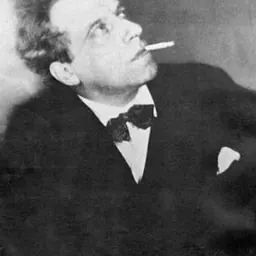


Related people
Same field, nearest in time


Contemporaries
People whose lives overlapped Les Kurbas's



Frequently asked questions
Who was Les Kurbas?
Ukrainian and Soviet actor, theatre director, film director (1887—1937)
When was Les Kurbas born?
Les Kurbas was born on 25 February 1887 in Sambir.
When did Les Kurbas die?
Les Kurbas died on 3 November 1937 in Sandarmokh.
What was Les Kurbas's occupation?
Les Kurbas was an actor, theatre director, film director, director, theatrologist and playwright.
What nationality was Les Kurbas?
Les Kurbas was Austrian, Ukrainian and Russian.
Sources & further reading
Cite this page
APA: Biography.guide. (2026). Les Kurbas. https://biography.guide/les-kurbas/
MLA: "Les Kurbas." Biography.guide, https://biography.guide/les-kurbas/.
Chicago: "Les Kurbas." Biography.guide. https://biography.guide/les-kurbas/.
Data last updated: 2026-09-20 · Spot an error? Report a correction.
Page generated 2026-09-27 05:19 UTC