
Mykola Sumtsov
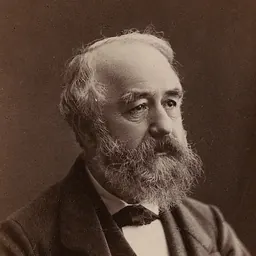
Ukrainian ethnographer, folklorist, art historian, literary scholar, educator and museum expert
About Mykola Sumtsov
Lived 1854 – 1922 (aged 68). Mykola Sumtsov was a Russian and Ukrainian folklorist, ethnographer, literary scholar, public figure, museologist and philologist.
Mykola Fedorovych Sumtsov or Nikolai Fyodorovich Sumtsov (, 18 April 1854, Saint Petersburg, Russian Empire – 12 September 1922 Kharkiv [Kharkov], Ukrainian SSR, USSR), sometimes spelled Sumcov, was an ethnographer, folklorist, art historian, literary scholar, educator and museum expert, who flourished in the Russian Empire, Ukrainian People's Republic, and Soviet Ukraine.
Sumtsov was a champion and defender of the culture and language of Ukraine in both academic and popular realms, and contributed to a systematic history of Ukrainian literature.
He studied at the 2nd Kharkiv Boys Gymnasium (high school), which he graduated with silver medal. The native Russian-speaker learned French and German in the gymnasium, and taught himself Ukrainian. Afterwards, he graduated History and Philology Faculty at Kharkiv University (1871–1875). In 1876 he undertook several courses at Heidelberg University, Germany. In 1878 Sumtsov returned to Kharkiv as a lecturer of Russian Literature. Supported by his mentor, Alexander Potebnja, he dedicated his introductory lecture to Ukrainian duma (Cossack epic song).
In 1880, he defended his Master thesis On the Wedding Rites, Mainly Russian. In 1885 Sumtsov was awarded a PhD degree for his thesis Khleb v Obriadakh i Pesniakh (Bread in Rituals and Songs) and in 1888 he was appointed professor.
In 1902, the 12th Archaeological Congress was held from August 15 to 27 in Kharkiv, organised by the Kharkiv Historical and Philological Society, chaired by Mykola Sumtsov. At the congress he organised an ethnographic exhibition consisting of impressive 26 sections and 1,490 artefacts. That exhibition became the foundation of Kharkiv University Ethnographic Museum, with Sumtsov as first curator from 1905 to 1918.
One of the most notable of Mykola Sumtsov's activities in support of the Ukrainian national movement was his public lecture in Ukrainian on 28 September 1907, when the ban on using Ukrainian in Ukraine had not yet been lifted.
In 1916, the Russian Geographical Society awarded Mykola Sumtsov a gold medal.
In 1917, Mykola Sumtsov, along with other members of Special Committee of Kharkiv University Board, signed an appeal to the government asking to allow free use of Ukrainian in all Kharkiv institutions.
One of the last projects undertaken by Mykola Sumtsov in 1920 to 1922 was overseeing gathering information on the local kobzars and their songs for the Gregory Skovoroda Museum of Sloboda Ukraine (now — M. F. Sumtsov Kharkiv Historical Museum).
Publications
Mykola Sumtsov wrote extensively. The bibliography of his known works contains 1,544 entries. His writings mainly concern two areas of science: ethnography and literature. In addition to the local periodicals, his works were also published in Bulgarian, Polish, Bohemian, German and French academic publications.
Ethnographic works
1881 – O brachnykh obriadakh, preimushchestvenno russkikh [On the Wedding Rites, Mainly Russian] 1885 – Khleb v Obriadakh i Pesniakh [Bread in rituals and songs] 1886 – articles on Koliadky [carols] in Kievskaia Starina 1889–1890 – articles on cultural experiences in Kievskaia Starina 1891 – articles on Pysanky in Kievskaia Starina 1898 – Razyskaniia v oblasti anekdoticheskoi literatury [Research in the field of anecdotal literature] 1902 – Ocherki Narodnogo Byta [Sketches of folk life] 1918 – Slobozhane: Istorychno-Etnohrafichna Rozvidka [The Sloboda Ukrainians: a historico-ethnographic study]
Literary works
Sumtsov's numerous literary publications include a range of articles dedicated to writings of renowned poets and writers, including Ivan Franko, Borys Hrinchenko, Ivan Manzhura, Oleksandr Oles, Vladimir Odoyevsky (See: Prince Odoyevsky. Moscow, 1884), Nikolay Nekrasov, Nikolay Gogol, Leo Tolstoy, Vasily Zhukovsky and Alexander Pushkin (See: Etudes about A. S. Pushkin. Moscow 1897). Sumtsov is also known as the author of a detailed research on the history of Cossack baroque thinkers, theologians and poets like Ivan Vyshensky, Lazar Baranovych, Ioanikii Galiatovsky, and Innokentii Gizel (See: On the history of literature in Southern Russia of the 17th century, in original: K istorii iuzhnorusskoi literatury semnadtsatogo stoletiia. Kharkiv, 1885). The works Sumtsov's also include literary publications on Ukrainian thinkers like Ivan Kotliarevsky, Taras Shevchenko, Panteleimon Kulish, Mykhailo Starytsky and Alexander Potebnja.
Membership
1880–1896 – Kharkiv Historical and Philological Society, secretary 1897–1919 – Kharkiv Historical and Philological Society, president 1905 – Russian Academy of Sciences, corresponding member 1908 – Shevchenko Scientific Society, full member 1919 – All-Ukrainian Academy of Sciences, full member
Selected works An Essay on the History of the Witchcraft in Europe. Kharkiv University, 1878. (in Rus.) On the Wedding Rites, Mainly Russian. Kharkiv University, 1881. (in Rus.) Prince V. F. Odoyevsky. Moscow, 1884. (in Rus.) Khleb v obriadakh i pesniakh (Bread in [Folk] Rituals and Songs), 1885. (in Rus.) Research on Koliadki and Shchedrivki. Kiev, 1886. (in Rus.) Raven in the Folk Literature. Moscow, 1890. (in Rus.) Contemporary Malorussian Ethnography. Kiev, 1893–1897. (in Rus.) On the Influence of Malorussian Scholastic Literature of the Seventeenth Century at the Great-Russian Old Believers Literature of the Eighteenth Century, and on the Reflection of Masonry // Kievskaya starina. 1895, vol. 51, No 12, Dep. 1, pp. 367–379. (in Rus.) On the Bibliography of Old Malorussian Religious Tales. Kharkiv University, 1896. (in Rus.) Razyskaniia v oblasti anekdoticheskoi literatury (Research in the Field of Anecdotal Literature), 1898. (in Rus.) Ocherki narodnogo byta (Sketches of Folk Life: From the 1901 Ethnographical Excursion to the Okhtyrka District of the Kharkiv Governorate), Kharkiv University, 1902. (in Rus.)
Don’t just read it —
keep it.
Full-length biographies made to live with: read them, listen on the way to work, watch them tonight.
- E-book
- Audio
- Video
Instant download · yours to keep · every purchase keeps this site free
Important facts
People in Mykola Sumtsov's life
Named in this biography and alive at the same time

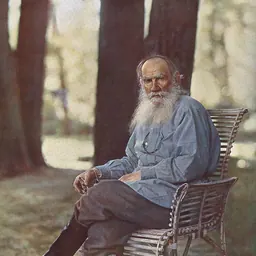
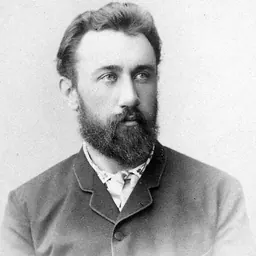
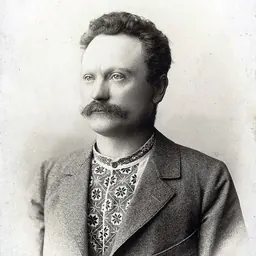


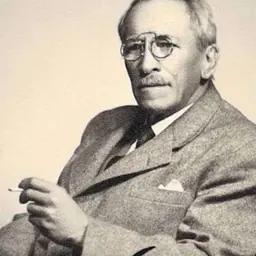

Related people
Same field, nearest in time
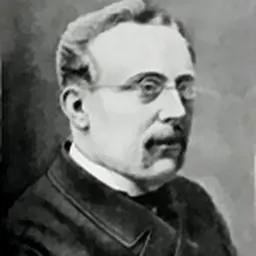
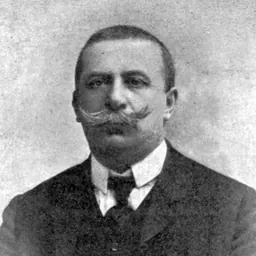
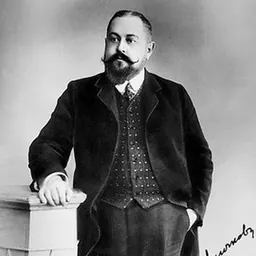
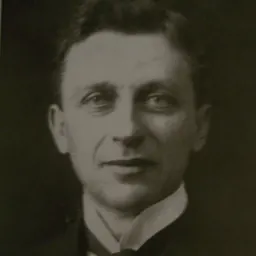

Contemporaries
People whose lives overlapped Mykola Sumtsov's





Frequently asked questions
Who was Mykola Sumtsov?
Ukrainian ethnographer, folklorist, art historian, literary scholar, educator and museum expert (1854–1922)
When was Mykola Sumtsov born?
Mykola Sumtsov was born on 6 April 1854 in Saint Petersburg.
When did Mykola Sumtsov die?
Mykola Sumtsov died on 12 September 1922 in Kharkiv.
What was Mykola Sumtsov's occupation?
Mykola Sumtsov was a folklorist, ethnographer, literary scholar, public figure, museologist and philologist.
What nationality was Mykola Sumtsov?
Mykola Sumtsov was Russian and Ukrainian.
Sources & further reading
Cite this page
APA: Biography.guide. (2026). Mykola Sumtsov. https://biography.guide/mykola-sumtsov/
MLA: "Mykola Sumtsov." Biography.guide, https://biography.guide/mykola-sumtsov/.
Chicago: "Mykola Sumtsov." Biography.guide. https://biography.guide/mykola-sumtsov/.
Data last updated: 2026-09-20 · Spot an error? Report a correction.
Page generated 2026-09-27 05:25 UTC