
About Panteleimon Kulish
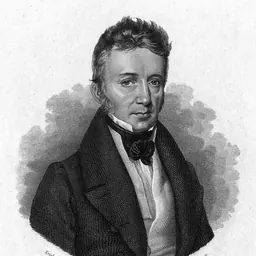
Lived 1819 – 1897 (aged 77). Panteleimon Kulish was a Russian and Ukrainian writer, historian, ethnographer, poet, translator and bible translator.
Panteleimon Oleksandrovych Kulish (, ; 7 August 1819 – 14 February 1897) was a Ukrainian writer, critic, poet, folklorist, translator and author of historical works.
A member of the Brotherhood of Saints Cyril and Methodius during his youth, after his arrest and exile for participating in the organization Kulish started to co-operate with Russian imperial authorities, abandoning his romantic views on Ukrainian history and supporting the incorporation of Ukraine by the Russian Empire, which caused a conflict between him and younger representatives of the Ukrainian national movement. A promoter of Ukraine's cultural development, Kulish also made an important contribution to the creation of modern Ukrainian orthography.
Life Panteleimon Kulish was born 7 August 1819 in Voronizh (now Sumy Oblast) into an impoverished Cossack gentry family. His mother, Kateryna Ivanivna, spoke exclusively Ukrainian and taught her son numerous folk songs, tales and legends. After completing only five years at the Novhorod-Siverskyi gymnasium, where he got acquainted with classical works of Russian literature and folklore, Kulish enrolled at Kyiv University in 1837 but was not allowed to finish his studies due to being unable to prove his nobility. Thanks to the protection of Mikhail Yuzefovich and Mykhailo Maksymovych, in 1840 he obtained a teaching position in Lutsk, where he wrote his first historical novella in Russian, Mykhailo Charnyshenko, or Little Russia Eighty Years Ago, as well as epic Ukraine (both published in Kyiv in 1843). Soon after his marriage with Bilozersky's sister Hanna in 1847, Kulish was arrested for his participation in this organization, and spent some time in prison and a few years in exile. In the early 1860s Kulish published several scientific papers on Ukrainian Medieval and Cossack history.
In 1864-1867 Kulish worked as a Russian official in Poland, which allowed him to access valuable documents concerning the history of Ukraine in local archives. Between 1868 and 1871 he lived in Galicia, where he engaged in publishing and translations of the Bible. After returning to Russia Kulish was employed as editor of the magazine published by the Ministry of Transport, simultaneously continuing his studies of Cossack history.
In the 1880s, after the introduction of Ems Decree, Kulish moved to Austrian Galicia. In light of the ban on Ukrainian publications in the Russian Empire, he resigned from being a Russian subject and adopted the citizenship of Austria. In Galicia Kulish cooperated with the local Ukrainian cultural and political leaders. Thus he was one of the first Ukrainian figures to, at least in part, successfully bridge the gap between Russian and Austrian Ukraine. He also appealed to Poles, calling for them to recognize Ukrainians as equals and to establish mutual dialogue, but his proposal was ignored by most leaders of Galicia's Polish community. This led Kulish to return to his previous Russophile views. The author spent his last years isolated on his homestead in northern Ukraine. During these years he translated a great deal of west European literature, including Shakespeare, into Ukrainian, and continued historical studies. Kulish died and was buried in his residence at the khutir Motronivka. In Kyiv Kulish also got in contact with local Polish nobility and learned the Polish language, which allowed him to read the works of Adam Mickiewicz and other Polish-language authors. Living in Lutsk, he befriended Stefan Zienowicz, a Polish chemist and mineralogist who had earlier worked at the University of Kyiv, and had close relations with the city's Polish community. During his second period of life in Kyiv Kulish got acquainted with Polish writer and literary critic Michał Grabowski, who remained his lifelong friend. Thanks to his acquaintance with Grabowski's compatriot, antiquarian Stanisław Świdziński, Kulish got access to valuable documents of Polish-Ukrainian history, including materials from the time of Cossacks and Haidamaks, as well as written correspondence of hetman Pylyp Orlyk, letters and documents of the Khanenko family and the chronicle of Samiilo Velychko.
As a result of his research, Kulish created several historical novels in Ukrainian. His most famous contribution in this field was Black Council, which was dedicated to a historical event from Cossack times. The author was also active in historical writing, composing a brief history of Ukraine in verse (under the title Ukraina) and a much larger History of the Reunification of Rus in three volumes. The latter dealt with the era of Hetman Bohdan Khmelnytsky in the seventeenth century. His two-volume collection of Ukrainian folklore, Notes on Southern Rus retains its scholarly significance to the present day.
Views
Kulish's initial fascination with Cossacks, influenced by the romantic ideals of his youth, eventually gave way to a critical view on their historical role, and by the end of his life he tended to view both Cossacks and Haidamaks as destructive movements lacking any ideals of statehood. In his epilogue to the Black Council Kulish expressed an opinion, that Ukrainians as a nation were unable to exist in a state of their own, which later led him to support the attachment of Ukraine to Russia, causing a negative attitude from most of his Ukrainian coleagues. However, after the adoption of the Ems Decree Kulish recognized the harm brought to Ukraine by Moscow's rule and called on his compatriots to engage in more active development of Ukrainian literature and culture in Galicia. Kulish considered cultural development to be a way of turning Ukrainians from an "ethnographic nation" into a "political" one. He also opposed the notion of Ukrainian language being based exclusively on common speech and supported the inclusion of elements from the old literary language into modern Ukrainian.
Historical work Criticized for his subjective approach, lack of scientific attitude and generally controversial views, Kulish nevertheless had some influence on the development of Ukrainian historiography. His denial of the state-building ability of the Ukrainian people was based not on his opposition to the idea of Ukrainian statehood as such, but on the recognition of the fact, that in the past and during his lifetime Ukrainians lacked a kind of social group which would be suitable in order to build a state of their own. Unlike his contemporaries, who saw the roots of the Ukrainian nation in the Cossack era, Kulish considered them to hail from the times of the Kyivan state.
On 7 August 2019, a Google Doodle was created to celebrate Kulish's 200th birthday.
Adaptations A nine-episode television series was created by Mykola Zaseyev-Rudenko on the base of Kulish's novel Black Council at the Dovzhenko Film Studios in 2000.
Don’t just read it —
keep it.
Full-length biographies made to live with: read them, listen on the way to work, watch them tonight.
- E-book
- Audio
- Video
Instant download · yours to keep · every purchase keeps this site free
Important facts
People in Panteleimon Kulish's life
Named in this biography and alive at the same time


Related people
Same field, nearest in time
Contemporaries
People whose lives overlapped Panteleimon Kulish's




Frequently asked questions
Who was Panteleimon Kulish?
Ukrainian writer, historian, ethnographer, and translator (1819–1897)
When was Panteleimon Kulish born?
Panteleimon Kulish was born on 26 July 1819 in Voronizh.
When did Panteleimon Kulish die?
Panteleimon Kulish died on 2 February 1897 in Motronivka, Olenivka.
What was Panteleimon Kulish's occupation?
Panteleimon Kulish was a writer, historian, ethnographer, poet, translator and bible translator.
What nationality was Panteleimon Kulish?
Panteleimon Kulish was Russian and Ukrainian.
Sources & further reading
· Wikipedia: Panteleimon Kulish
Cite this page
APA: Biography.guide. (2026). Panteleimon Kulish. https://biography.guide/panteleimon-kulish/
MLA: "Panteleimon Kulish." Biography.guide, https://biography.guide/panteleimon-kulish/.
Chicago: "Panteleimon Kulish." Biography.guide. https://biography.guide/panteleimon-kulish/.
Data last updated: 2026-09-20 · Spot an error? Report a correction.
Page generated 2026-09-27 05:28 UTC