
About Mustafa Wahbi al-Tal
Lived 1897 – 1949 (aged 51). Mustafa Wahbi al-Tal was a Turkish and Jordanian politician, poet and writer.
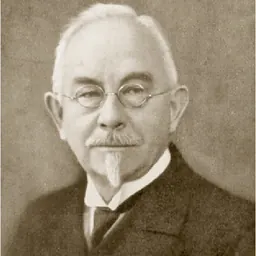
Mustafa Wahbi Tal (; 25 May 189924 May 1949), also known by his pen name Arar , was a Jordanian poet, writer, teacher and civil servant, widely regarded as Jordan's most prominent poet and among the best-known Jordanian poets among Arab readers.
Born in Irbid in the Ottoman Empire on 25 May 1899, Tal completed his elementary education in his hometown, later leaving to complete his high school education in Damascus. His rebellious and stubborn temperament would appear as early as his high school years in Damascus, when he would be exiled several times by the Ottoman authorities for participating in school strikes. In his adulthood, Tal would be imprisoned and exiled several times for democratic activism or for insulting high-ranking officials by the governments of the Arab Kingdom of Syria, and, after its downfall, by the government of the Emirate of Transjordan.
His first job was in Karak, Transjordan, as an Arabic literature teacher. Later Tal would be appointed as Administrative Governor of Wadi Al-Seer and Shoubak in the 1920s. After earning a law degree in 1930, he would hold several positions in the judiciary before being appointed as Chief of Protocol at the Emir's Court. Tal then was laid off from his job and imprisoned for 70 days after an altercation with a Prime Minister serving during that time. This would be the latest in a series of exiles and imprisonments he faced throughout his life. Tal became desperate and his alcoholism worsened, contributing to his death on 24 May 1949.
Tal's relationship with the nomadic Dom (gypsy) community in Transjordan, which are called Nawar in Arabic, influenced much of his poetry, whereas he named his only poetry collection, Ashiyyat Wadi Al-Yabis, in reference to the festive nights he spent with the Nawar and to a Nawari woman he loved. Tal found justice, equality and lack of classism among the Nawari community, which he thought was lacking in Transjordan's cities. He reflected these views in many of his poems, as well as venerating the lands of Jordan, and at other times vehemently criticizing its government's policies. He also wrote poems dedicated to criticizing British policies which supported Zionism in Palestine along with British colonial officers in Transjordan, while other poems he wrote venerated alcohol and were about women.
Tal is Jordan's most celebrated poet. The country's most illustrious literary award is named after him, and his hometown of Irbid holds an annual literary festival in his name. The house where he used to live in Irbid was turned into a museum that welcomes hundreds of visitors annually. He was married four times, two of which ended in divorce. He had ten children. His eldest son Wasfi Tal was Jordan's Prime Minister for several tenures during the late 1960s and early 1970s until his assassination in 1971.
Biography Early life Mustafa Wahbi Tal was born in Irbid, Syria Vilayet, Ottoman Empire on 25 May 1899 to an illiterate father and a mother that was "blasphemously stubborn" according to his friend and biographer Ya'qoub Al-Oudat. He was named Mustafa as namesake of his grandfather and Wahbi was added to his birth name per Ottoman tradition. From a young age, Tal suffered from Rhotacism, a speech impediment characterized in the inability to pronounce 'r' sounds.
Participation in Adwan Rebellion
In May 1923, Tal was appointed as Administrative Governor of the Wadi Al-Seer area west of Transjordan's capital Amman. He remained in his job until being fired on 8 July 1923, the day in which he was arrested with Auda Qoussous, Shamsudeen Sami, Saleh Najdawi, Ali Sharkasi and other Transjordanian intellectuals who sided with the Adwan tribe during the Adwan Rebellion.
In another instance, he wrote a long poem titled Al-Oubodyeh Al-Kobra (The Great Slavery) chastising the Irbid Attorney General after he expelled the Nawari community leader Mohammad Al-Fahel (nicknamed Al-Haber) from the courthouse because of his torn and dirty clothes:
Opposition to the first Anglo-Transjordanian treaty Tal making a speech that discussed Transjordan's political and economic status and warned attendees of British policies in support of Zionism in Palestine which, according to him, aimed to turn it into a Jewish homeland that neglected the rights of the Arab natives during the Third National Conference on 25 May 1930.
In 1927, he was appointed principal of Al Husn School for seven months before resigning due to his active opposition to the Anglo-Transjordanian treaty of 1928, which gave Britain sweeping powers over the Transjordanian state. The government of Transjordan accused Tal of inciting opposition to the treaty among the inhabitants of Ajloun. The Governor of Ajloun then sentenced him to house arrest in Amman for a few months. After he was released, Tal made a speech at the Third National Conference highlighting the Transjordan's political and economic status and warned attendees of British policies in support of Zionism in Palestine which, according to him, aimed to turn it into a Jewish homeland that neglected the rights of the Arab natives. The conference concluded with demanding an elected legislature that holds the Emir's government accountable.
As civil servant In 1928, Tal was preparing to publish his own newspaper under the name of Al-Anba''' (The News). He wrote most of its articles before he was banned from publishing them. Later he was appointed as Administrative Governor of Shoubak for the second time. In 1931, Tal was exiled to Aqaba for four months because of an article he published in Al-Karmil. He befriended an Afghan sheikh there, where Tal would often drink alcohol and the sheikh tea together. Tal was released after he wrote a poem apologizing to Prime Minister Abd Allah Siraj.
Tal also wrote poems criticizing the British colonial officials in Jordan including Frederick Peake and Glubb Pasha, Transjordan's Arab Legion commanders, and Lieutenant Colonel Henry Cox, the British Representative. In addition to Tal, Emir Abdullah was also a poet and the two men were one of the leading poets of their day, responsible for formulating alternate visions of the country through their poetry.
Many of Tal's poems were about women and alcohol:
Tal wrote essays about the political scene in Transjordan and Palestine. He corresponded with several influential figures including: Sharif Hussein bin Ali, Emir Abdullah, Jordanian activist Suleiman Nabulsi, Palestinian leader Haj Amin Al-Husseini, Egyptian Prime Minister Mostafa El-Nahas, American British historian Bernard Lewis and to several newspaper editors in Egypt, Syria and Palestine. and one of the most well-known Jordanian poets among Arab readers. The Yarmouk University in his hometown of Irbid named Jordan's most prestigious literary award after him, the Arar Prize for Literary Creativity''. Irbid holds an annual poetry festival named after him. The Arar Literary Forum holds cultural events in Tal's house in Irbid, which was turned into a museum that welcomes hundreds of visitors annually.
Personal life
Tal was married four times and had ten children. His first marriage was to Munifa Baban, a Kurdish woman he met during his time in Arapgir, Turkey. They were married on 25 November 1918. When Tal left his job in Arapgir and returned to his hometown of Irbid, he left his wife at his uncle's house. His first son Wasfi was born there. Wasfi later relocated with his mother to live at his father's house in Irbid when he was four years old. The couple would later have five more children: Mou'een, Maryoud, Sa'eed, Shaker and Abdallah. Mustafa Wahbi Tal and his son Wasfi Tal during the late 1930s. Wasfi would later become the Prime Minister of Jordan Tal also married Shoma Harb Al-Dahiyat in 1925. The day after their marriage he left to a faraway village to arbitrate a tribal dispute and sent her divorce papers from there. He was married again to Oufa' Al-Jabr, a Bedouin woman, in 1933 and the couple had four children: Safieh, Sayel, Alieh and Taha. He married Adwieh 'Araj, a Circassian woman, in 1943 and was divorced shortly after.
When Tal was jailed and expelled from his job as Chief of Protocol in the Emir's Court in 1942 because of an altercation with then Prime Minister Tawfik Abu Al-Huda, his eldest son Wasfi was outraged and sought an interview with the Prime Minister who refused to see him. Wasfi lost his temper in the corridor outside the Prime Minister's office and launched into a tirade of abuse and curses which were overheard by Abu Al-Huda. He was jailed with his father for three months and lost his job as a chemistry teacher. Wasfi later became Jordan's Prime Minister for several tenures during the late 1960s and early 1970s until his assassination in 1971. Mustafa's other son Sa'eed would later become Deputy Prime Minister of Jordan during the 1990s.
Don’t just read it —
keep it.
Full-length biographies made to live with: read them, listen on the way to work, watch them tonight.
- E-book
- Audio
- Video
Instant download · yours to keep · every purchase keeps this site free
Important facts
Family & relationships
People in Mustafa Wahbi al-Tal's life
Named in this biography and alive at the same time


Related people
Same field, nearest in time




Contemporaries
People whose lives overlapped Mustafa Wahbi al-Tal's


Frequently asked questions
Who was Mustafa Wahbi al-Tal?
Jordanian teacher, poet and civil servant (1899–1949)
When was Mustafa Wahbi al-Tal born?
Mustafa Wahbi al-Tal was born on 25 May 1897 in Irbid.
When did Mustafa Wahbi al-Tal die?
Mustafa Wahbi al-Tal died on 24 May 1949 in Amman.
What was Mustafa Wahbi al-Tal's occupation?
Mustafa Wahbi al-Tal was a politician, poet and writer.
What nationality was Mustafa Wahbi al-Tal?
Mustafa Wahbi al-Tal was Turkish and Jordanian.
Sources & further reading
· Wikipedia: Mustafa Wahbi al-Tal
Cite this page
APA: Biography.guide. (2026). Mustafa Wahbi al-Tal. https://biography.guide/mustafa-wahbi-al-tal/
MLA: "Mustafa Wahbi al-Tal." Biography.guide, https://biography.guide/mustafa-wahbi-al-tal/.
Chicago: "Mustafa Wahbi al-Tal." Biography.guide. https://biography.guide/mustafa-wahbi-al-tal/.
Data last updated: 2026-09-20 · Spot an error? Report a correction.
Page generated 2026-09-27 05:21 UTC