
Mushahid Ahmad Bayampuri
Pakistani Bengali Muslim theologian
About Mushahid Ahmad Bayampuri
Lived 1907 – 1971 (aged 63–64). Mushahid Ahmad Bayampuri was a Pakistani.
Mushahid Ahmad Bayampuri (, ; 1907–1971) was a late-twentieth century Bengali Islamic Hadith scholar, teacher, writer, jurist, orator and politician. He is often described by Bangladeshi scholars as the Bukhari of Bengal, and Shaykh al-Islam. Bayampuri served as a member of the National Assembly of Pakistan, the professor of Hadith studies at Sylhet Government Alia Madrasah, the principal of Darul Hadith Kanaighat and the president of the Eastern Sylhet Independent Religious Arabic Madrasah Education Board. His numerous works, which covered a range of disciplines in Islamic literature such as Hadith, Tafsir and the political aspects of Islam, were written in the Arabic, Bengali and Urdu languages. Some of his books are part of syllabic studies in the city of Madinah and under the .
Early life and education Muhammad Mushahid Ahmad was born on a Friday in Muharram 1327 AH (1907 CE), in the village of Bayampur in Kanaighat, Sylhet District, a village known for its principled islamic adherence, religious upbringing and home to many scholars. Both of his parents were Sunni Bengalis. His father, Alim bin Danish Mian, was a qari, while his mother, Sufia Begum, was a hafiza known for her piety and modesty. She played a prominent part in her son’s upbringing and early education. He was the second of their three sons, and they were raised by their mother following the death of his father during his childhood.
He began his career as a teacher after completing his studies at the madrasa but returned to education later in North India. He studied for five years at the Madrasa Aliya of Rampur State and two years at the Alia Madrasa of Meerut. He wrote two books in this period, which were published under the name of his teacher, one of which was an explanation of Ibn Hajib’s kaafiyah, which was titled Idah al-Matalib. Although he went back to teaching in Bengal after these seven years, Mushahid later enrolled at the Darul Uloom Deoband in Saharanpur in 1936, where he studied Hadith under Hussain Ahmad Madani and other scholars, graduating with a degree whilst getting the highest mark in Hadith studies after one and a half years of studying there. His study on the Sahih of Imam Bukhari was so exceptional that it remarkably demonstrated his depth of knowledge and impressed his seniors, and it is reported that his examination answers on the topic where kept by the university.
In the certificate given to him, Shaykh Hussain Ahmad Madani wrote as a tazkiyyah (praise): “… Mr Muhammad Mushahid, a resident of Kanaighat in Sylhet district, has obtained the highest marks in the highest Jamaat of Hadith of Darul Uloom Deoband, where there were 180 students with special qualifications from outside India and from every district of India. He has been given various awards for being the first in the Jamaat. Allah Almighty has bestowed upon him many great and innate qualities. His intellect is very sharp and bright, his character is advanced and noble, and I have no doubt that he will be successful if given any teaching position
Career Bayampuri briefly taught at the Lalarchak Primary School before spending seven years in North India. He gave Hadith studies classes at the Alia madrasas of Badarpur and Rampur. Prior to his studies at Deoband, he taught at his local Lalarchar Rahmania Madrasa too.
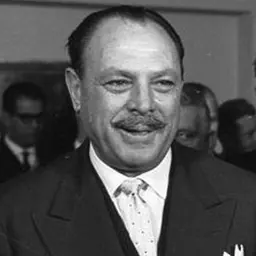
During his term, he felt that the strength of Islamic parties were even close to the strength needed to change the political landscape. As a result, he joined Ayub Khan's Convention Muslim League for the greater good. He benefitted by taking grants from the government for funding Kanaighat Darul Hadith and the Akuni Madrasa of Sylhet. He lost his seat at the 1965 basic elections to Ajmal Ali Choudhury. At the 1970 Pakistani general elections, Bayampuri competed for the seat as a Jamiat Ulema-e-Islam candidate but failed for a second time.
Works Mushahid Ahmad has written a number of works in Arabic, Urdu and Bengali: al-Fatḥ al-Karīm fī Siyāsah an-Nabī al-Amīn (1948, Arabic and Urdu) (Translated into Bengali by Abu Saeed Muhammad Omar Ali as Islamer Raśṭrīyô O Ôrthônoitik Uttôradhikar) al-Laṭāʾif ar-Rabbāniyyah fī al-Āyāt al-Qurʾāniyyah īdah al-Matālib Sharh Kāfiyatu Ibn Hajib (first published under his teacher) al-Ziyadat al-Imānu wa Nuqsānuh Mas’alah Qira’a Khalf al-Imām Mas’alah Ru’ya al-Hilāl al-Furqān bayna al-Ḥaqq wa al-Bāṭil fī ʿIlm at-Taṣawwuf wa al-Iḥsān al-Furqān bayna Awliyāʾ ar-Raḥmān wa Awliyāʾ ash-Shayṭān al-Burhān fī Istiḥbāb Samāʿ al-Qurʼān Dawa al-Haqq (Refutation of Darul Ulum Karachi’s Fatwa on Qiyam al Layl) Śôtter Alo (Bengali, 2 volumes) Iẓhār-e-Ḥaqq
Personal life Bayampuri married 10 times and is the father of 11 children.
He completed Hajj three times. He became well known on an extremely broader scale for his scholarship and knowledge on Hadith by Saudi Arabian religious authorities in one of these occasions. During his presence in a Hajj sermon, one of the Imam’s of Makkah and Khatib had made mention of a prophetic narration in which he had erred, it is reported that the Imam had narrated a Hadith from Al-Tabarani whilst mistakenly attributing it to Musnad Ahmad ibn Hanbal, consequently from the crowd, Bayampuri stood up amongst everyone and corrected him. After witnessing this, the Khatib was impressed with the immense knowledge Bayampuri had possessed of the prophetic tradition. After finding out the knowledge Bayampuri possessed in Hadith, the Saudi Arabian Government enabled the King of Saudi Arabia to have the state constitution reviewed by Bayampuri to see where it could be amended. Bayampuri suggested that it be amended at 14 places.
He was requested by the government of Saudi Arabia to stay in the country and take up teaching positions as his knowledge would be of immense benefit. He was also approached by a group of people from the renowned Azhar University of Egypt for the same request. However, after performing istikhara, he had decided not to take up the offers and that it would be befitting for him to go back to his homeland and carry on teaching there. Bayampuri’s grave was similarly reported to have emitted strong fragrances on two separate occasions after his death as well with locals witnessing, once in 2012, and once in 2020, to which the news spread to various regions of Bangladesh, and scholars approving of such miracle.
Bayampuri is widely remembered and often mentioned in religious lectures by Islamic Scholars in many Islamic seminaries and lectures.
A bridge on the Surma River in Kanaighat Upazila is named after Bayampuri. He has been praised by numerous scholars and is mentioned in various books. During Bayampuri's return from Assam to Sylhet, Hussain Ahmad Madani mentioned that "an enlightenment is going towards Sylhet". Abdul Karim Shaykh-e-Kouria mentioned that if all of the ilm of the scholars of Sylhet District were put together, they would match only up to the knee of Bayampuri.
His son, Sheikhzada Faruq Ahmad, contested in the 1973 Bangladeshi general elections, losing only to Habibur Rahman (Tota Mia).
Don’t just read it —
keep it.
Full-length biographies made to live with: read them, listen on the way to work, watch them tonight.
- E-book
- Audio
- Video
Instant download · yours to keep · every purchase keeps this site free
Important facts
People in Mushahid Ahmad Bayampuri's life
Named in this biography and alive at the same time





Contemporaries
People whose lives overlapped Mushahid Ahmad Bayampuri's



Frequently asked questions
Who was Mushahid Ahmad Bayampuri?
Pakistani Bengali Muslim theologian
When was Mushahid Ahmad Bayampuri born?
Mushahid Ahmad Bayampuri was born in 1907 in Assam Province, British Raj, Kanaighat, Sylhet District.
When did Mushahid Ahmad Bayampuri die?
Mushahid Ahmad Bayampuri died on 7 February 1971 in Kanaighat.
What nationality was Mushahid Ahmad Bayampuri?
Mushahid Ahmad Bayampuri was Pakistani.
Sources & further reading
· Wikipedia: Mushahid Ahmad Bayampuri
· DBpedia: Mushahid Ahmad Bayampuri
Cite this page
APA: Biography.guide. (2026). Mushahid Ahmad Bayampuri. https://biography.guide/mushahid-ahmad-bayampuri/
MLA: "Mushahid Ahmad Bayampuri." Biography.guide, https://biography.guide/mushahid-ahmad-bayampuri/.
Chicago: "Mushahid Ahmad Bayampuri." Biography.guide. https://biography.guide/mushahid-ahmad-bayampuri/.
Data last updated: 2026-09-20 · Spot an error? Report a correction.
Page generated 2026-09-27 05:02 UTC