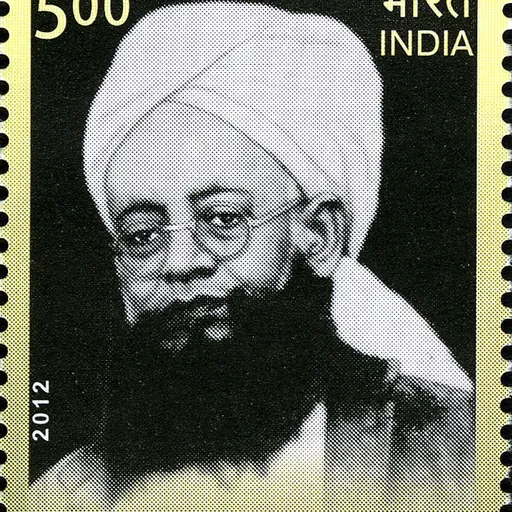
About Hussain Ahmad Madani
Lived 1879 – 1957 (aged 77–78). Hussain Ahmad Madani was an Indian ulema, imam, politician and freedom fighter.
Husain Ahmad Madani (; 6 October 1879 – 5 December 1957) was an Indian Islamic scholar, serving as the principal of Darul Uloom Deoband in Uttar Pradesh. He was among the first recipients of the civilian honour of Padma Bhushan in 1954.
Madani played a key role in cementing the Congress-Khilafat Pact in the 1920s and "Through a series of lectures and pamphlets during the 1920s and 1930s, Madani prepared the ground for the cooperation of the Indian Ulama with the Indian National Congress."
His work Muttahida Qaumiyat Aur Islam was published in 1938 and advocated for a united country, in opposition to the partition of India.
Early life and ancestry
Hussain Ahmad Madani was born in Uttar Pradesh in a small town named Bangarmau in district Unnao. When he was born his father worked as a teacher in Bangarmau. His family was originally from Tanda in district Ambedkar Nagar. His father's name was Sayyid Habibullah, who was a descendant of the Islamic prophet Muhammad through Husayn ibn Ali down 35 generations. Husayn's 16th generation down descendant Sayyid Nurul Haq was given 24 villages in Tanda by the Emperor of Delhi. Eventually through time, some of this land was inherited by Sayyid Habibullah (thirteen villages as of 1757).
Career The Madani Square monument in Sylhet, Bangladesh, built in 2019 commemorating Hussain Ahmad Madani. After graduating from the Darul Uloom Deoband, he migrated to Medina with his family. He began teaching Arabic grammar, usul al-fiqh, usul al-hadith, and Quranic exegesis. He spent 18 years teaching these various Islamic sciences in Medina. He was then appointed as head teacher and "Shaikhul Hadith" of Darul Uloom Deoband. He served in this position for approximately 28 years. and predominantly due to this, a large number of Muslims from Eastern U.P. and Bihar declined to migrate to Pakistan at the time of 1947 independence of Pakistan and the Partition of India. He became the President of the Jamiat Ulema-e-Hind, a post he held until his death in 1957. (He also held the post of Shaikhul Hadith at Darul Uloom Deoband till his death.) He was of the view that in the present times, nations are formed on the basis of homeland (geographic basis) and not on ethnicity and religion. On the issue of whether the identity of a nation depended upon its land or religion, there was an interesting debate between Husain Ahmad Madani and Allama Iqbal. Allama Iqbal, a known pan-Islamist and a leading pro-Pakistan figure of the time, had at first developed differences of opinion with Husain Ahmad Madani over this issue. Later a mutual friend of both these leaders, a person named Taloot intervened by writing letters to both Iqbal and Madani. Taloot was able to bring more clarity to the circumstances and the intent of Madani in stating what he originally had stated about forming new nations and homelands. Taloot's intervention was successful and eventually both Iqbal and Madani were able to understand each other better. It resulted in a reconciliation between the two Muslim leaders and Iqbal finally wrote a personal letter saying that he respected Maulana Husain Ahmad Madani's service and devotion to Islam as much as any other Muslim despite their political differences. Husain Ahmad Madani himself was reportedly quoted as saying, "All should endeavor jointly for such a democratic government in which Hindus, Muslims, Sikhs, Christians and Parsis are included. Such a freedom is in accordance with Islam." ... ."that Muslims could live as observant Muslims in a religiously plural society where they would be full citizens of an independent, secular India." This was due to Sylhet being incorporated into the Assam Province, requiring Islamic students to go to Dhaka or Calcutta for appropriate learning such as Sihah-e-Sittah. Thus, he came to Sylhet for 2 years due to the insistence of the people of Sylhet, despite offers of teaching from other places. In December 1924, Madani entered Sylhet and started teaching at the Khelafat Building Madrasa near Nayasarak Masjid in Manik Pirer Tila, Sylhet. In the daily five-hour class, Madani would teach books such as Sharh Nukhbatil Fikar, Al-Fawz al-Kabir, Jami Tirmidhi and other Sihah-e-Sittah. He also immersed himself in tasawwuf in Sylhet. Three years later, he returned to Sylhet and committed to his followers that he would visit Sylhet every Ramadan. Madani continued this annual practice up until the Partition of India in 1947.
Literary works Composite Nationalism and Islam Naqsh-e-Hayat (Autobiography of Maulana Madni). Ash-Shihabus Saqib (Refutation of Ahmed Raza Khan Barelvi) Maktubat Shaykh al-Islam (over 2000 pages) Safar Nama Shaykhul Hind Mahmud al-Hasan (related to Silk Letter Movement) Madani Square, structure named after his efforts and hard work in Sylhet, Bangladesh.
Death and legacy
Madni died on 5 December 1957. His funeral prayer was led by Zakariyya Kandhlawi. Urdu author Nizamuddin Asir Adrawi has written his biography, Ma'asr Shaykh al-Islam, which is published by Darul Mu'allifeen, Deoband. A technical college in Saharanpur was named Madani Technical Institute after him.
Madani Technical Institute Madani Technical Institute (MTI), named after Madani and founded in 1991, is a government-recognised technical college situated in Deoband, Saharanpur, Uttar Pradesh, India. The institute's curriculum holds approval from both the Directorate General of Employment and Training (DGET) and the National Council on Vocational Training (NCVT). Presently, MTI offers courses in Draughtsman (Civil), Electrician, Electronics Mechanic, Fitter, and Wireman.
Don’t just read it —
keep it.
Full-length biographies made to live with: read them, listen on the way to work, watch them tonight.
- E-book
- Audio
- Video
Instant download · yours to keep · every purchase keeps this site free
Important facts
People in Hussain Ahmad Madani's life
Named in this biography and alive at the same time
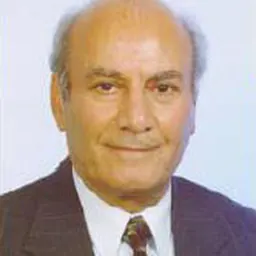




Related people
Same field, nearest in time
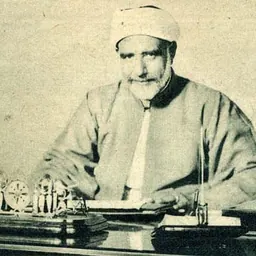
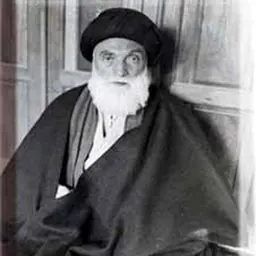
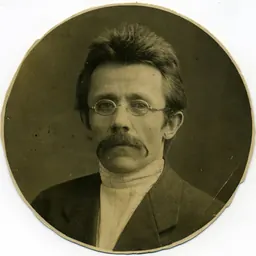

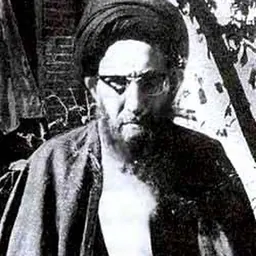
Contemporaries
People whose lives overlapped Hussain Ahmad Madani's
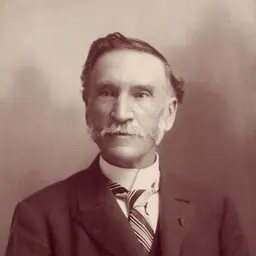


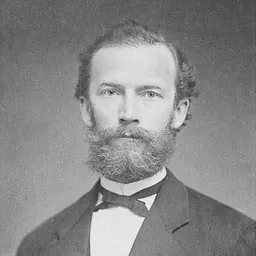

Frequently asked questions
Who was Hussain Ahmad Madani?
Indian freedom struggle leader and scholar
When was Hussain Ahmad Madani born?
Hussain Ahmad Madani was born on 6 October 1879 in Unnao district, Uttar Pradesh.
When did Hussain Ahmad Madani die?
Hussain Ahmad Madani died in 1957 in Deoband.
What was Hussain Ahmad Madani's occupation?
Hussain Ahmad Madani was an ulema, imam, politician and freedom fighter.
What nationality was Hussain Ahmad Madani?
Hussain Ahmad Madani was Indian.
Sources & further reading
· Wikipedia: Hussain Ahmad Madani
· DBpedia: Husain Ahmad Madani
Cite this page
APA: Biography.guide. (2026). Hussain Ahmad Madani. https://biography.guide/hussain-ahmad-madani/
MLA: "Hussain Ahmad Madani." Biography.guide, https://biography.guide/hussain-ahmad-madani/.
Chicago: "Hussain Ahmad Madani." Biography.guide. https://biography.guide/hussain-ahmad-madani/.
Data last updated: 2026-10-02 · Spot an error? Report a correction.
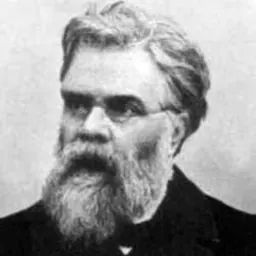
Portrait: Wikimedia Commons · author & licence
Page generated 2026-10-03 09:35 UTC