
About Münir Ertegün
Lived 1883 – 1944 (aged 60–61). Münir Ertegün was a Turkish diplomat.
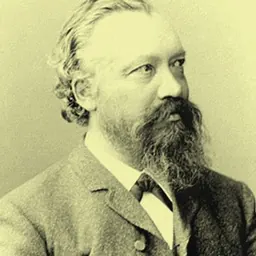
Mehmet Münir Ertegün (1883 – 11 November 1944) was a Turkish legal counsel in international law to the "Sublime Porte" (imperial government) of the late Ottoman Empire and a diplomat of the Republic of Turkey during its early years. Ertegün married Emine Hayrünnisa Rüstem in 1917 and the couple had three children, two of whom were Nesuhi and Ahmet Ertegün, the brothers who founded Atlantic Records and became iconic figures in the American music industry.
Life and career
Born in Istanbul to a civil servant father, Mehmed Cemil Bey, and a mother Ayşe Hamide Hanım, who was a daughter of Sufi shaykh İbrahim Edhem Efendi, he studied law at Darülfünûn-u Şahâne (دار الفنون شهانه), now Istanbul University, and graduated in 1908. He was a legal counsel for the Ottoman Ministry of Foreign Affairs, when he saw the birth of his first son, Nesuhi, on 26 November 1917, in Constantinople (now Istanbul), during the First World War. Taking part in an Ottoman delegation with a mission to seek reconciliation with the Nationalists in Ankara, by the end of 1920, changed his destiny. While the two Ottoman ministers heading the delegation returned to Istanbul after not achieving an understanding with the revolutionaries led by Mustafa Kemal Pasha he chose to join the National Struggle and remained in Ankara, leaving behind his young wife and three-year-old son, Nesuhi. and the United States (1934–1944).
As the Republic's ambassador to Washington, Ertegün opened his embassy's parlors to African American jazz musicians, who gathered there to play freely in a socio-historical context which was deeply divided by racial segregation at the time. Ertegün worked also on his government's orders to remove any mention of the Armenian Genocide in American popular culture. In 1934, he led a ferocious and ultimately successful campaign to quash a film adaptation by MGM of Austrian writer Franz Werfel's Forty Days of Musa Dagh, a historical dramatization of an episode from the genocide. He became the Dean of the Diplomatic Corps in May 1944. He held this last post until he died in Washington, D.C., of a heart attack in November of the same year.
In April 1946, a year after World War II had ended, his body was carried back to Istanbul aboard the USS Missouri and buried in the garden of Sufi tekke, in Sultantepe, Üsküdar. near his shaykh grandfather İbrahim Edhem Efendi, who was once the head of the Tekke. (His two sons Nesuhi and Ahmet Ertegün also rest there.)
When Ertegün died, there was not yet a mosque in Washington, D.C., at which his funeral could be held. The Islamic Center of Washington was built as a result.
He also had a daughter named Selma Göksel.
Don’t just read it —
keep it.
Full-length biographies made to live with: read them, listen on the way to work, watch them tonight.
- E-book
- Audio
- Video
Instant download · yours to keep · every purchase keeps this site free
Important facts
People in Münir Ertegün's life
Named in this biography and alive at the same time


Related people
Same field, nearest in time

Contemporaries
People whose lives overlapped Münir Ertegün's

Frequently asked questions
Who was Münir Ertegün?
Turkish diplomat (1883–1944)
When was Münir Ertegün born?
Münir Ertegün was born in 1883 in Istanbul.
When did Münir Ertegün die?
Münir Ertegün died on 11 November 1944 in Washington, D.C..
What was Münir Ertegün's occupation?
Münir Ertegün was a diplomat.
What nationality was Münir Ertegün?
Münir Ertegün was Turkish.
Sources & further reading
Cite this page
APA: Biography.guide. (2026). Münir Ertegün. https://biography.guide/munir-ertegun/
MLA: "Münir Ertegün." Biography.guide, https://biography.guide/munir-ertegun/.
Chicago: "Münir Ertegün." Biography.guide. https://biography.guide/munir-ertegun/.
Data last updated: 2026-09-20 · Spot an error? Report a correction.
Page generated 2026-09-27 05:26 UTC