
About Mulla Effendi
Lived 1863 – 1942 (aged 78–79). Mulla Effendi was an ulema, philosopher, scholar, astronomer and politician.
Mulla Abu Bakr Effendi, also Mulla Effendi (also spelled Mala Fandi, , , Abu Bakr IV, or Küçük Mulla (; 1863 - December 31, 1942), was a senior Islamic philosopher, scholar, astronomer, politician, and a prominent personality from Erbil, Ottoman Iraq (now in Kurdistan Region of Iraq).
Mulla Effendi was born into a respected and intellectual family of Islamic scholars who settled in Erbil in the 16th century. He spent most of their life learning and teaching Islamic studies at the Great Mosque at the Citadel of Erbil. His family was well known for their piety and learning and influential throughout Kurdistan for a hundred years before him.
After being educated at the Great Mosque, Mulla Effendi like his ancestors spent most of his time teaching and learning there. Throughout his life, he granted more than hundred scientific licenses for scholars from different parts of Iraq, Iran, and the Middle East in general, and sponsored the daily living and study costs of his students. He also contributed to establishing many schools and mosques in Arbil and in many different villages.
He became one of the most influential figures in Kurdistan in the late 19th century and until his death. He had an important role in disengaging tribal conflicts during the Ottoman rule where he received the highest recognition by the Ottoman Sultan Abdul Hamid II. Throughout the British Mandate and after the creation of Iraq, he played a prominent role in inspiring and directing public opinion, as well as being deeply involved in the political process of the region. In 1924, he strongly urged appending Mosul Wilayah to Iraq in his meeting with the members of the League of Nations commission. He also advocated for the rights of the Christian inhabitants of Ankawa. In the events of 1941, the Iraqi royal family chose his house as the most suitable and safe for their stay, and when King Faisal II returned, he awarded him "Wisam al-Rafidain" of the first order as a reward for his services for his country. He also received many honors and tributes both during and after his life.
Early life and family
Mulla Abu Bakr Effendi's family is traced back to a known family that emigrated from Iran along with other families during the 16th century at the time of Shah Ismail I Safawi of Iran and settled in Arbil. The reason for the emigration was due to differences between the chief leader of the family and the ruling Shah.
Works
Ottoman Empire During the Ottoman Empire, Mulla Effendi's family had a significant role in disengaging public conflicts and settling disputes between Kurdish tribes. At one time, Sultan Abdul Hamid II requested Mulla Effendi's help to settle a conflict between two large Kurdish tribes. Mulla Effendi used his influence to reconcile the two tribes.
For his achievement, Sultan Abdul Hamid II granted him the "Servant of the Two Shrines" medal. It was considered the second highest rank Order of the Ottoman Empire.
British mandate During the beginning of the British mandate, following the arrival of the British troops into Iraq, the country was in a state of anarchy. Mulla Effendi gathered the tribal leaders and urged them to refrain from taking any action that would compromise the stability of the country. Lieut.-Colonel Sir Rupert Hay, the British Political Officer of Arbil, and author of "Two Years in Kurdistan, Experiences of a Political Officer 1918-1920", described Mulla Effendi's role in inspiring and directing the public opinion, and in talking to the tribal chiefs over to a reasonable attitude. He described Mulla Effendi in his book as the following:
Also, in his book, he wrote:
An aerial view of Citadel of Arbil in January 2008 shows the Great Mosque at the center. The Great Mosque is considered to be the oldest mosque in Arbil. It is also known as the White Mosque, Citadel Mosque, or Mulla Effendi Mosque.thumb
Gertrude Bell had often visited Mulla Effendi at his house in Badawa, and mentioned him in her letters to her father published in 1927, a year after her death by her stepmother in two volumes.
A.M. Hamilton, who was notable for building the Hamilton Road through Kurdistan, described him in his book published in 1937 "Road through Kurdistan". Also, Lieut.-Colonel Sir Wallace A. Lyon, the predecessor of Lieut.-Colonel Sir William Rupert Hay, described Mulla Effendi's status in his autobiography (1918–44):
In 1924 at the time when the dispute between Iraq and Turkey over the control of the former Ottoman province of Mosul was under discussion by the League of Nations, the members of the League of Nations Commission visited Mulla Effendi at his house in Badawa to discuss the issue with him. At the meeting, he strongly supported annexing Mosul to Iraq and stressed the rights of the Kurdish population. King Faisal I was quoted as describing Mulla Effendi to his brother by saying:
Ankawa Christians
In the early 1920s, a few groups threatened to take over the lands of the indigenous Christian inhabitants of Ankawa. The Archbishop and town chiefs went to meet Mulla Effendi at the Great Mosque to explain the situation to him and make him aware of rising tensions in Ankawa. Mulla Effendi immediately gathered the tribal leaders in Arbil and informed tribesmen that he would consider any attack against Christians as an attack against him. With those words, he prevented any further attempts of taking over Christian lands in Ankawa.
1941 Coup d'etat During the last days of the Anglo-Iraqi War, before British troops entered Baghdad, and before the collapse of Rashid Ali Al-Gaylani government, Rashid Ali phoned Mulla Effendi and informed him that he had chosen his house as a safe haven for the royal family to stay until the conflict ended. King Faisal II, Queen Alia, members of the royal family, and court escorts and servants left Baghdad on May 28, 1941, to stay at Mulla Effendi's house at Badawa. He opened his house to them and moved his family to another house at the citadel. He invited tribal leaders to Badawa to express solidarity with the royal family. On June 3, 1941, two days after the return of Regent Abd al-Ilah from Habbaniyah to Baghdad, the royal family left Badawa and returned to Baghdad. Many famous poets praised Mulla Effendi in their poems, including Sheikh Raza Talabani, Nemat-Allah al-Nema, and Abdul-Rahman al-Bana. The Kurdistan Regional Government named a street, a school, and a public health center in Arbil city after him.
Don’t just read it —
keep it.
Full-length biographies made to live with: read them, listen on the way to work, watch them tonight.
- E-book
- Audio
- Video
Instant download · yours to keep · every purchase keeps this site free
Important facts
People in Mulla Effendi's life
Named in this biography and alive at the same time

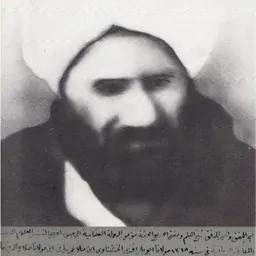


Related people
Same field, nearest in time
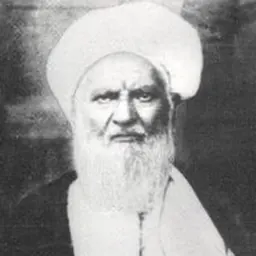


Contemporaries
People whose lives overlapped Mulla Effendi's
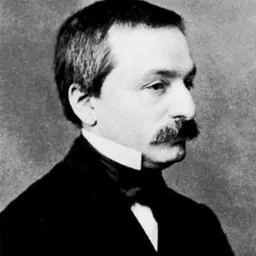



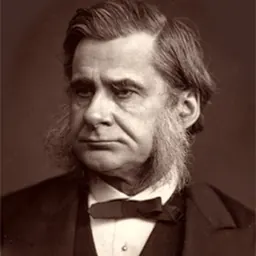
Frequently asked questions
Who was Mulla Effendi?
Kurdish astronomer
When was Mulla Effendi born?
Mulla Effendi was born in 1863 in Erbil.
When did Mulla Effendi die?
Mulla Effendi died on 31 December 1942 in Erbil.
What was Mulla Effendi's occupation?
Mulla Effendi was an ulema, philosopher, scholar, astronomer and politician.
What nationality was Mulla Effendi?
Mulla Effendi's recorded nationality: Ottoman Iraq, Mandatory Iraq, Kingdom of Iraq.
Sources & further reading
Cite this page
APA: Biography.guide. (2026). Mulla Effendi. https://biography.guide/mulla-effendi/
MLA: "Mulla Effendi." Biography.guide, https://biography.guide/mulla-effendi/.
Chicago: "Mulla Effendi." Biography.guide. https://biography.guide/mulla-effendi/.
Data last updated: 2026-09-20 · Spot an error? Report a correction.
Page generated 2026-09-27 05:20 UTC