
Muḥammad Nāṣir al-Dīn al-Albānī
Albanian Islamic scholar
About Muḥammad Nāṣir al-Dīn al-Albānī
Lived 1914 – 1999 (aged 85). Muḥammad Nāṣir al-Dīn al-Albānī was a Syrian and Jordanian writer, university teacher, carpenter, watchmaker, theologian and muhaddith.
Muhammad Nasir al-Din al-Albani (born Muhamed Nasirudin Nexhati; 16 August 19143 October 1999), commonly known as al-Albani, was an Albanian Islamic hadith scholar (muhaddith), regarded as one of the prominent figures of modern Salafism. He was known for his rigorous re-evaluation of hadith literature and for rejecting adherence to traditional schools of jurisprudence. Al-Albani became a controversial yet-influential reformer within Sunni Islam.
He was twice imprisoned in Syria for his teachings and later lectured at the Islamic University of Madinah at the invitation of Ibn Baz. He authored over 200 works, including and . His reassessment of canonical hadiths drew both acclaim and criticism, earning him, among Salafis, the title 'al-Bukhari of the contemporary age '.
Early life and education al-Albani was born on 16 August 1914 in Shkodër, Albania, to a family adhering to the Hanafi school of Jurisprudence within Sunni Islam. His father, Nuh Nexhati, was a jurist of the Hanafi jurisprudence, trained in Istanbul. Fearing the rise of secularism during the rule of Zog I, Nexhati withdrew his son from school in Albania. In 1923, when al-Albani was nine years old, he and his family moved to Damascus, Syria, then under French occupation.
Education In Damascus, al-Albani began his religious studies under his father and several local scholars, where he was taught the Qur'an and other Islamic sciences. He learned Arabic at al-Is'af, a non-profit civil school, where he came to be known as ('the Albanian') after leaving formal schooling to focus on writing. He studied the renowned Hanafi text by al-Shurunbulali under Sa'id al-Burhani and also studied the book with his native Syrian teachers. During this time, he earned a modest living as a carpenter before joining his father as a watchmaker.
Despite his father's discouragement from pursuing hadith studies, al-Albani became interested in the field around the age of twenty, influenced by the Lebanese-born reformist scholar Muhammad Rashid Rida. Al-Albani studied under a number of scholars, including Muhammad Bahjat al-Baytar, 'Izz al-Din al-Tanoukhi, Sa'id al-Burhani, Ibn al-Baghi, who collectively encouraged his growing focus on hadith. His early scholarly work included a commentary on Mughni 'an haml al-asfar fi al-asfar fi takhrij ma fi al-ahya' min al-akhbar by Abd al-Rahim ibn al-Husain al-'Iraqi, which marked the beginning of al-Albani's scholarly career and brought him recognition within Damascus's religious circles.
Career Al-Albani began writing a series of lectures, books, and articles, some of which were published in al-Manar magazine. These include his opinions that mihrabs were a religious innovation (bid'ah), and that it was permissible to pray in a mosque while wearing shoes.
Critique of reformists and Islamists While he praised Muhammad ibn Abd al-Wahhab for his reformist dawah movement in Najd, he also criticized him for what he described as "exaggeration and harshness" and for being "weak in hadith and jurisprudence". Al-Albani was among the leading Salafi scholars who preached against what they considered the warped literalism of extremists. They believed that Muslims should focus on purifying their beliefs and practice and that, in time, "God would bring victory over the forces of falsehood and unbelief."
Al-Albani criticized influential Islamist thinkers such as Sayyid Qutb, whom he accused of theological deviation for holding the belief in the Oneness of Being. Al-Albani also accused Hassan al-Banna, the leader of the Muslim Brotherhood, of not being a religious scholar and holding positions contrary to the Sunna.
Criticism Al-Albani's works attracted criticism from a wide range of scholars. In the early 1970s, Syrian hadith scholar Abd al-Fattah Abu Ghudda published a tract against al-Albani's re-evaluation of Sahih al-Bukhari and Sahih Muslim. The Egyptian hadith scholar Mahmud Sa'id Mamduh, who studied with Abu Ghudda and 'Abdallah b. al-Siddiq al-Ghumari, wrote at least four rebuttals of al-Albani's work on different subjects. In 1987, Mamduh published a work entitled Alerting the Muslim to al-Albani's Transgression upon Sahih Muslim, in which he argued that:
The Syrian Ash'ari scholar Muhammad Said Ramadan al-Bouti, criticized al-Albani's anti-madhhab stance and his call for all Palestinians to leave the occupied territories, the West Bank, and Gaza. He wrote two rebuttals of al-Albani entitled Anti-Madhabism: the Dangers of an Innovation that Threaten the Sharia and Salafiyya: a Blessed Historical Period, Not a School of Fiqh. Other critics included Syrian hadith scholars Nur al-Din Itr and Abdullah Sirajuddin al-Husayni Lebanese Sufi scholar Gibril Fouad Haddad, who called al-Albani "the chief innovator of our time," and the Jordanian theologian Hasan b. Ali al-Saqqaf, who composed a book entitled Dictionary of al-Albani's Slanderings.
Works Emad Hamdeh has described al-Albani as a prolific scholar, authoring more than 200 works on hadith, jurisprudence, and creed. His notable writings include Silsalat al-Hadith as-Sahiha, Silsilat al-Ahadith al-Daifa wa al-Mawduwa and Sifat Salat al-Nabi min al-Takbir ila al-Taslim ka-Annaka Taraha ("Characteristics of the Prophet's prayer, from beginning to end as though you were witnessing it"). Many of his articles were published in al-Manar magazine, and his teachings inspired a generation of students in Syria, Jordan, and Saudi Arabia. His reassessment of canonical hadith collections such as Sahih al-Bukhari and Sahih Muslim sparked both praise and criticism, earning him among Salafis the epithet 'al-Bukhari of the contemporary age'. +
Formula for Salah (Prayer) Among al-Albani's most well known works is his book in which he redefined the proper gestures and formula of Muslim prayer (Salah) based strictly on hadith attributed to the Islamic prophet Muhammad. His conclusions diverged from the prescriptions of all established Sunni schools of jurisprudence.
Don’t just read it —
keep it.
Full-length biographies made to live with: read them, listen on the way to work, watch them tonight.
- E-book
- Audio
- Video
Instant download · yours to keep · every purchase keeps this site free
Important facts
People in Muḥammad Nāṣir al-Dīn al-Albānī's life
Named in this biography and alive at the same time




Related people
Same field, nearest in time

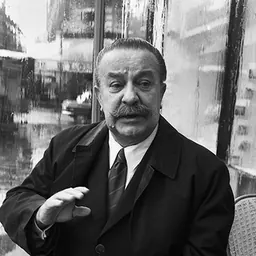


Contemporaries
People whose lives overlapped Muḥammad Nāṣir al-Dīn al-Albānī's

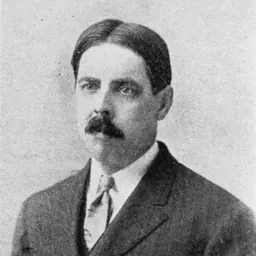


Frequently asked questions
Who was Muḥammad Nāṣir al-Dīn al-Albānī?
Albanian Islamic scholar (1914–1999)
When was Muḥammad Nāṣir al-Dīn al-Albānī born?
Muḥammad Nāṣir al-Dīn al-Albānī was born on 16 August 1914 in Shkodër.
When did Muḥammad Nāṣir al-Dīn al-Albānī die?
Muḥammad Nāṣir al-Dīn al-Albānī died on 3 October 1999 in Amman.
What was Muḥammad Nāṣir al-Dīn al-Albānī's occupation?
Muḥammad Nāṣir al-Dīn al-Albānī was a writer, university teacher, carpenter, watchmaker, theologian and muhaddith.
What nationality was Muḥammad Nāṣir al-Dīn al-Albānī?
Muḥammad Nāṣir al-Dīn al-Albānī was Syrian and Jordanian.
Sources & further reading
· Wikipedia: Muḥammad Nāṣir al-Dīn al-Albānī
Cite this page
APA: Biography.guide. (2026). Muḥammad Nāṣir al-Dīn al-Albānī. https://biography.guide/muhammad-nasir-al-din-al-albani/
MLA: "Muḥammad Nāṣir al-Dīn al-Albānī." Biography.guide, https://biography.guide/muhammad-nasir-al-din-al-albani/.
Chicago: "Muḥammad Nāṣir al-Dīn al-Albānī." Biography.guide. https://biography.guide/muhammad-nasir-al-din-al-albani/.
Data last updated: 2026-09-25 · Spot an error? Report a correction.
Page generated 2026-09-27 05:11 UTC