
About Muhammad Musa
Lived 1908 – 1991 (aged 82). Muhammad Musa was an Indian and Pakistani politician, military personnel and autobiographer.
Mohammad Musa Khan (20 December 1908 — 12 March 1991) was a Pakistani four-star general who served as the fourth Commander-in-Chief of the Pakistan Army from 1958 to 1966, for most of the regime of President Ayub Khan. He was then appointed Governor of West Pakistan by President Ayub and served from 1966 to 1969. He was appointed as the 10th Governor of Balochistan in 1985 and died in office in 1991.
Gaining commission as a Second lieutenant in the British Indian Army, Khan served with distinction in the Burma and North African campaigns as part of the Allied effort in World War II. Following the Partition of India in 1947, he opted for the Dominion of Pakistan, subsequently transferring his military service to the newly created Pakistan Army. He led a brigade against India during the First Kashmir War in 1947–1948, and eventually ascended the ranks to become the C-in-C of the Army after the 1958 coup d'état. Khan gained notability and public fame throughout Pakistan when he was in command of the Pakistan Army during the Second Kashmir War with India in 1965.
Khan retired shortly after the 1965 war and embarked on a career in national politics, after which he was appointed to serve as the Governor of West Pakistan, a position he held from 1966 to 1969. In 1985, he was appointed as the Governor of Balochistan and remained in office until his death in 1991.
Early life Musa was born on 20 October 1908 in Quetta, Baluchistan, British India to an ethnic Hazara family.
His family was sardar (lit. chief) of the Sang-e-Masha administration of Jaghori Hazara tribe and Musa was the eldest son of Yazdan Khan, who was the local Hazara tribal chief and himself a descendant of Sher Ali Khan, a Hazara elder from Jaghori, Ghazni.
Personal life Musa's younger brother, Mohammad Isa, was born in 1911 and died in September 1963. His third brother, Mohammad Ishaq, was born in 1914 and died in September 1974. Ishaq started his career as a Sub-Inspector Police and was promoted as an Inspector and resigned of Polce Service and started his own business.
Musa married his first cousin, Gulshah and they had six children. Their first child, Mohammad Ismail, was born in the spring of 1930 and died of pneumonia at eight months old. Their second son, Mohammad Ibrahim, was born in June 1932 and died in Karachi on 19 July 1969. Their eldest daughter, Uzra, was born in Quetta in May 1939 and married Sharbat Ali Changezi. Their second daughter, Maryam, was born in the winter of 1946 and the youngest, Zainab, was born in January 1949. Their son, Hassan, was the victim of a target killing in Karachi in 1998.
In his book, Musa wrote about his son Mohammad Ibrahim and said: "His demise was a great blow to the whole family. It took me and my wife very long to recover from it". Musa further wrote that Ibrahim used to look after his own agricultural land and was a good golf player, having won the Pakistan National Championship in 1962 and two other major tournaments in the country.
Early military career After his schooling, he was recruited to the British Indian Army as a Jawan in 1926 and eventually joined the 4th Hazara Pioneers after being promoted as the Naik a non-commissioned officer in the British Indian Army. He was selected to join the Indian Military Academy (IMA) at Dehra Dun as a cadet in October 1932. The first batch of IMA, known as "The Pioneers", also produced India's first Field Marshal Sam Manekshaw, and Smith Dun, the future commander-in-chief of the Burmese Army. He was said to be an excellent sportsman and played hockey.
After the partition of British India that followed the establishment of Pakistan in 1947, he opted for Pakistan and joined the Pakistan Army as a staff officer.
Later military career
In 1950s, Musa's commanding assignments included his role as the Commandant of the East Pakistan Rifles, and also having served as GOC of 14th Infantry Division in Dhaka, East Pakistan, in 1951. His elevation also meant that he would supersede three of the most senior officers in the Pakistan Army: Gen Adam Khan, Gen Sher Ali Khan Pataudi, and Gen Latif Khan, all of whom were decorated Sandhurst graduates.
President Ayub delegated the military affairs to General Musa when heading the civic government. In 1960, he was appointed to serve as the President of the Pakistan Hockey Federation which he remained in the post until being retired in 1966. It was during his stint as president when the Hockey Team won its first Gold Medal against the Indian Hockey Team in the Summer Olympics in Rome in 1960.
Bajaur Campaign
In September 1960, Afghan Regular Troops disguised as local tribesmen started border incursions into the NWFP (now Khyber Pakhtunkhwa) province of Pakistan with the goal of starting a local rebellion to capture the Pashtun Inhabited Territory, under General Musa's leadership, Pakistani troops and Local Pashtun tribesmen along with Pakistan Airforce support pushed back the Afghans in 1961 and captured many Afghan soldiers.
The 1965 War In 1964, he became aware of covert operation studied by the Foreign ministry led by Foreign Minister Zulfikar Ali Bhutto, and presented views against the operation due to no linkage between the covert actions and the conventional backup. General Musa also had the support from President Ayub Khan on his views; however, the war began in 1965. After the Indian Army moved to the Rann of Kutch, General Musa ordered Army GHQ to respond to the Indian Army by moving the 12th Division.
About the failure due to command change, General Musa justified his actions that he had not had time to select a commander or staff despite the authority given to him. His strategy based on classical trench method supported by armory, artillery and airpower was tactically powerful and successful as it stopped the advancing Indian Army but politically unsuccessful due to the country being party of the peace treaty brokered by the USSR in 1965. Upon his retirement, General Musa did not recommend Yahya Khan's nomination as Commander-in-chief and Yahya's name was not included in the list of nominations sent to President Ayub Khan; nonetheless, General Musa was succeeded by General Yahya Khan as Commander in Chief.
About the war with India in 1965, General Musa provided his views and testimonies in two books written on military history of Pakistan Army: first being the My Version: India-Pakistan War, 1965 and the second being the Jawan to General: Recollections of a Pakistani Soldier, the latter was mainly his biography.
Retirement and Politics
At the time of his retirement in 1966, General Musa was a famed and popular military figure which led President Ayub Khan to appoint him as the Governor of West Pakistan. News of the appointment was met with enthusiasm by the West Pakistani people.
From 1969 to 1984, he settled in Karachi while receiving a military pension. After the general elections held in 1988, Governor Musa controversially dissolved the provincial assembly on the then-Chief Minister Zafarullah Khan Jamali's advice.
However, the Balochistan High Court restored the provincial assembly amid public condemnation of the Governor's move.
Post-1965 war About the war with India in 1965, General Musa provided his views and testimonies in two books written on military history of Pakistan Army: the first being My Version and the second being Jawan to General: Recollections of a Pakistani Soldier which was also his autobiography. General Mohammad Musa, who commanded the Army in the '65 war, gave his account of how the events unfolded at GHQ, the C-in-C and the Supreme Commander Field Marshal Ayub Khan surprising India on 6 September 1965 in My Version: India-Pakistan War, 1965
Governor of Balochistan (1985-1991) Death Musa Khan died in Quetta on 12 March 1991.
Awards and decorations
Hilal-e-Pakistan
(Crescent of Pakistan)
(HPk)Hilal-i-Jurat (Crescent of Courage)
1965 WarHilal-e-Quaid-e-Azam (HQA)Sitara-e-Harb 1965 War (War Star 1965)Tamgha-e-Jang 1965 War (War Medal 1965)Pakistan Medal (Pakistan Tamgha)
1947Tamgha-e-Qayam-e-Jamhuria (Republic Commemoration Medal)
1956Member of the Order of the British Empire (MBE) Indian Distinguished Service Medal(IDSM)India General Service Medal (1936)
(North West Frontier 1937–39 Clasp)1939-1945 StarAfrica StarWar Medal 1939-1945 (with Mentioned in despatches oak leaf)India Service MedalQueen Elizabeth II Coronation Medal (1953)
Don’t just read it —
keep it.
Full-length biographies made to live with: read them, listen on the way to work, watch them tonight.
- E-book
- Audio
- Video
Instant download · yours to keep · every purchase keeps this site free
Important facts
People in Muhammad Musa's life
Named in this biography and alive at the same time
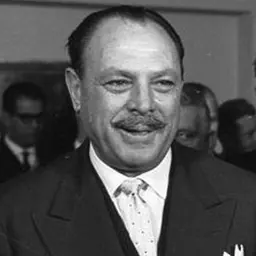





Related people
Same field, nearest in time





Contemporaries
People whose lives overlapped Muhammad Musa's


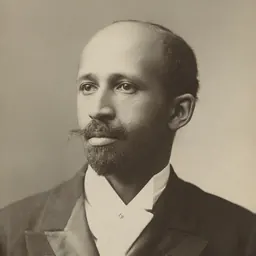
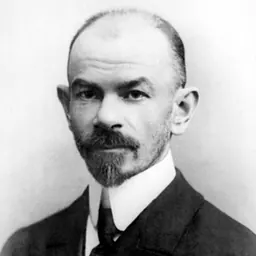
Frequently asked questions
Who was Muhammad Musa?
Pakistani Hazara general (1908–1991)
When was Muhammad Musa born?
Muhammad Musa was born on 20 October 1908 in Quetta.
When did Muhammad Musa die?
Muhammad Musa died on 12 March 1991 in Quetta.
What was Muhammad Musa's occupation?
Muhammad Musa was a politician, military personnel and autobiographer.
What nationality was Muhammad Musa?
Muhammad Musa was Indian and Pakistani.
Sources & further reading
· DBpedia: Muhammad Musa (general)
Cite this page
APA: Biography.guide. (2026). Muhammad Musa. https://biography.guide/muhammad-musa/
MLA: "Muhammad Musa." Biography.guide, https://biography.guide/muhammad-musa/.
Chicago: "Muhammad Musa." Biography.guide. https://biography.guide/muhammad-musa/.
Data last updated: 2026-09-27 · Spot an error? Report a correction.
Page generated 2026-09-27 05:16 UTC