
About Muhammad Hafeez Qureshi
Lived 1930 – 2007 (aged 77). Muhammad Hafeez Qureshi was a Pakistani physicist, engineer and nuclear physicist, known for Pakistan and weapons of mass destruction.
Muhammad Hafeez Qureshi (Urdu: محمد حفيظ قريشى) (31 October 1930 – 11 August 2007), , known as Hafeez Qureshi, was a Pakistani nuclear scientist and a mechanical engineer, known for his role as a diagnostics engineer for his nation's nuclear capability.
His career was spent working at the Pakistan Institute of Nuclear Science & Technology as overseeing the diagnostics on the subcritical experiments on the nuclear weapons where he gained expertise on engineering applications of nuclear physics. His family emigrated from India to Pakistan sometime after the partition of British-ruled India in 1947; only to settle in Karachi, Sindh.
In his dormitory at the university, his schoolmate and friend was a future notable optical physicist Dr. Muhammad Jameel— who was also present when Pakistan tested its nuclear devices in Ras Koh Range.
At MSU, Qureshi enrolled in the engineering department and gained a Bachelor of Science (BS) in mechanical engineering, followed by a Master of Science (MS), also in mechanical engineering
Pakistan Atomic Energy Commission
In 1963, Qureshi served as design engineer at the Atomic Energy Center in Lahore where he oversaw the installation of the first neutron generator. In 1967, Qureshi moved to the Nuclear Physics Group working under Naeem Ahmad Khan that was investigating on the feasibility of the gas centrifuges for the industrial enrichment.
This study group also included Sultan Mahmood and Samar Mubarakmand but left the project when he joined the Radiation Isotope Application Division (RIAD) at the laboratory under Naeem Ahmad Khan. In December 1971, Qureshi was made director of RIAD with support provided from Dr. Naeem Ahmad.
1971 war and atomic bomb project
In 1974, Qureshi was invited by Munir Ahmad Khan and Abdus Salam to participate in the development of nuclear weapons when he was asked to design, engineer, and machine the design components, tampers, and explosive lenses necessary for detonation of the nuclear weapon. He soon joined the Metallurgical Laboratory (ML) located in Wah Cantonment and collaborated with Dr. Zaman Sheikh, a physical chemist and authority on explosives, of Defence Science & Technology Organization (DESTO). This led to the establishment of the Wah Group Scientist (WGS) at the ML that worked on metallurgical aspect of the nuclear device. Several sessions were held on the feasibility of the device between the Wah Group Scientist with the Abdus Salam and Riazuddin of Theoretical Physics Group (TPG); Asghar Qadir and Munir Ahmad Rashid of the Mathematical Physics Group; Ishfaq Ahmad of Nuclear Physics Division. During the meeting, the word bomb was never used, instead the scientists used scientific research rationale. There, the scientists decided to develop an 'implosion' over the 'gun' type fission device citing economy in the use of fissile material.
The Wah Group Scientists also took initiatives in designing of high precision mechanical and chemical components – how tampers would be developed to produce efficiency and high precision data – physics calculations – what would its appropriate time reaction be when the explosives make contact with the material– high explosives– what kind of chemistry be would be used, and triggering mechanisms – how the weapon would be detonated. Since the testing facilities in PINSTECH Nilore lacked, the ML performed several explosives experiments and chemistry measurements in cooperation with the Pakistan Ordnance Factories (POF), which was the source of providing the explosives, in 1976.
By 1979, the Wah Group Scientists under Hafeez and Sheikh had developed the wide range of explosive lenses, design components finished on the computer numerical control, the polymer-based high explosive materials, and triggering mechanisms.
Subcritical testing and diagnostics In 1980, the Wah Group Scientist team collaborated with the Diagnostics Directorate in designing the diagnostics to viability and reliability of the first nuclear device without the use of nuclear testing. The first subcritical experiment on the first nuclear device took place on 11 March 1983. The diagnostics and the subcritical experiments continued on 24 different improved designs, developed by TPG, under Samar Mubarakmand of the Diagnostics Directorate and Hafeez Qureshi of Wah Group Scientist.
Death and honors
On 11 August 2007, Qureshi died from natural causes, aged 76. After his retirement, he served on the mechanical engineering faculty at the Pakistan Institute of Engineering and Applied Sciences, and was honored with his nation's highest honors including the Sitara-e-Imtiaz in 1992 and Hilal-e-Imtiaz in 2002 conferred by the President of Pakistan.
In 2023, the Government of Pakistan accepted the recommendation to honor his services with the Nishan-i-Imtiaz, which he was awarded in 2024.
Don’t just read it —
keep it.
Full-length biographies made to live with: read them, listen on the way to work, watch them tonight.
- E-book
- Audio
- Video
Instant download · yours to keep · every purchase keeps this site free
Important facts
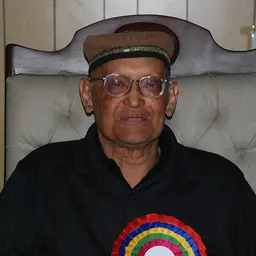
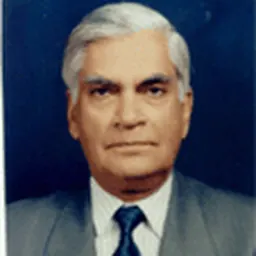
People in Muhammad Hafeez Qureshi's life
Named in this biography and alive at the same time




Related people
Same field, nearest in time



Contemporaries
People whose lives overlapped Muhammad Hafeez Qureshi's



Frequently asked questions
Who was Muhammad Hafeez Qureshi?
Pakistani nuclear physicist
When was Muhammad Hafeez Qureshi born?
Muhammad Hafeez Qureshi was born on 28 January 1930 in Kapurthala.
When did Muhammad Hafeez Qureshi die?
Muhammad Hafeez Qureshi died on 11 August 2007 in Wah Cantonment.
What was Muhammad Hafeez Qureshi's occupation?
Muhammad Hafeez Qureshi was a physicist, engineer and nuclear physicist.
What was Muhammad Hafeez Qureshi known for?
Muhammad Hafeez Qureshi was known for Pakistan and weapons of mass destruction.
What nationality was Muhammad Hafeez Qureshi?
Muhammad Hafeez Qureshi was Pakistani.
Sources & further reading
· Wikipedia: Muhammad Hafeez Qureshi
· DBpedia: Muhammad Hafeez Qureshi
Cite this page
APA: Biography.guide. (2026). Muhammad Hafeez Qureshi. https://biography.guide/muhammad-hafeez-qureshi/
MLA: "Muhammad Hafeez Qureshi." Biography.guide, https://biography.guide/muhammad-hafeez-qureshi/.
Chicago: "Muhammad Hafeez Qureshi." Biography.guide. https://biography.guide/muhammad-hafeez-qureshi/.
Data last updated: 2026-09-20 · Spot an error? Report a correction.
Page generated 2026-09-27 05:25 UTC