
About Moss Cass
Lived 1927 – 2022 (aged 95). Moss Cass was an Australian politician, physician and pediatrician.
Moses Henry Cass (18 February 1927 – 26 February 2022) was an Australian doctor and politician who held ministerial office in the Whitlam government. He served as Minister for Environment and Conservation (1972–1975), the Environment, and the Media (1975). He represented the Division of Maribyrnong in the House of Representatives from 1969 to 1983.
Early life Cass was born in Narrogin, Western Australia to Jewish parents who had fled Tsarist Russia to escape antisemitism. His paternal grandfather, Moses Cass, was born in Białystok, Vistula Land, Tsarist Russia (now Poland), arriving in Perth in 1906.
Cass studied medicine at the University of Sydney and during the 1950s and 1960s worked as a registrar at hospitals in Sydney, London and Melbourne. He was a research fellow at Melbourne's Royal Children's Hospital and conducted research into the use of a heart–lung machine for open-heart surgery. He was the first medical director (from 1964 to 1969) of the Trade Union Clinic and Research Centre, which became the Western Region Health Centre (now merged into the cohealth community health organisation).
He became known as a proponent of abortion law reform On a radio broadcast in June 1969, Cass stated "I have certainly broken the law on numerous occasions by sending patients to other doctors for the purpose of having abortions induced." He stated that he had performed abortions "every weekend" at Royal North Shore Hospital while undergoing his residency and that he was "sure that most doctors are in the same position".
Politics Cass joined the Australian Labor Party (ALP) in 1955. He stood in safe Liberal seats at the 1961 and 1963 elections, running against Prime Minister Robert Menzies in Kooyong and John Jess in La Trobe. He was appointed Minister for Environment and Conservation following the election of the Whitlam government in 1972. He appointed marine biologist Don McMichael as his departmental secretary. Cass held the second-lowest rank in cabinet, above only science minister Bill Morrison. He was assisted in his environmental protection efforts by Rex Connor, the Minister for Minerals and Energy. Connor used his seniority in the party to overcome opposition to Cass's proposals, notably helping secure the passage of the Environment Protection (Impact of Proposals) Act 1974.
In an address to a Young Labor meeting in Melbourne, Cass was reported as having stated he would like to see the legalisation of marijuana in Australia as he thought it was "pretty harmless" and made people "feel good."
Cass was unsuccessful in seeking to prevent the flooding of Lake Pedder in Tasmania. Nonetheless, he did lay the groundwork for the end of sandmining on Fraser Island and government protection of the Great Barrier Reef. In 1975 he led parliamentarians and ALP branch members in expressing concerns about the effects of uranium mining. A key concern was the adverse effect that uranium mining would have on the northern Aboriginal people. Cass said: "nuclear energy creates the most dangerous, insidious and persistent waste products, ever experienced on the planet".
In October 1973, Cass seconded former prime minister John Gorton's motion for the decriminalisation of homosexuality, which was successful although it had no legal effect. He also argued for the decriminalisation of marijuana. In June 1975, Cass relinquished the environment portfolio and instead was appointed Minister for the Media. He announced plans for a voluntary Australian Press Council, but in September stated that a voluntary council would not be sufficient. He was criticised by Rupert Murdoch, who stated it was "sinister" and constituted censorship. Cass stated that the proposal had been subjected to "bizarre distortion and hysterical over-reaction" by some sections of the press.
Following the dismissal of the government and Labor's defeat at the 1975 election, Cass was named opposition spokesman for health in Whitlam's shadow cabinet. When Bill Hayden replaced Whitlam as opposition leader in December 1977, Cass was given the portfolio of immigration and ethnic affairs. He supported cutting immigration, stating there were not enough jobs for migrants. In 1978, he stated that there was "considerable organisation" behind Vietnamese boat people coming to Australia.
Cass announced in June 1982 that he would not recontest his seat at the next election.
Later life and death In 1983, Cass chaired a review into the Australian Institute of Multicultural Affairs. In the same year he was appointed by the Hawke government to the council of the National Museum of Australia.
Cass served as chair of the Australian National Biocentre from 2002 to 2003. He was also patron of the Sustainable Living Foundation and an honorary fellow at the Melbourne University School of Land and Environment. During the Gaza War of 2009, he signed a statement condemning Israel's "grossly disproportionate military assault".
His daughter Naomi is an arts administrator and gallery director and his second child Deborah Cass was an academic lawyer at the London School of Economics whose writings and teaching were widely admired in Australia and overseas. The Deborah Cass writing prize, a national writing prize for first and second generation migrant writers, was created after her death was offered annually 2015–2022.
Cass died on 26 February 2022, at the age of 95.
Quotes Cass is incorrectly believed by some to be the originator of the saying, "We do not inherit the earth from our ancestors; we borrow it from our children" (although a similar paraphrase was used earlier by the environmental activist Wendell Berry). On 13 November 1974, when Cass was environment minister, he gave a speech in Paris to the meeting of the Organisation for Economic Co-operation and Development. Borrowing heavily from Native American proverbs and traditions, he said:
Cass's version was a longer explanation than the original, traditional proverb.
Cass has been cited as the first person to use the term "queue jumping" in reference to asylum seekers, in a 1978 opinion column in The Australian.
Don’t just read it —
keep it.
Full-length biographies made to live with: read them, listen on the way to work, watch them tonight.
- E-book
- Audio
- Video
Instant download · yours to keep · every purchase keeps this site free
Important facts
People in Moss Cass's life
Named in this biography and alive at the same time



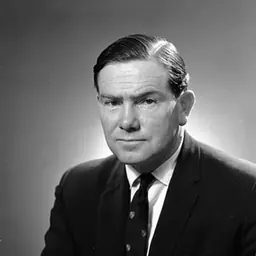
Related people
Same field, nearest in time



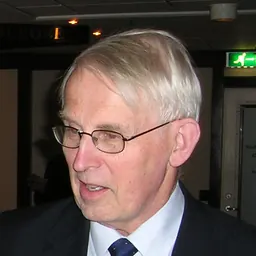


Contemporaries
People whose lives overlapped Moss Cass's
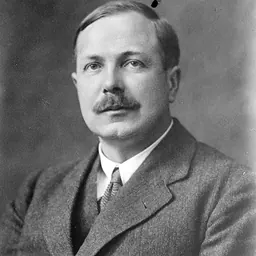

Frequently asked questions
Who was Moss Cass?
Australian politician
When was Moss Cass born?
Moss Cass was born on 18 February 1927 in Narrogin.
When did Moss Cass die?
Moss Cass died on 26 February 2022 in Melbourne.
What was Moss Cass's occupation?
Moss Cass was a politician, physician and pediatrician.
What nationality was Moss Cass?
Moss Cass was Australian.
Sources & further reading
Cite this page
APA: Biography.guide. (2026). Moss Cass. https://biography.guide/moss-cass/
MLA: "Moss Cass." Biography.guide, https://biography.guide/moss-cass/.
Chicago: "Moss Cass." Biography.guide. https://biography.guide/moss-cass/.
Data last updated: 2026-09-20 · Spot an error? Report a correction.
Page generated 2026-09-27 05:30 UTC