
About Moshe Castel
Lived 1909 – 1991 (aged 81–82). Moshe Castel was an Israeli and Turkish painter.
Moshe Castel (; 1909 – December 12, 1991) was an Israeli painter.
Biography Moshe Elazar Castel born in Jerusalem, Ottoman Palestine, in 1909, to Rabbi Yehuda Castel and his wife Rachel. The family was descended from the Jewish Castel clan, who are Sephardic Jews from Castile who according to oral tradition, immigrated to the city of Gaza after the expulsion of the Jews from Spain in 1492, and later relocated to Hebron in the early modern period. His father was born in Hebron. He opened religious schools for Sephardi boys in the Nahalat Shiv'a and Bukharim quarters of Jerusalem. Moshe grew up in the Bukharim neighborhood, where he attended his father's school. At the age of 13, he was accepted to the Bezalel Art School, directed by Boris Schatz, where he studied from 1921 to 1925.
During the weekends of 1925-1927 he would study under Yitzhak Frenkel (a painter of the Ecole de Paris) at his studio in Tel Aviv, where he encountered the influence of modern French art. His teacher, Shmuel Ben David, encouraged him to study art in Paris. Beit Castel, the artists' residence in the artists quarter of Safed, now a gallery. Castel traveled to Paris in 1927, where he attended Académie Julian and Ecole du Louvre. He sat in the Louvre copying the works of Rembrandt, Velasquez, Delacroix and Courbet, intrigued by their paint-layering techniques. It was here that he began to realize that "art is not symbolic, but rather material, the material is the main thing, the way the paint is placed, the way the layers are placed on the picture, this is the most essential thing." In 1949, Castel married Bilhah (née Bauman), an actress.
Artistic career Moshe Castel, in the artists quarter of Safed, with his painting "Zohar", 1956. Moshe Castel was influenced by his teacher Yitzhak Frenkel, adopting the modern French style of the School of Paris and travelling to France during the 1920s. In 1947, Castel rebelled against Frenkel's influence helping found the "New Horizons" (Ofakim Hadashim) group together with several other of Frenkel's former pupils including Yehezkel Streichman and Avigdor Stematsky as well as the artists Yosef Zaritsky, Marcel Janco and others. From the 1950s on, Castel created relief paintings inspired by the "ancient predecessors of Hebrew civilization." In 1948, he visited the ruins of an ancient synagogue in Korazin, an ancient Jewish town in the Galilee. Inspired by the basalt blocks he saw there, engraved with images and ornaments, he began to use ground basalt, which he molded into shapes, as his basic material. The technique utilized ground basalt rock mixed with sand and glue, infused with the rich colors that became his trademark.
Awards and commemoration
Legacy His art can today be found in several public collections including the Tate gallery in London, the Museum of Modern art in New York, in the Vatican, in the San Francisco Museum of art as well as in the Israeli parliament, supreme court and Israeli presidential residence. His museum in summer of 2024 showcased an exhibition of 74 artists including Naftali Bezem, Yosef Ostrovsky and Yitzhak Alexander Frenkel (Frenel).
Awards
In 1941 and again in 1946, Castel was awarded the Dizengoff Prize for painting by the Tel Aviv Municipality. He won the "Premier do Estado" prize at the São Paulo Art Biennial in Brazil.
Don’t just read it —
keep it.
Full-length biographies made to live with: read them, listen on the way to work, watch them tonight.
- E-book
- Audio
- Video
Instant download · yours to keep · every purchase keeps this site free
Important facts
People in Moshe Castel's life
Named in this biography and alive at the same time

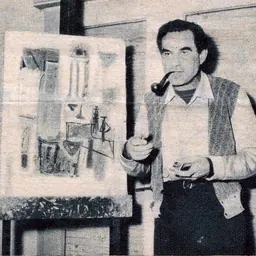
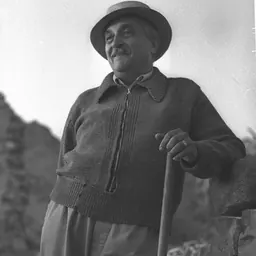



Related people
Same field, nearest in time
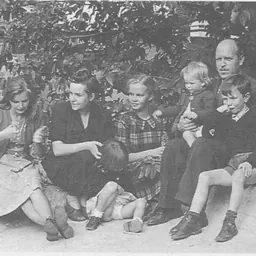


Contemporaries
People whose lives overlapped Moshe Castel's



Frequently asked questions
Who was Moshe Castel?
Israeli artist (1909–1991)
When was Moshe Castel born?
Moshe Castel was born in 1909 in Jerusalem.
When did Moshe Castel die?
Moshe Castel died on 12 December 1991 in Tel Aviv.
What was Moshe Castel's occupation?
Moshe Castel was a painter.
What nationality was Moshe Castel?
Moshe Castel was Israeli and Turkish.
Sources & further reading
Cite this page
APA: Biography.guide. (2026). Moshe Castel. https://biography.guide/moshe-castel/
MLA: "Moshe Castel." Biography.guide, https://biography.guide/moshe-castel/.
Chicago: "Moshe Castel." Biography.guide. https://biography.guide/moshe-castel/.
Data last updated: 2026-09-20 · Spot an error? Report a correction.
Page generated 2026-09-27 05:20 UTC