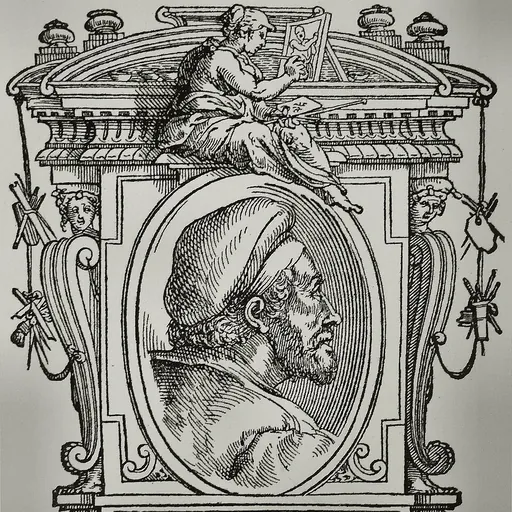
About Morto da Feltre
Lived 1480 – 1527 (aged 46–47). Morto da Feltre was an Italian painter.
Morto da Feltre was an Italian painter of the Venetian school who worked at the close of the 15th century and beginning of the 16th.
Biography His real name appears to have been Pietro Luzzo, Pietro Luci or Lorenzo Luzzo; he is also known by the name Zarato or Zarotto, either from the place of his death or because his father, a surgeon, was in Zara during the son's childhood: whether he was termed "Morto" (dead) from his joyless temperament is a disputed point.
Born in Feltre (province of Belluno), he may probably have studied painting first in Venice and surroundings, initially an assistant of Pinturicchio. It is claimed by Vasari that at an early age he went to Rome, and investigated the ancient, especially the subterranean remains, and thence to Pozzuoli, where he painted from the decorations of antique crypts or grotte. The style of fanciful arabesque which he formed for himself from these studies gained the name of "grottesche", whence comes the term grotesque; not, indeed, that Morto was the first painter of arabesque in the Italian Renaissance, for art of this kind had, been developed, both in painting and in sculpture, towards 1480, but he may have powerfully aided its diffusion southwards.
His works were received with much favor in Rome. He afterwards went to Florence, and painted some fine grotesques in the Palazzo Pubblico and trained Andrea di Cosimo. Returning to Venice towards 1505, he assisted Giorgione in painting the Fondaco dei Tedeschi, and seems to have remained with him till 1510. It may have been in 1515 that Morto returned to his native Feltre, then in a very ruinous condition from the ravages of war in 1509. There he executed various works, including some frescoes, still partly extant, and considered to be almost worthy of the hand of Raphael, in the loggia beside the church of Santo Stefano. He may have met Giovanni da Udine.
Towards the age of forty-five, Morto, unquiet and dissatisfied, abandoned painting and took to soldiering in the service of the Venetian republic. He was made captain of a troop of two hundred men; and fighting valorously, he is said to have died at Zara in Dalmatia, in 1519. This story, and especially the date of it, are questionable: there is some reason to think that Morto was painting as late as 1522. One of his pictures is in the Berlin museum, an allegorical subject of Peace and War. Andrea Feltrini was his pupil and assistant as a decorative painter.
He is cited in Giorgio Vasari's Vite or biographies of the artists.
Don’t just read it —
keep it.
Full-length biographies made to live with: read them, listen on the way to work, watch them tonight.
- E-book
- Audio
- Video
Instant download · yours to keep · every purchase keeps this site free
Important facts
more
Fletro de Morto, Morto da Feltro, Morto Da FeltrePeople in Morto da Feltre's life
Named in this biography and alive at the same time

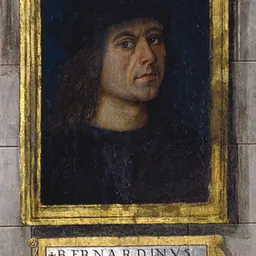

Related people
Same field, nearest in time


Contemporaries
People whose lives overlapped Morto da Feltre's

Frequently asked questions
Who was Morto da Feltre?
Italian painter (1480-1527)
When was Morto da Feltre born?
Morto da Feltre was born in 1480 in Feltre.
When did Morto da Feltre die?
Morto da Feltre died in 1527 in Zadar.
What was Morto da Feltre's occupation?
Morto da Feltre was a painter.
What nationality was Morto da Feltre?
Morto da Feltre was Italian.
Sources & further reading
Cite this page
APA: Biography.guide. (2026). Morto da Feltre. https://biography.guide/morto-da-feltre/
MLA: "Morto da Feltre." Biography.guide, https://biography.guide/morto-da-feltre/.
Chicago: "Morto da Feltre." Biography.guide. https://biography.guide/morto-da-feltre/.
Data last updated: 2026-09-21 · Spot an error? Report a correction.
Portrait: Wikimedia Commons · author & licence
Page generated 2026-09-27 05:00 UTC