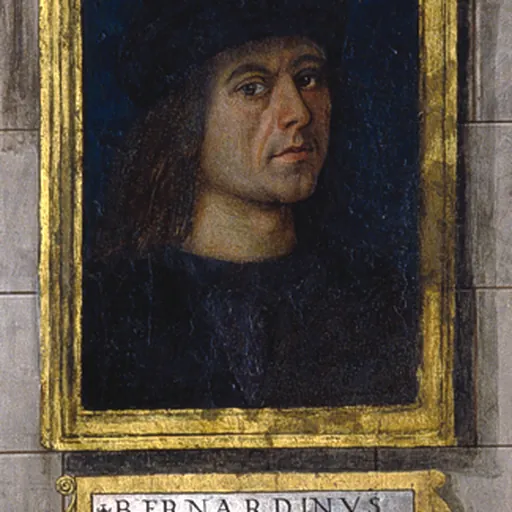
About Pinturicchio
Lived 1454 – 1513 (aged 58–59). Pinturicchio was an Italian painter, illuminator and draftsperson.
The Crucifixion with Sts. Jerome and Christopher, 1471, oil on wood, 59 × 40 cm, Galleria Borghese, Rome
Pinturicchio, or Pintoricchio (, ; born Bernardino di Betto; 1454–1513), also known as Benetto di Biagio or Sordicchio, was an Italian Renaissance painter. He acquired his nickname (meaning "little painter") because of his small stature and he used it to sign some of his artworks that he produced during the fifteenth and sixteenth centuries.
Biography
Early years
Pinturicchio was born the son of Benedetto or Betto di Biagio, in Perugia. In his career, he may have trained under lesser-known Perugian painters such as Bonfigli and Fiorenzo di Lorenzo. According to Vasari, Pinturicchio was a paid assistant of Perugino.
The works of the Perugian Renaissance school are very similar and often paintings by Perugino, Pinturicchio, Lo Spagna, and a young Raphael may be mistaken, one for the other. In the execution of large frescoes, pupils and assistants had a large share in the work, either in enlarging the master's sketch to the full-sized cartoon, in transferring the cartoon to the wall, or in painting backgrounds or accessories.
His assignment in Rome, to decorate the Sistine Chapel, was an experience fraught with learning from prominent artists of the time, including: Sandro Botticelli, Domenico Ghirlandaio, Pietro Vanucci, and Luca Signorelli. The Sistine Chapel was where it is believed that Pinturicchio was collaborating with Perugino to some extent.
The earliest known of his works is an altarpiece of the Adoration of the Shepherds, in the Della Rovere Chapel, the first chapel (from the west) on the south, built by Cardinal Domenico della Rovere. In the lunettes under the vault, Pinturicchio painted small scenes from the life of St. Jerome. The polychrome grotesque wall decoration on a yellow-gold background probably was inspired by the paintings of the Domus Aurea, and belongs the earliest and highest quality of their kind in Rome.
The frescos he painted in the Cybo Chapel, built by Cardinal Lorenzo Cybo de Mari in the beginning of the sixteenth century, were destroyed in 1682, when the chapel was rebuilt by Cardinal Alderano Cybo. The old fresco of the Virgin and the Child by Pinturicchio was detached from the wall and sent by the cardinal to Massa in 1687. The fragment was re-used as the altarpiece of the Ducal Chapel of the Cathedral of Massa.
The third chapel on the south is that of Girolamo Basso della Rovere, nephew of Pope Sixtus IV, and bishop of Recanati. The Basso Della Rovere Chapel contains an altarpiece, Madonna enthroned between Four Saints, and on the eastern side a fresco of the Assumption of the Virgin. The vault and its lunettes are richly decorated with small paintings of the Life of the Virgin, surrounded by graceful arabesques; and the dado is covered with monochrome paintings of scenes from the lives of saints, illusionistic benches, and gracefully and powerfully drawn figures of women in full length, in which the influence of Luca Signorelli may be traced.
In the Costa Chapel, Pinturicchio or one of his helpers painted the Four Latin Doctors in the lunettes of the vault. Most of these frescoes are considerably injured by moisture and have suffered little from restoration. The last paintings completed by Pinturicchio in this church are found on the vault behind the choir, where he painted decorative frescoes, with main lines arranged to suit their surroundings in a skilful way. In the centre is an octagonal panel, Coronation of the Virgin, and surrounding it, are medallions of the Four Evangelists. The spaces between them are filled by reclining figures of the Four Sibyls. On each pendentive is a figure of one of the Four Doctors enthroned under a niched canopy. The bands that separate these paintings have elaborate arabesques on a gold ground, and the whole is painted with broad and effective touches, very telling when seen (as is necessarily the case) from a considerable distance below.
Works in the Vatican Library In 1492, Pinturicchio was summoned to Orvieto Cathedral. However, he was also commissioned by Pope Alexander VI (Borgia) to decorate a recently completed suite of six rooms, the Borgia Apartments in the Apostolic Palace of the Vatican. These rooms now form part of the Vatican Library, and five still retain a series of Pinturicchio frescoes. He worked in these rooms until around 1494, assisted by his pupils, and not without interruption. It was not until Pope Alexander VI died that Pinturicchio left Rome for Umbria, leaving much of the work in Rome to be completed by Michelangelo, Raphael, and others. Madonna with Reading Child (c. 1494–1498), 33.7 × 25.4 cm, North Carolina Museum of Art, Raleigh, North Carolina Madonna with Writing Child (c. 1494–1498), 61 × 41.6 cm, Philadelphia Museum of Art, Philadelphia Madonna with Writing Child and Bishop (c. 1495), 158 × 77.3 cm, Museu de Belles Arts, Valencia Madonna with Child and St. John the Baptist (c. 1495), 45.5 x 37 cm, National Museum, Warsaw Eroli Chapel (1497), frescoes, Cathedral of Spoleto, Spoleto Santa Maria dei Fossi Altarpiece, oil on panel and canvas, 513 × 314 cm, Galleria Nazionale dell'Umbria, Perugia Portrait of a Boy (c. 1500), Gemäldegalerie Alte Meister, Dresden Baglioni Chapel (c. 1500–1501). Santa Maria Maggiore, Spello
Piccolomini Library (1502–1507), frescoes, Cathedral of Siena, Siena Coronation of Pius II (c. 1503–1508), fresco, Cathedral of Siena, Siena St. John the Baptist Chapel (1504), Cathedral of Siena, Siena Madonna Enthroned with Saints (1506–1508), 318 × 257 cm, church of Sant'Andrea, Spello Virgin and Child (51,4 × 40,6) tempera and gold on wood panel, Alicem institute, Luxembourg
Don’t just read it —
keep it.
Full-length biographies made to live with: read them, listen on the way to work, watch them tonight.
- E-book
- Audio
- Video
Instant download · yours to keep · every purchase keeps this site free
Important facts
more
Bernardino Pinturicchio, Bernardino Di Betto-Benedetto Di Biagio Pintoricchio, Bernardino Betti, Bernardino di Betto-Benedetto di Biagio Pinturicchio, Il Pintoricchio, Bernardino Betti Pinturicchio, Pittoricchio, gen. Pinturicchio Bernardino di Betto di Biagi, Bernardino Di BettoPeople in Pinturicchio's life
Named in this biography and alive at the same time





Related people
Same field, nearest in time
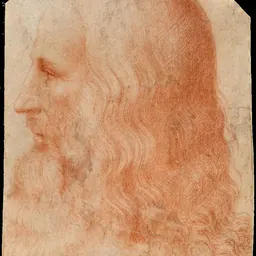
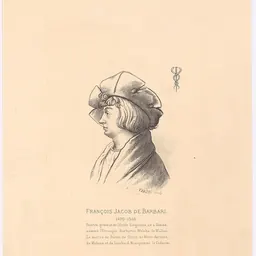
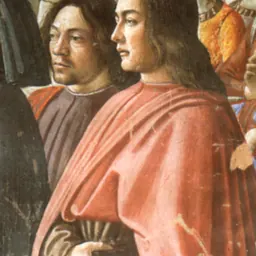

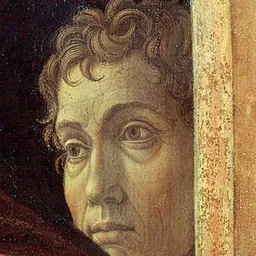

Contemporaries
People whose lives overlapped Pinturicchio's


Frequently asked questions
Who was Pinturicchio?
Italian painter (1454-1513)
When was Pinturicchio born?
Pinturicchio was born in 1454 in Perugia.
When did Pinturicchio die?
Pinturicchio died on 11 December 1513 in Siena.
What was Pinturicchio's occupation?
Pinturicchio was a painter, illuminator and draftsperson.
What nationality was Pinturicchio?
Pinturicchio was Italian.
Sources & further reading
Cite this page
APA: Biography.guide. (2026). Pinturicchio. https://biography.guide/pinturicchio/
MLA: "Pinturicchio." Biography.guide, https://biography.guide/pinturicchio/.
Chicago: "Pinturicchio." Biography.guide. https://biography.guide/pinturicchio/.
Data last updated: 2026-09-21 · Spot an error? Report a correction.
Portrait: Wikimedia Commons · author & licence
Page generated 2026-09-27 04:58 UTC