
Morris Engel
American photographer and filmmaker
About Morris Engel
Lived 1918 – 2005 (aged 86). Morris Engel was an American film director, screenwriter, cinematographer, photographer, filmmaker and director.
Morris Engel (April 8, 1918 – March 5, 2005) was an American photographer, cinematographer and filmmaker best known for making the first good-quality, internationally recognized American film "independent" of Hollywood studios, Little Fugitive, in collaboration with his wife, photographer Ruth Orkin, and their friend, writer Raymond Abrashkin.
Engel was a pioneer in the use of hand-held cameras that he helped design throughout his features and in using nonprofessional actors in American films, following the example of Italian Neo-realism. His naturalistic films influenced future prominent independent and French New Wave filmmakers. He worked briefly as a photographer for the Leftist newspaper PM He was also an active photo-journalist working for Fortune, Collier's and McCalls, among others.
During the war he was a still photographer but he probably was familiar with a handheld 35 mm battery-operated camera developed during the war for combat photography, the Cunningham Combat Camera. The large square camera was mounted on a rifle stock, held tightly to the cameraman's chest by handles mounted on each side, and aimed in the general direction of the action, sighted by a top-mounted viewfinder. With a two hundred foot magazine, it could run for two minutes. The other primary motion picture camera used by the military was the Bell and Howell Eyemo, a spring-run camera held to the eye with a 20-second running time.
After the war, Engel and an engineer he met in the service, Charles Woodruff, reconfigured the Cunningham camera into a much smaller camera for civilian purposes. Engel explained, "Designed for me, it was a compact 35mm, hand held, shoulder cradled, [with] double registration pins and twin lens finder and optical system." It used the Cunningham 35mm 200 foot interchangeable magazines which met the camera at the film gate with the lens, motor, shutter, and viewfinder comprising the camera body. Twin lens geared together enabled the viewfinder lens and the camera to be focused together, as on Engel's preferred still camera, the Rolleiflex. Like the Rolleiflex, the viewfinder was viewed from above. Held against the waist, rather than in front of the face, the camera was both steadier and less conspicuous than the Eyemo. "With a simple shoulder belt support," Engel said, "I was armed with a camera which became the heart of the esthetic and mobile approach to the film [the Little Fugitive]. This camera was about the same size as the Eyemo, but looked like a giant Ocarina with the camera in the wide part at the top and the smaller curved part below.
In 1950, Engel tried to sell a March of Time imitation called How America Lives filmed with his new camera to distributors but found no takers.
Richie Andrusco in Little Fugitive Since he couldn't sell proposed short subjects, he decided to make a feature. In 1953, Engel, along with his girlfriend, fellow photographer Ruth Orkin, and his former colleague at PM, Raymond Abrashkin, made the feature film Little Fugitive for $80,000, shooting the film on location in Coney Island with the hand-held 35 millimeter camera Engel and his friend had designed. This camera was compact and lightweight so it would be unobtrusive shooting in public. As such, it did not allow simultaneous sound recording; the sound was dubbed later. The film, one of the first successful American "independent films", earned them an Academy Award nomination for Best Writing, Motion Picture Story and a Silver Lion at the Venice Film Festival. The film told the story of a seven-year-old boy, played by Richie Andrusco, who runs away from home and spends the day at Coney Island. Andrusco never appeared in another film, and the other performers were mainly nonprofessionals.
In 1961, Engel directed three television commercials, including an award-winning one for Oreo cookies. The other two were for Ivory soap and Fab detergent. A half-hour short film The Dog Lover was made the following year, a comedy about a shop merchant whose life is turned upside down by the stray dog his kid brings home.
Engel died of cancer in 2005.
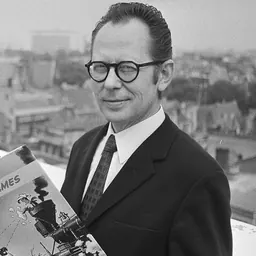
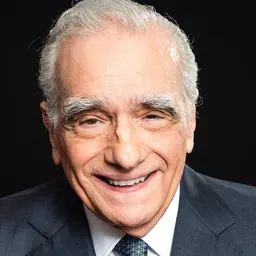
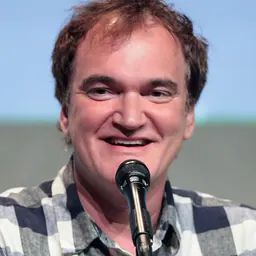
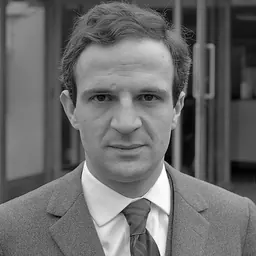
Legacy Engel and Orkin's work occupy a pivotal position in the independent and art film scene of the 1950s, and was influential on John Cassavetes, Martin Scorsese, Jim Jarmusch, Quentin Tarantino, and François Truffaut, and was frequently cited as an example by the influential film theorist Siegfried Kracauer.
Writing in Cassavetes on Cassavetes, biographer Raymond Carney says that Cassavetes was familiar with the work of the New York-based independent filmmakers who preceded him, and was "particularly fond" of Engel's three films from the 1950s. Carney writes that "Commentators who regard [Cassavetes] as the 'first independent' are only displaying their ignorance of the history of independent American film, which goes back to the early 1950s."
Truffaut was inspired by Little Fugitive spontaneous production style when he created The 400 Blows (1959), saying long afterwards: "Our New Wave would never have come into being if it hadn't been for the young American Morris Engel, who showed us the way to independent production with [this] fine movie."
Filmography (complete) The Farm They Won (1951 short documentary film) Little Fugitive (1953 feature film) Lovers and Lollipops (1956 feature film) Weddings and Babies (1958 feature film) One Chase Manhattan Plaza (1961 short documentary film) The Dog Lover (1962 short film) Little Girls Have Pretty Curls (1962 short documentary film) I Need a Ride to California (1968 feature film) (released in 2019) Peace Is (1968 short documentary film) A Little Bit Pregnant (1994 feature documentary video) Camellia (1998 feature documentary video) Morris Engel Home Movies (various dates, short documentary) (released in 2021)
Exhibitions (selection) November 4, 2011 – March 25, 2012 "The Radical Camera: New York's Photo League, 1936–1951" at The Jewish Museum, New York August 20 – August 29, 2005 Morris Engel's Weddings and Babies: Newly Preserved at Museum of Modern Art, New York
Don’t just read it —
keep it.
Full-length biographies made to live with: read them, listen on the way to work, watch them tonight.
- E-book
- Audio
- Video
Instant download · yours to keep · every purchase keeps this site free
Important facts
Family & relationships
People in Morris Engel's life
Named in this biography and alive at the same time



Related people
Same field, nearest in time


Contemporaries
People whose lives overlapped Morris Engel's


Frequently asked questions
Who was Morris Engel?
American photographer and filmmaker (1918-2005)
When was Morris Engel born?
Morris Engel was born on 8 April 1918 in Brooklyn.
When did Morris Engel die?
Morris Engel died on 5 March 2005 in New York City.
What was Morris Engel's occupation?
Morris Engel was a film director, screenwriter, cinematographer, photographer, filmmaker and director.
What nationality was Morris Engel?
Morris Engel was American.
Sources & further reading
Cite this page
APA: Biography.guide. (2026). Morris Engel. https://biography.guide/morris-engel/
MLA: "Morris Engel." Biography.guide, https://biography.guide/morris-engel/.
Chicago: "Morris Engel." Biography.guide. https://biography.guide/morris-engel/.
Data last updated: 2026-09-20 · Spot an error? Report a correction.
Page generated 2026-09-27 05:07 UTC