
About Morris Cargill
Lived 1914 – 2000 (aged 85). Morris Cargill was a Jamaican journalist, lawyer, politician and writer.
Morris Cargill (10 June 1914 – 8 April 2000), was a Jamaican politician, lawyer, businessman, planter, journalist and novelist. He was also a columnist for the Jamaican Gleaner.
Biography Cargill was born in Kingston, British Jamaica and educated at Munro College, a prestigious Jamaican secondary school, and the Stowe School in England. Cargill was articled as a solicitor in 1937. During World War II, he worked for the Crown Film Unit in Britain. After the war, he played a role in the development of the coffee liqueur Tia Maria. Returning to the Caribbean he worked as a newspaper editor in Trinidad, and, having acquired a banana plantation in Jamaica, began a career as a columnist for the Gleaner newspapers in 1953 which was to last, with some interruptions, until his death. Until the late 1970s, his articles appeared under the pseudonym Thomas Wright.
In 1958, he was elected to the parliament of the Federation of the West Indies, as a candidate of the Jamaica Labour Party, and served as deputy leader of the opposition in that legislature for the next four years.
In 1964, he persuaded his friend Ian Fleming to write the introductory article for a guidebook to Jamaica called Ian Fleming Introduces Jamaica. In the late 1960s and early 1970s, he collaborated with novelist John Hearne, under the pseudonym "John Morris", on a series of three thrillers—Fever Grass, The Candywine Development, and The Checkerboard Caper—about an imaginary Jamaican secret service. Cargill makes an appearance, in the surprising guise of a high court judge, at the end of Fleming's 1965 novel The Man with the Golden Gun.
For two years in the late 1970s, Cargill left Jamaica because of his opposition to the government of Michael Manley, returning in 1980 to join the campaign against Manley. During this period, Cargill lived in the United States and worked for the publisher Lyle Stuart, editing a study of the Third Reich in Germany called A Gallery of Nazis, and writing a memoir called Jamaica Farewell (an expanded version of which was reissued in 1995).
Assassination attempt On 26 May 1969, Keith Clarke shot Cargill in the buttocks, although Cargill survived the attack. Around the same time, Clarke successfully shot and killed industrial chemist Julius Walenta.
Don’t just read it —
keep it.
Full-length biographies made to live with: read them, listen on the way to work, watch them tonight.
- E-book
- Audio
- Video
Instant download · yours to keep · every purchase keeps this site free
Important facts
People in Morris Cargill's life
Named in this biography and alive at the same time




Related people
Same field, nearest in time


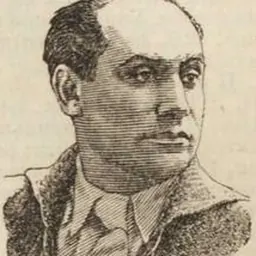

Contemporaries
People whose lives overlapped Morris Cargill's



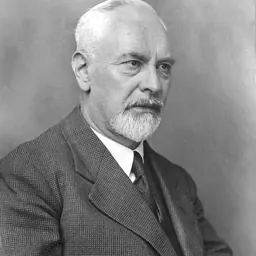
Frequently asked questions
Who was Morris Cargill?
Jamaican writer and politician
When was Morris Cargill born?
Morris Cargill was born on 10 June 1914.
When did Morris Cargill die?
Morris Cargill died on 8 April 2000.
What was Morris Cargill's occupation?
Morris Cargill was a journalist, lawyer, politician and writer.
What nationality was Morris Cargill?
Morris Cargill was Jamaican.
Sources & further reading
Cite this page
APA: Biography.guide. (2026). Morris Cargill. https://biography.guide/morris-cargill/
MLA: "Morris Cargill." Biography.guide, https://biography.guide/morris-cargill/.
Chicago: "Morris Cargill." Biography.guide. https://biography.guide/morris-cargill/.
Data last updated: 2026-09-20 · Spot an error? Report a correction.
Page generated 2026-09-27 05:22 UTC