
About Mohammed Kazem Yazdi
Lived 1831 – 1919 (aged 87–88). Mohammed Kazem Yazdi was an Iranian politician, akhoond, islamicist and islamic jurist.
Mohammed Kazem Tabataba'i Yazdi (; 1831–1919) was a Twelver Shia Marja' based in Najaf, most famous for compiling a collection of religious rulings, al-Urwa al-wuthqa.
Constitutional Revolution He was apolitical, and therefore during the Iranian Constitutional Revolution, he stayed neutral most of the time and seldom issued any political statement. Contrary to Akhund Khorasani, he thought that Usulism did not offer the liberty to support constitutional politics. In his view, politics was beyond his expertise and therefore he avoided taking part in it. While Akhund Khorasani was an eminent Marja' in Najaf, many imitators prayed behind Kazim Yazdi too, as his lesson on rulings (figh) was famous. In other words, both Mohammad Kazem and Khorasani had constituted a great Shia school in Najaf although they had different views in politics at the same time. However, he was not fully supportive of the King Muhammad Ali Shah Qajar or Fazlullah Nouri, despite their efforts he didn't fully support them. Therefore, when parliament asked him to review the final draft of constitution, he suggested some changes and signed the document. He said that modern industries were permissible unless explicitly prohibited by Sharia. He also agreed with teaching of modern sciences, and added that the state should not intervene in the centers of religious learning (Hawza). He wasn't against formation of organizations and societies that do not create chaos, and in this regard there was no difference between religious and non-religious organizations. In law-making, unlike Nouri, he separated the religious (Sharia) and public law (Urfiya). His opinion was that the personal and family matters should be settled in religious courts by jurists, and the governmental affairs and matters of state should be taken care of by modern judiciary. Parliament added article 71 and 72 into the constitution based on his opinions. Ayatullah Yazdi said that as long as modern democratic constitution did not force people to do what was forbidden by Sharia and refrain from religious duties, there was no reason to oppose democratic reform, and the government had the right to prosecute wrong doers.
Works One of his important books is Urwa al-Wuthqa (Orwatul Wosgha). This book which is in Arabic is to a collection of legal ruling issued in 1919.
Don’t just read it —
keep it.
Full-length biographies made to live with: read them, listen on the way to work, watch them tonight.
- E-book
- Audio
- Video
Instant download · yours to keep · every purchase keeps this site free
Important facts
People in Mohammed Kazem Yazdi's life
Named in this biography and alive at the same time

Related people
Same field, nearest in time
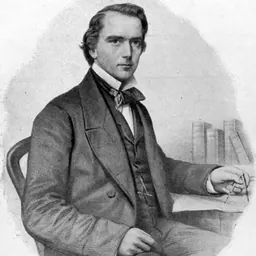


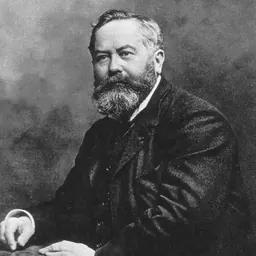

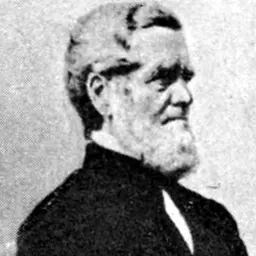
Contemporaries
People whose lives overlapped Mohammed Kazem Yazdi's






Frequently asked questions
Who was Mohammed Kazem Yazdi?
Iraqi Shia Islamic scholar (1831–1919)
When was Mohammed Kazem Yazdi born?
Mohammed Kazem Yazdi was born in 1831 in Yazd.
When did Mohammed Kazem Yazdi die?
Mohammed Kazem Yazdi died in 1919 in Najaf.
What was Mohammed Kazem Yazdi's occupation?
Mohammed Kazem Yazdi was a politician, akhoond, islamicist and islamic jurist.
What nationality was Mohammed Kazem Yazdi?
Mohammed Kazem Yazdi was Iranian.
Sources & further reading
· Wikipedia: Mohammed Kazem Yazdi
· DBpedia: Mohammed Kazem Yazdi
Cite this page
APA: Biography.guide. (2026). Mohammed Kazem Yazdi. https://biography.guide/mohammed-kazem-yazdi/
MLA: "Mohammed Kazem Yazdi." Biography.guide, https://biography.guide/mohammed-kazem-yazdi/.
Chicago: "Mohammed Kazem Yazdi." Biography.guide. https://biography.guide/mohammed-kazem-yazdi/.
Data last updated: 2026-09-26 · Spot an error? Report a correction.
Page generated 2026-09-27 05:16 UTC