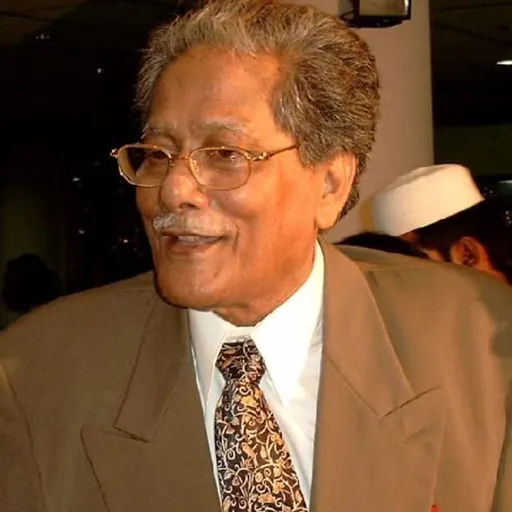
About Mizanur Rahman Chowdhury
Lived 1928 – 2006 (aged 77). Mizanur Rahman Chowdhury was a Pakistani, Bangladeshi and Indian politician.
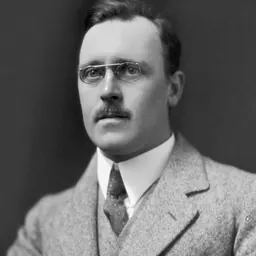
Mizanur Rahman Chowdhury (; 19 October 1928 – 2 February 2006) was a Bengali politician, most notable for serving as Prime Minister of Bangladesh from 9 July 1986, to 27 March 1988.
Early life Chowdhury was born on 19 October 1928 in present-day Chandpur District, Bangladesh to Muhammad Hafiz Chowdhury and Mahmuda Chowdhury. In college, he was involved in student politics. He went to high school in Nuria High Madrasa and went to graduate from Feni College in 1952. He was the headmaster of Bamni Junior High School in Noakhali district. He was selected to join the Provincial Public Service Commission and started in government service. He started Nuria High Madrasa in Chandpur as an English teacher after resigning government service. He also participated in the World Christian Conference in Delhi. During his Delhi tour he participated in several seminars on the Liberation War of Bangladesh. Pakistan Army burned his house in Chandpur. He spend most of his time in Agartala, Shillong and Kolkata in motivating the Bengali youths and soldiers. After the independence of Bangladesh he returned to Bangladesh on 25 December.
Post-independence career Minister of Information and Radio of Bangladesh Mizanur Rahman Chowdhury (left) being sworn in as Minister of Information and Radio of Bangladesh during a ceremony presided over by President Abu Syed Chowdhury (center), with Prime Minister Sheikh Mujibur Rahman seated at right. Mizanur Rahman Chowdhury was included in the Cabinet of Prime Minister Sheikh Mujibur Rahman and sworn in as a Minister on 12 January 1972. He was given the charge of the Ministry of Information and Radio of Bangladesh. He also served as a Member of Constituent Assembly of Bangladesh. After getting the charge of Ministry of Information and Radio of Bangladesh he worked for gathering support for the party. As a close associate of Sheikh Mujibur Rahman, he was part of the founding leadership that shaped the early state institutions and communication strategy of the nascent republic. During his tenure as the Minister of Information and Radio of Bangladesh he helped the martyred radio workers family by giving them jobs in Bangladesh Betar. He held the portfolio of the Minister of Information and Radio of Bangladesh till 16 March 1973.
Minister of Disaster Management and Relief
In 1973, he was elected to the 1st Jatiya Sangsad (National Parliament) representing the Awami League, and was appointed the Minister of Disaster Management and Relief, overseeing critical post-war recovery and resettlement efforts. He also revised the Relief Manuel of 1940s. During his tenure he worked in uploading 15,000 ton imported goods and relief materials from Chittagong Port. After 63 days of getting the charge of Ministry of Disaster Management and Relief he resigned from the Cabinet Council on Sheikh Mujibur Rahman's order on 17 May 1973.
Resignation from the cabinet and onwards
Standing: Abdur Rab Serniabat, Abdul Malek Ukil, Mizanur Rahman Chowdhury, Muhammad Sohrab Hossain, Sheikh Abdul Aziz, Abdul Mannan, General M.A.G Osmani, Shamsul Haq; Sitting: Prime Minister Bangabandhu Sheikh Mujibur Rahman, President Abu Sayeed Chowdhury After his exit from the cabinet he continued to serve as a Member of Parliament. He was also elected as a member Dhaka University syndicate. In 1974 he led the Bangladesh Parliamentary delegation in the Commonwealth Parliamentary Association Conference. Later he was elected to the executive committee of the Commonwealth Parliamentary Association as the representative of Asia. He also went to Sri Lanka to take part in the Commonwealth Parliamentary Association on behalf of Bangladesh.
Formation of Awami League (Mizan) Following the assassination of Sheikh Mujibur Rahman in 1975, the Awami League faced significant internal challenges. On 25 August 1976, a meeting of the party's former central executive members appointed Mizanur Rahman Chowdhury as the convenor of a preparatory committee tasked with re-registering the party under the name "Bangladesh Awami League." This effort led to the party's official registration on 4 November 1976.
During the Awami League's three-day conference from 3 to 5 April 1978, Abdul Malek Ukil was elected president and Abdur Razzaq became general secretary. Mizanur Rahman Chowdhury rejected the legitimacy of this committee. Later disagreement was created between him and some senior leaders about BAKSAL. On 1 August 1978, he, along with Dewan Farid Gazi, formed a separate convenor committee, leading to a formal split in the party. Subsequently, from 3 to 5 November 1978, Chowdhury's faction held its own council at Hotel Eden, electing him as president and Professor Yusuf Ali as general secretary.
Sheikh Hasina and Mizanur Rahman Chowdhury in 2002 after his return to the Awami League. After the June 1996 Bangladeshi general election Awami League formed a coalition government with Jatiya Party and Anwar Hossain Manju the then General Secretary of Jatiya Party was included in the newly formed cabinet. When Awami League came to power Hussain Muhammad Ershad was released from jail on 9 January 1997. Following the release of Hussain Muhammad Ershad, Ershad became the Chairman of Jatiya Party and Chowdhury back to his old Vice Chairman's post. Because of having disagreement with Hussain Muhammad Ershad, Chowdhury resigned from all of his posts of Jatiya Party and also cancelled his primary membership on 12 February 1999. Later he along with Anwar Hossain Manju called a separate council of Jatiya Party on 23 and 24 April 1999. He and Anwar Hossain Manju were elected chairman and General Secretary of the party respectively.
He returned to Awami League in 2001 and was a member of the party's advisory committee till his death.
Books রংধনুর ভালোবাসা রাজনীতির তিনকাল
Death He died in February 2006 in Birdem Hospital, Dhaka. His death was widely mourned across the political spectrum. President Iajuddin Ahmed, Prime Minister Khaleda Zia, and Leader of the Opposition Sheikh Hasina expressed deep condolences, recognizing his contributions to the nation.
Sheikh Hasina beside Begum Sajeda Mizan Chowdhury, the widow of Mizanur Rahman Chowdhury, at their residence on the day of his death.
President Iajuddin Ahmed, in a condolence message, lauded Mizanur Rahman Chowdhury's pivotal role in the democratic movement, particularly his efforts in shaping parliamentary democracy as a robust institution. He described Chowdhury's passing as an "irrecoverable loss" to the practice of political restraint and to upholding respect for differing opinions.
Prime Minister Khaleda Zia also expressed deep condolences, acknowledging Chowdhury's invaluable contributions to the promotion of democracy. She observed that his death created a significant void in the nation's political landscape, and she prayed for his eternal peace, extending sympathy to his bereaved family. On her behalf, Forest and Environment Minister Torikul Islam placed floral wreath at the coffin of the veteran politician before the janaza.
Opposition Leader Sheikh Hasina reflected on Chowdhury's remarkable legacy, recalling his leadership in mobilizing the nation toward freedom under Bangabandhu Sheikh Mujibur Rahman. She emphasized his distinguished participation in successive movements, beginning with the 1952 Language Movement, which advanced the rights of the Bangalee people.
Several senior Awami League leaders, including Abdul Jalil, Obaidul Quader, Syed Abul Hossain, Major (Retd.) Rafiqul Islam, Mofazzal Hossain Chowdhury, and Noor-E-Alam Chowdhury, accompanied the Leader of the Opposition in paying respects.
Moudud Ahmed, then Law Minister, along with Kazi Zafar Ahmed, Shah Moazzem Hossain, Sheikh Shahidul Islam of Jatiya Party (Manju), and Kader Siddiqui, President of the Krishak Sramik Janata League, also visited the residence of Mizanur Rahman Chowdhury and placed wreaths at his coffin. Multiple funeral prayers were held in his honor—first at Gulshan Azad Mosque, then at the Central Shaheed Minar, the Awami League central office on Bangabandhu Avenue, and Baitul Mukarram National Mosque. He was then taken to his ancestral homes in Shahrasti Upazila and Hajiganj Upazila in Chandpur District for further janazas. Mizanur Rahman Chowdhury was laid to rest at his family graveyard with full state honors.
Don’t just read it —
keep it.
Full-length biographies made to live with: read them, listen on the way to work, watch them tonight.
- E-book
- Audio
- Video
Instant download · yours to keep · every purchase keeps this site free
Important facts
People in Mizanur Rahman Chowdhury's life
Named in this biography and alive at the same time

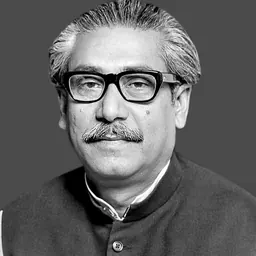
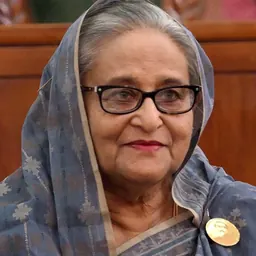
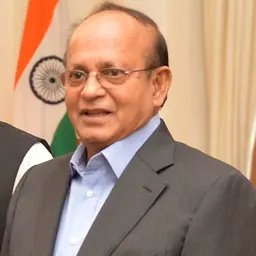
Related people
Same field, nearest in time


Contemporaries
People whose lives overlapped Mizanur Rahman Chowdhury's
Frequently asked questions
Who was Mizanur Rahman Chowdhury?
former Prime Minister of Bangladesh (1928-2006)
When was Mizanur Rahman Chowdhury born?
Mizanur Rahman Chowdhury was born on 19 October 1928 in Chandpur District.
When did Mizanur Rahman Chowdhury die?
Mizanur Rahman Chowdhury died on 2 February 2006 in Dhaka.
What was Mizanur Rahman Chowdhury's occupation?
Mizanur Rahman Chowdhury was a politician.
What nationality was Mizanur Rahman Chowdhury?
Mizanur Rahman Chowdhury was Pakistani, Bangladeshi and Indian.
Sources & further reading
· Wikipedia: Mizanur Rahman Chowdhury
· DBpedia: Mizanur Rahman Chowdhury
Cite this page
APA: Biography.guide. (2026). Mizanur Rahman Chowdhury. https://biography.guide/mizanur-rahman-chowdhury-politician/
MLA: "Mizanur Rahman Chowdhury." Biography.guide, https://biography.guide/mizanur-rahman-chowdhury-politician/.
Chicago: "Mizanur Rahman Chowdhury." Biography.guide. https://biography.guide/mizanur-rahman-chowdhury-politician/.
Data last updated: 2026-09-30 · Spot an error? Report a correction.
Portrait: Wikimedia Commons · author & licence
Page generated 2026-10-05 04:28 UTC