
About Miwa Kai
Lived 1913 – 2011 (aged 98). Miwa Kai was a librarian and pianist.
Miwako Kai (; May 24, 1913 [ Taishō 2] – December 10, 2011 [ Heisei 23]) was a Japanese-American pianist and librarian. Raised between San Francisco and Tokyo, she came to national attention in Japan in 1932 when she was awarded the Grand Prize at the first Music Competition, an honor conferred above the individual divisional prizes and never given to anyone else. Together with Chieko Hara, she took part in the third International Chopin Piano Competition in 1937, becoming the first competitors from an Asian country in the history of the event.
Living in San Francisco when the attack on Pearl Harbor brought the United States into World War II, Kai was forcibly interned in 1942, first at the Santa Anita Assembly Center in California and then at the Topaz War Relocation Center in Utah.
After her release, she settled in New York and joined the Columbia University Libraries, where she spent nearly four decades developing the Japanese-language holdings of the East Asian Library, now the C.V. Starr East Asian Library, heading the Japanese collection from 1945 until her retirement in 1983. In 1995, the Government of Japan awarded her the Order of the Precious Crown in recognition of her contributions to Japanese studies and to cultural exchange between the two countries. Her grandfather, , was an early student of Fukuzawa Yukichi and managed the New York branch of a silk and tea importing house before founding the firm of O. Kai & Co. in 1885, operating Japanese art and curio stores in San Francisco and New York.
Kai progressed rapidly, soon appearing in group recitals with other pupils and acquiring a reputation as a child prodigy, although she later maintained that she had been scarcely better as a performer than her Japanese contemporaries.
In the autumn of 1927, Kai returned to Japan with the Kawasakis as part of a concert tour, during which her birth parents reclaimed custody of her. According to some accounts her family arranged for her to marry a Japanese nobleman, but the engagement was called off.
Kai gave the Japanese premiere of Robert Schumann's Piano Concerto in A minor, Op. 54 in 1933, appearing with the New Symphony Orchestra under . The performance was reviewed at length by the critic Seiichirō Utsumi in the inaugural issue of the journal Ongaku Hyōron. Two years later, in 1935, she again appeared with the New Symphony Orchestra under Shifferblatt, this time in Franz Liszt's Piano Concerto No. 1. That same year she was a soloist at Tokyo's Hibiya Public Hall under the conductor Hidemaro Konoye, brother of Prince Fumimaro Konoe. Eighty pianists from twenty-two countries took part, and although neither of them were among the prizewinners, their playing in kimono was warmly received by critics and the public. Kai was invited to perform for President Ignacy Mościcki at a reception held for the competitors and the diplomatic corps at the Royal Castle.
Following the competition, Kai was invited by the Japanese Embassy in Berlin on a tour of London, after which she stayed as a guest at the Japanese legations in Paris and Vienna. She returned to Japan as a well-known public figure and gave a recital of Chopin and other composers at Hibiya Public Hall under the auspices of the Polish minister to Japan and the Tokyo Nichi Nichi Shimbun.
Return to the United States In May 1939, Kai returned to the United States on a goodwill tour sponsored by the Japan Tourist Bureau, accompanying the entertainer Takiko Mizunoe. She went back to Japan shortly afterwards, but in January 1940 traveled once more to California, this time for an announced stay of a year.
The Japanese-language holdings of the East Asian Library had been built largely around materials assembled through the efforts of Ryusaku Tsunoda. After the end of the war in 1945, Kai spent two months at the Library of Congress in Washington, D.C., with her colleague Philip Yampolsky, helping to process books that occupation authorities had confiscated from libraries throughout Japan.
Kai also received and trained librarians sent to Columbia by Japanese institutions, among them the National Diet Library and the library of Waseda University. Her work on the Japanese collection was described by Columbia as having left a lasting mark not only on the university but on librarians and scholars of Japanese studies more broadly.
Kai retired in 1983 on reaching seventy, then the mandatory retirement age. To mark her nearly four decades of service, a metal plaque was dedicated to her in the reading room of the C.V. Starr East Asian Library and a cherry tree was planted in her honor outside Kent Hall. Her principal projects after retirement were two published catalogues, issued in 1986 and 1996; she then began a comprehensive history of the Japanese collection at the East Asian Library, which she worked on almost until the end of her life but did not complete.
Legacy A memorial service for Kai was held in the C.V. Starr East Asian Library reading room on April 20, 2012, with tributes from Columbia faculty, the librarians of the National Diet Library and Waseda University Library, and members of her family. The reading room holds a display of items associated with her, including the sign from the Japanese-language library at the Topaz War Relocation Center, the Order of the Precious Crown medal and hanging scroll she received in 1995, a Waseda University certificate of appreciation, and a collection of first-day cover cachets donated in her honor. A memorial issue of the Journal of East Asian Libraries (no. 154, 2012), the organ of the Council on East Asian Libraries, published tributes from colleagues and associates including Donald Keene and .
Publications Political Chronology of Japan, 1885–1957 (with Philip B. Yampolsky). New York: East Asian Institute, Columbia University (1957) Say It in Japanese. New York: Dover Publications (first published in the 1950s; revised and enlarged edition 1983) Japanese Woodblock Printed Books and Other Unique Japanese Materials at Columbia University (2 volumes in 4 parts). New York (1996)
Don’t just read it —
keep it.
Full-length biographies made to live with: read them, listen on the way to work, watch them tonight.
- E-book
- Audio
- Video
Instant download · yours to keep · every purchase keeps this site free
Important facts
People in Miwa Kai's life
Named in this biography and alive at the same time





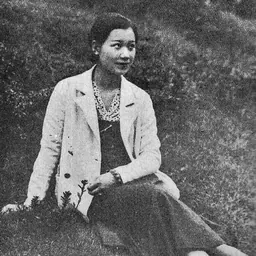

Related people
Same field, nearest in time
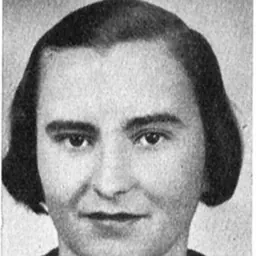
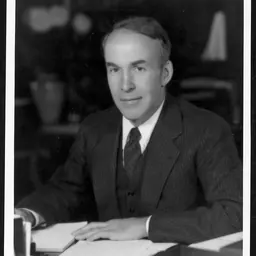
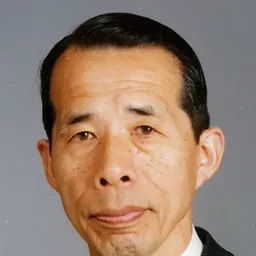


Contemporaries
People whose lives overlapped Miwa Kai's




Frequently asked questions
Who was Miwa Kai?
Japanese pianist and librarian (1913–2011)
When was Miwa Kai born?
Miwa Kai was born on 24 May 1913.
When did Miwa Kai die?
Miwa Kai died on 10 December 2011.
What was Miwa Kai's occupation?
Miwa Kai was a librarian and pianist.
Sources & further reading
Cite this page
APA: Biography.guide. (2026). Miwa Kai. https://biography.guide/miwa-kai/
MLA: "Miwa Kai." Biography.guide, https://biography.guide/miwa-kai/.
Chicago: "Miwa Kai." Biography.guide. https://biography.guide/miwa-kai/.
Data last updated: 2026-09-20 · Spot an error? Report a correction.
Page generated 2026-09-27 05:18 UTC