
Mirza Abu Taleb Khan
Indian tax collector, Persian scholar and author of an early travel memoir recounting his trip to Britain, Europe and Asia Minor
About Mirza Abu Taleb Khan
Lived 1752 – 1800. Mirza Abu Taleb Khan was a tax collector, travel writer and traveler.
Mirza Abu Taleb Khan (; more formally Mirzá Abú Muhammad Tabrízí Isfahání, , known as The Persian Prince during his stay in London and as Abú Tálib Londoni once back in India 1752–) was an Indian tax-collector and administrator of Iranian stock, notable for a memoir of his travels in Britain, Europe and Asia Minor, Masir Talib fi Bilad Afranji, written between circa 1799 and 1805.
The book's title is translated as The Travels of Taleb in the Regions of Europe and was reprinted in the West as Travels of Mirza Abu Taleb Khan in Asia, Africa and Europe; it is one of the earliest by an Indian travel writer about the West, and has been described as 'perhaps the most significant "reverse travelogue" published in Europe during the Romantic era". He wrote all his works in Persian.
Biography
Oudh and Bengal Much of what is known of Abu Taleb's background comes from his memoirs. By his description, his Iranian father Hajji Mohammed Beg (died 1768) was born in Abbasabad in the Isfahan Province of Persia, but fled to Lucknow in Oudh State, northern India, in fear of the 'tyranny' of Nader Shah. There he was 'admitted to the friendship' of Safdarjung, the Subadar Nawab of Oudh and was in time appointed assistant to the deputy-governor of Oudh, Safdarjung's nephew Mohammed Culy Khan. His appointment did not survive Safdarjung's death in 1754; the new Nawab, Safdarjung's son Shuja-ud-Daula had Mohammed Culy Khan executed and Hajy Mohammed Beg Khan fled to Murshidabad, West Bengal within a couple of years of Abu Taleb's birth in Lucknow in 1752.
Abu Taleb and his mother remained in Lucknow under the protection of the Nawab - "although Nabob Shujaa ad Dowleh was much displeased at my father's conduct, he nevertheless, recollecting the connexion between our families, supplied my mother with money for her expenses and have her strict injunctions to let me have the very best education." They moved to Murshidabad in 1766, but in 1768, within about 18 months of their arrival, Hajy Mohammed Beg Khan died. Abu Taleb had been married into the family of 'Muzaffer Jung - Nabob of Bengal' and spent some time in that prince's service, remaining away from Oudh until, in 1775, after the death of Shuja-ud-Daula and the accession of his son Asaf-ud-Daula, he was invited by the prime minister, Mokhtiar-ud-Daula, to take up the position of Aumildar of the Etawah district. The role combined tax-collector, Lord-Lieutenant and local military controller, but ceased within a couple of years upon the death of Abu Taleb's patron Mokhtiar, and the appointment of Hyder Beg Khan as his replacement.
Abu Taleb spent a year in Lucknow, after which he took up a first appointment with the East India Company - already well involved in Oudh affairs - to assist Colonel Alexander Hanney, the company's tax-collector at Gorakhpur; this he did for three years until Hanney returned to Europe, whereupon Abu Taleb retired again to a year of unemployment in Lucknow. Relations between the Company and Oudh were in this period strained, including during the 1781–1782 third period of Nathaniel Middleton office as Resident, and, according to Abu Taleb, the State's tax-collection system was in sufficient disarray that Zamindars, notably Balbhadra Singh, were refusing to make any payments (all Hyder Beg Khan's fault, according to Abu Taleb.) A military action by the Nawab and the Company against Singh failed (again, Hyder Beg Khan's fault!) and, Abu Taleb says, Warren Hastings, the then Governor General, instructed Middleton to send for Abu Taleb as a person who might be able to bring Singh under control. After briefly playing hard-to-get, Mizra agreed to assist and from circa 1782-1784 Abu Taleb campaigned against, defeated and killed Singh. Middleton had been withdrawn from Lucknow, and Hastings resigned in 1784, leaving Abu Taleb somewhat exposed, but surviving on an allowance from the Nawab of 6,000 rupees per annum; his bête noire Hyder Beg Khan was still in place and appeared to have the confidence of the new Governor General, Sir John Macpherson.
By 1787, Hyder Beg Khan had stopped Abu Taleb's allowance, which precipitated a decision on Abu Taleb's part to leave Lucknow for Calcutta, the seat of East India Company government. Initial overtures to Sir Charles Cornwallis, who succeeded Macpherson as Governor General, were poorly timed; Cornwallis's attention was focussed on Tipu Sultan and the Third Anglo-Mysore War, and it was only at the 1792 conclusion of that engagement that Cornwallis responded, sending Abu Taleb back to Lucknow with letters of recommendation to Asaf-ud-Daula and George Frederick Cherry, the Resident. Abu Taleb's expectation of a resumption of employment was dashed by disagreements between the Nawab and the Resident severe enough to necessitate the withdrawal of the latter from Lucknow; in 1795 Abu Taleb again found it expedient to remove to Calcutta. Although John Shore made encouraging noises, several years of deteriorating Company relations with Oudh, the 1797 death of Asaf-ud-Daula, the brief reign of Wazir Ali Khan with its delayed culmination in the Massacre of Benares all served to render Abu Taleb unemployed, separated from his family, increasingly poor and depressed.
Khan's travels It was at this very low period in Abu Taleb's life that, in 1799, an unexpected offer was made to him by David Thomas Richardson, an East India Company officer returning to London for health reasons. Richardson suggested that Abu Taleb accompany him and undertake a grand-tour of Europe; Abu Taleb promptly accepted. It is unclear whether Richardson's offer arose from personal friendship, or if the hand of the East India Company was involved. Tim Willasey-Wilsey suggests that the company was making an investment in Abu Taleb with a view to his potential later utility in Oudh. This reading of the situation may rest in some small part on Charles Stewart's English language translation of Abu Taleb's Persian language travel memoir, which sees Richardson offering to pay Abu Taleb's expenses. That translation is disputed by Gita Hashemi, who translates the key passage in the book as Abu Taleb agreeing to Richardson's suggestion, but booking and paying for his own passage. Equally, it is clear that Abu Taleb was involved in the political intrigues of Oudh, and both were regarded whilst en route as having confidential motives for their travel; and the unprecedented nature of the trip is itself grounds for reasonable suspicion in the context of the company's anticipation of annexation of Oudh State. Travels of Mirza Abu Taleb Khan in Asia, Africa and Europe 1810, 1814
Besides these, Elliot and Dowson assert that he was the author of 'several other treatises, a Biography of the Poets, ancient and modern, and', quoting the Zubdatu-l Gharaib of Muhammad Riza, '"himself indulged in versification, especially on the subject of the females of England, who aspire to equality with the Angels of Paradise, and he was always expatiating on the heart-ravishing strains of the women of that country, who used to sing at the public assemblies"'.
Don’t just read it —
keep it.
Full-length biographies made to live with: read them, listen on the way to work, watch them tonight.
- E-book
- Audio
- Video
Instant download · yours to keep · every purchase keeps this site free
Important facts
People in Mirza Abu Taleb Khan's life
Named in this biography and alive at the same time


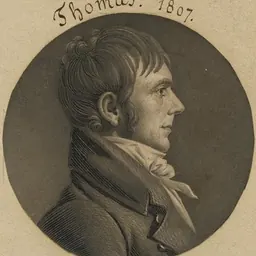

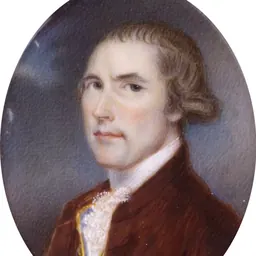


Related people
Same field, nearest in time

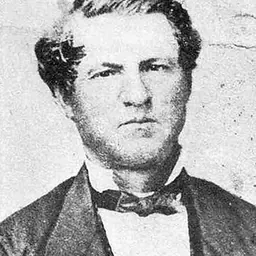
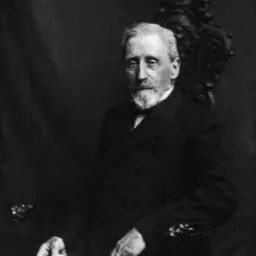

Contemporaries
People whose lives overlapped Mirza Abu Taleb Khan's





Frequently asked questions
Who was Mirza Abu Taleb Khan?
Indian tax collector, Persian scholar and author of an early travel memoir recounting his trip to Britain, Europe and Asia Minor (1752–1806)
When was Mirza Abu Taleb Khan born?
Mirza Abu Taleb Khan was born in 1752 in Lucknow.
When did Mirza Abu Taleb Khan die?
Mirza Abu Taleb Khan died in 1800 in Bundelkhand.
What was Mirza Abu Taleb Khan's occupation?
Mirza Abu Taleb Khan was a tax collector, travel writer and traveler.
Sources & further reading
· Wikipedia: Mirza Abu Taleb Khan
· DBpedia: Mirza Abu Taleb Khan
Cite this page
APA: Biography.guide. (2026). Mirza Abu Taleb Khan. https://biography.guide/mirza-abu-taleb-khan/
MLA: "Mirza Abu Taleb Khan." Biography.guide, https://biography.guide/mirza-abu-taleb-khan/.
Chicago: "Mirza Abu Taleb Khan." Biography.guide. https://biography.guide/mirza-abu-taleb-khan/.
Data last updated: 2026-09-20 · Spot an error? Report a correction.
Page generated 2026-09-27 05:17 UTC