
About Mírzá Abu'l-Fadl
Lived 1844 – 1914 (aged 69–70). Mírzá Abu'l-Fadl was a religious writer and theologian.
Mírzá Muḥammad , or Mírzá Abu'l-Faḍl-i-Gulpáygání (1844–1914), was the foremost Baháʼí scholar who helped spread the Baháʼí Faith in Egypt, Turkmenistan, and the United States. He is one of the few Apostles of Baháʼu'lláh who never actually met Baháʼu'lláh. His given name was Muhammad, and he chose the alias Abu'l-Faḍl (progenitor of virtue) for himself, but ʻAbdu'l-Bahá frequently addressed him as Abu'l-Fada'il (progenitor of virtues).
Early life Mírzá Abu'l-Faḍl was born in a village near Gulpaygan, Iran, in June or July 1844. His family were prominent religious scholars in the village; his father, Mirza Muhammad Rida Shariʻatmadar, was a religious leader, and his mother, Sharafu'n-Nisa, was related to the prayer leader of the town. Abu'l-Faḍl completed his preliminary education in Gulpaygan, and then successively went to Arak, Karbala and Najaf to continue his education. In 1868 he left for Isfahan to study Islamic sciences at one of the religious colleges in the city; he was given a room by one of the prayer leaders, Imam-Jumʻih, Sayyid Muhammad Sultanu'l-ʻUlama, who was a friend of his father's. Abu'l-Faḍl remained at the college for three years, becoming well-versed in several branches of knowledge. Abu'l-Faḍl's father died in the winter of 1871, and after his death, Abu'l-Faḍl's brothers schemed against him and took all their father's inheritance.
In the next several months, Abu'l-Faḍl met with some of the leading Baháʼís including Nabíl-i-Akbar, Mirza Ismaʻil Dhabih and Aqa Mirza Haydar ʻAli Ardistani. While he was at Mirza Ismaʻil Dhabih's house, he read two of Baháʼu'lláh's tablets, the Lawh-i-Ra'ís (Tablet of the Chief) and the Lawh-i-Fu'ád (Tablet of Fu'ad Pasha), which contain prophecies both of the fall of the Ottoman Sultan Abd-ul-Aziz and vizier ʻAli Páshá and of the loss of Adrianople from the Sultan. He determined that if the events portrayed in those tablets came to pass, he would believe in Baháʼu'lláh.
Publications Fara'id (The Peerless Gems): A book written in 1898 in reply to a critique on the Kitáb-i-Íqán and published in Cairo. Generally considered Mírzá Abu'l-Faḍl's greatest work, written in Persian, with occasional citations of Arabic statements. Al-Duraru'l-Bahiyyih (The Shining Pearls): Published in 1900, it is a collection of essays on the history of the Baháʼí Faith. Since it was written in Arabic, it was responsible for making the Baháʼís known in Egypt. It has been translated by Juan Cole as Miracles and Metaphors Burhan-i-Lamiʻ (The Brilliant Proof): Published, along with an English translation, in Chicago in 1912, the paper responds to a Christian clergyman's questions. Republished as Sharh-i-Ayat-i-Mu'arrakhih (In Explanation of Massacre Verses that Prophesy Dates): Written in 1888, the work discusses the date of the prophecies concerning the coming of the Promised One in the scriptures of Islam, Christianity, Judaism, and Zoroastrianism. Risalih Ayyubiyyih (Treatise addressed to Ayyub): Written in 1887, concerning prophecies relating to the Promised One in the Torah. Faslu'l-Khitab (The Decisive Utterance): A large book written in Samarqand in 1892; among its subjects, it discusses the traditions in Shia Islam regarding the persecution of the Promised One. The book was written in reply to a critique by an Adharbayjan Shia cleric. No known copy of the work exists. Risaliyyih Iskandaraniyyih: Published along with Al-Duraru'l-Bahiyyih, the paper provides proofs for Muhammad's prophethood from Christian and Jewish scripture. It also explains the verse from the Qurʼan "Then it is ours to explain it." The Kitab-i-Ibrar (Book of Justification): While no manuscript of this book currently exists, it was referred to in Abu'l-Faḍl's other works and seems to have dealt with the Covenant. Al-Hujaju'l-Baháʼíyyih (The Baháʼí Proofs): A book written while in the United States, which explains and defends the Baháʼí Faith from a Christian point of view. Kashfu'l-Ghita (The Uncovering of Error): After E.G. Browne published the Nuqtatu'l-Kaf, which was hostile to the Baháʼí Faith, Abu'l-Faḍl began working on refutations of that book. When he learned that other Baháʼí scholars had also started working on refutations that had reached an advanced stage, he suspended his writing. He never completed the book, and when his papers were sent to his cousin in Ashkhabad, his cousin worked on completing the book, of which 132 of 438 pages are written by Abu'l-Faḍl.
Letters In addition to the books that Abu'l-Faḍl wrote, he also wrote a number of shorter works in response to questions addressed to him; some of these letters have been published in a number of compilations:
Majmuʻiy-i-Rasaʼil-i-Hadrat-i-Abi'l-Faḍl: Published in Cairo in 1920 and contains 16 letters and treatises. Rasa'il wa Raqa'im: Published in Persian in Tehran in 1977, and contains 23 treatises and 59 letters. Some of the treatises from this work have been translated by Juan Cole into English in Letters & Essays including: Two treatises on the Covenant: Published in 1911 in Cairo consisting of two treatises written in 1899 and 1896 which deal with proofs from the Bible and the Qurʼan, and about the actions of Covenant-breakers. Risalih Iskandariyyih (Treatise of Alexander): Written in response to a request by E.G. Browne to write about the life of Baháʼu'lláh among other things. The letter was named in honour of Alexander Tumansky, who had also requested information about Baháʼu'lláh. Al-Bab wa'l-Babiyyih (The Báb and Bábísm): A brief history of the Baháʼí Faith commissioned by the editor of the Egyptian magazine Al-Muqtataf after the assassination of Nasser al-Din Shah. A treatise regarding Baháʼu'lláh's ancestry which traces it to the last Sasanian king, Yazdgerd III. Part of this text was translated by H.M. Balyuzi and published in his book Eminent Baháʼís in the time of Baháʼu'lláh.
Don’t just read it —
keep it.
Full-length biographies made to live with: read them, listen on the way to work, watch them tonight.
- E-book
- Audio
- Video
Instant download · yours to keep · every purchase keeps this site free
Important facts
People in Mírzá Abu'l-Fadl's life
Named in this biography and alive at the same time
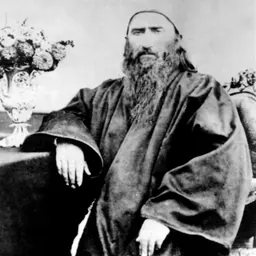


Related people
Same field, nearest in time

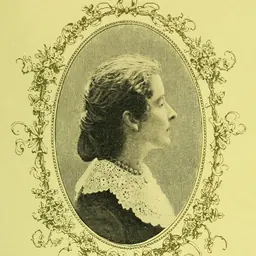


Contemporaries
People whose lives overlapped Mírzá Abu'l-Fadl's
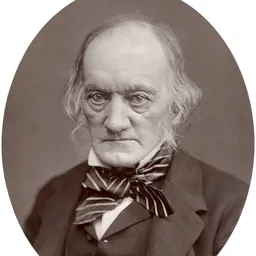
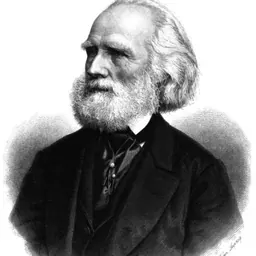


Frequently asked questions
Who was Mírzá Abu'l-Fadl?
Iranian Bahá'í scholar and religious writer
When was Mírzá Abu'l-Fadl born?
Mírzá Abu'l-Fadl was born in 1844 in Golpayegan.
When did Mírzá Abu'l-Fadl die?
Mírzá Abu'l-Fadl died on 21 January 1914 in Cairo.
What was Mírzá Abu'l-Fadl's occupation?
Mírzá Abu'l-Fadl was a religious writer and theologian.
What nationality was Mírzá Abu'l-Fadl?
Mírzá Abu'l-Fadl's recorded nationality: Qajar Iran.
Sources & further reading
Cite this page
APA: Biography.guide. (2026). Mírzá Abu'l-Fadl. https://biography.guide/mirza-abu-l-fadl/
MLA: "Mírzá Abu'l-Fadl." Biography.guide, https://biography.guide/mirza-abu-l-fadl/.
Chicago: "Mírzá Abu'l-Fadl." Biography.guide. https://biography.guide/mirza-abu-l-fadl/.
Data last updated: 2026-09-20 · Spot an error? Report a correction.
Page generated 2026-09-27 05:19 UTC