
About Miroslav Tichý
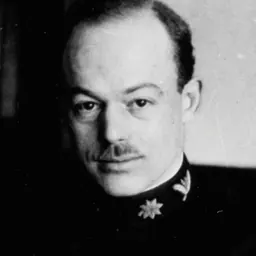
Lived 1926 – 2011 (aged 84). Miroslav Tichý was a Czech photographer, painter, graphic artist and draftsperson.
Miroslav Tichý (; November 20, 1926 – April 12, 2011) was a photographer who from the 1960s until 1985 took thousands of surreptitious pictures of women in his hometown of Kyjov in the Czech Republic, using homemade cameras constructed of cardboard tubes, tin cans and other at-hand materials. Most of his subjects were unaware that they were being photographed. A few struck beauty-pageant poses when they sighted Tichý, perhaps not realizing that the parody of a camera he carried was real.
Of his technical methods, Tichy has said, "First of all, you have to have a bad camera", and, "If you want to be famous, you must do something more badly than anybody in the entire world."
Early life Miroslav Tichý was born in 1926 in the village of Nětčice, part of the town of Kyjov (now South Moravian Region), Czechoslovakia. He was an introverted child who did well in school.
Although Tichý is regarded today as an outsider artist because of his unconventional approach to photography, he studied at the Academy of Fine Arts in Prague, and for a time seemed on the path to becoming an esteemed painter in the modernist mode, working in a style reminiscent of Josef Čapek. After the Communist takeover of Czechoslovakia in 1948, students at the Academy were required to work in the Socialist mode, drawing workers in overalls rather than female models. Tichý refused, stopped working and quit the Academy. He was then required to perform his compulsory military service. His non-photographic body of work includes 100 to 200 oil paintings and a vast number of drawings. As with his photographs, in the past he destroyed an unknown number of such works. Although he was not permitted to go to the pool, he could photograph undisturbed through the wire fence. The fence often appears in his pictures, its presence adding a suggestion of forbidden fruit.
According to a review by R. Wayne Parsons published in The New York Photo Review, We see women photographed from the rear, from the front, from the side; we see their feet, legs, buttocks, backs, faces, as well as complete bodies [as when drawing a nude at the Academy]; we see them walking, standing, sitting, bending over, reclining. There are a few nudes, though the poor image quality sometimes makes it difficult to determine if we are looking at a nude or a woman with not much on. [...] Whatever eroticism is present is limited to that of the voyeur; these women are not inviting us into their world.
Buxbaum began an effort to collect and preserve the artist's deteriorating photographs. He says that over the next 25 years it was his good fortune to be the only person to see, collect and document Tichý's work. Tichý made him presents of bundles of photographs, and Buxbaum bought more bundles from Tichý's neighbor and "surrogate mother", Jana Hebnarová, who looked after Tichý since his mother's death and was appointed his heir. In 2006, Buxbaum said that he believed his to be the most complete collection of Tichý's photographs, and that he had placed part of it with galleries for sale on commission, with the intention of making it available to museums and collectors to "bequeath it to the world of art".
Recognition As part of Buxbaum's conservation efforts, he made a documentary about the artist's work and life, Miroslav Tichý: Tarzan Retired (2004). Tichý's work was largely unknown until Buxbaum's collection of his photographs was shown at the 2004 Biennial of Contemporary Art in Seville. Tichý's work won the Rencontres d'Arles 2005 New Discovery Award, and Buxbaum set up the Tichý Oceán Foundation on behalf of Tichý, then 77, to preserve and exhibit his work. In 2005, he had a major retrospective at the Kunsthaus in Zurich, In its review, The New York Times thought his anti-modernist style was representative of the nonviolent subversion practiced by Czech students and artists under the Soviet regime, and called his photographs an "uncanny fusion of eroticism, paranoia and deliberation" that is "mildly disturbing [but also] intensely fascinating".
Critical interpretation An essay in Artforum International describes Tichý as "practically reinventing photography from scratch", rehabilitating the soft focus, manipulated pictorial photography of the late 1800s...not as a distortion of the medium but as something like its essence. What counts for him is not only the image – just one moment in the photographic process – but also the chemical activity of the materials, which is never entirely stable or complete, and the delimitation of the results via cropping and framing.
Director Radek Horacek of the Brno House of Art, which held an exhibition of Tichy's photographs in 2006, describes them thus: They are all very careful observations of women from Kyjov and of everyday trivial activities. But soon you realize that these trivial situations such as someone sitting on a bench, women waiting for a bus, someone taking a T-shirt off at a swimming pool, are somehow extraordinary. Tichy managed to give this banality a feeling of exceptionality and rarity. Just part of a female body in his pictures can look very esoteric. There are so many magazines that offer much more nudity than Tichy but his photographs are different. A woman's tights between a knee and a skirt or a swimming costume in his pictures look somehow mysterious.
Selected solo shows 2019: "A Figure Drawn" Robert Heald Gallery, Wellington, New Zealand 2017: "Photographs 1960–1990" Robert Heald Gallery, Wellington, New Zealand 2013: “City of the Women”, Zephyr, Mannheim, Germany 2013: “Homage to Miroslav Tichý”, Prague Biennale, Prague, Czech Republic 2012: "L'Homme à la Mauvaise Caméra", Pascal Polar Gallery, Brussels, Belgium 2012: "The Artist with the Bad Camera", Moscow House of Photography, Moscow, Russia 2011: "Sun Screen", Horton Gallery, New York City, United States 2011: "Miroslav Tichỷ, Retrospettiva", SI Fest, Savignano sul Rubicone, Italy 2011: "Miroslav Tichỷ", Braunschweig University of Art, Braunschweig, Germany 2011: "Miroslav Tichỷ", Wilkinson Gallery, London, Great Britain 2011: "Les formes du vrai / Forms of Truth", City Gallery Prague, Prague, Czech Republic 2010: "Miroslav Tichỷ", International Centre of Photography, New York City, United States 2009: "Miroslav Tichỷ. Mirography", Ivorypress Art Space, Madrid, Spain 2008: "Miroslav Tichỷ", Centre Georges Pompidou, Musée national d’Art Moderne, Paris, France 2008: "Miroslav Tichỷ", Kunsthaus Bregenz, KUB Billboards, Bregenz, Austria 2008: "Miroslav Tichỷ", Museum of Modern Art (MMK), Frankfurt, Germany 2007: "Miroslav Tichỷ", Taka Ishii Gallery, Tokyo, Japan 2007: "Miroslav Tichỷ", Beijing Art Now Gallery, Beijing, China 2007: "Miroslav Tichỷ", Beijing Art Now Gallery, Shanghai, China 2006: "Miroslav Tichỷ", Brno House of Art, Brno, Czech Republic 2005: "Miroslav Tichỷ", Kunsthaus, Zurich, Switzerland
Don’t just read it —
keep it.
Full-length biographies made to live with: read them, listen on the way to work, watch them tonight.
- E-book
- Audio
- Video
Instant download · yours to keep · every purchase keeps this site free
Important facts
People in Miroslav Tichý's life
Named in this biography and alive at the same time

Related people
Same field, nearest in time




Contemporaries
People whose lives overlapped Miroslav Tichý's


Frequently asked questions
Who was Miroslav Tichý?
Czech photographer and painter (1926-2011)
When was Miroslav Tichý born?
Miroslav Tichý was born on 20 November 1926 in Kyjov, Nětčice (Kyjov).
When did Miroslav Tichý die?
Miroslav Tichý died on 12 April 2011 in Kyjov, Veselí nad Moravou.
What was Miroslav Tichý's occupation?
Miroslav Tichý was a photographer, painter, graphic artist and draftsperson.
What nationality was Miroslav Tichý?
Miroslav Tichý was Czech.
Sources & further reading
Cite this page
APA: Biography.guide. (2026). Miroslav Tichý. https://biography.guide/miroslav-tichy/
MLA: "Miroslav Tichý." Biography.guide, https://biography.guide/miroslav-tichy/.
Chicago: "Miroslav Tichý." Biography.guide. https://biography.guide/miroslav-tichy/.
Data last updated: 2026-09-22 · Spot an error? Report a correction.
Page generated 2026-09-27 05:23 UTC