
About Mira Schendel
Lived 1919 – 1988 (aged 69). Mira Schendel was a Brazilian and Swiss painter, sculptor, poet, writer, illustrator and artist.
Mira Schendel (June 7, 1919 – July 24, 1988) was a 20th-century Brazilian contemporary artist. She was known for her drawings on rice paper and was also active as a painter, poet, and sculptor. Her work drew upon the art of language and poetry, and what appears to have driven her was the ability to reinvent it.
Early life Mira Schendel was born Myrrha Dagmar Dub in 1919 in Zurich, Switzerland. Her father, Karl Leo Dub, was a fabric merchant, and her mother, Ada Saveria Büttner, was a milliner. Schendel's parents divorced in September 1922, and her mother married Count Tommaso Gnoli in 1937.
Career When she arrived in São Paulo in 1953, Brazilian modernism was dominated by a debate between figuration and abstraction. in the idea of being and nothingness, in mystical thinking and her deep reading of Wittgenstein. But the impact of these works does not depend upon the viewer sharing either that knowledge or those interests.
Schendel’s work features mixtures of calligraphy, phrases, letters, and encrypted traces of language. The graphic output in Schendel’s paintings explore the relations between language and art, and the inquiry into that relationship reveals itself in the totality of her work. Schendel’s paintings from the mid-1950s depict shallow surfaces, simplified figuration, and muted tones, and the textures and materials stand out more than the values of the color. These early works suggest a play of opposition between visual elements and the hand of the artist. The lines of Schendel’s drawings are driven toward writing. The precise inscriptions are linked to letters and words and the gesture of her hand is linked to more general meanings. Her works explore the universality of language. However, later in her career lines lost association with the movement of her hand and gained the generality of concepts as she began to place them in ambiguous situations.
She worked rapidly and in little over a year she had made the majority of approximately 2,000 drawings. In these works she also first combined multiple languages, using words and phrases from her principle spoken languages - Italian, German and Portuguese but also adding words in French, English, Croat and Czech. One important group of monotypes was inspired by Karlheinz Stockhausen's Gesang der Jünglinge (1955–1956), an early piece of electronic music that employed vocals drawn from the biblical Book of Daniel. A number of these were included in the 1965 São Paulo Bienal.
These drawings included Droguinhas (Little Nothings), c. 1965–68, Trenzinho (Little Train), 1965, and the Objetos graficos (Graphic objects), 1967.
After using rice paper in Monotypes and discovering the quality of the material, Schendel began to use it as an autonomous medium itself in her works Droguinhas and Trenzinho.
Mira Schendel also plays against the grain of language. In works such as Droguinhas, Trenzinhos, and Still Waves of Probability, despite the overall repetition and accumulation, Schendel explores language as action, faltering to absolute resistance. According to Sonia Salzstein, in Schendel’s experience, the subjectivity emerges in the course of a process and therefore, can’t be reduced to a psychology.
When Schendel arrived in Brazil she had an experimental and reflective attitude towards things. These traits reveal themselves in her work, as well as her previous experience in art and philosophy during her time in Milan. Schendel’s experimental nature produced heterogeneous works that are not easy to confine to a consistent style. She explored multiple directions in her work which allowed her to enjoy the freedom of fluid form of thought and play with the limits of form and work itself.
Schendel’s work drew upon the art of language and poetry, and what appears to have driven her was the ability to reinvent it.
Schendel neither attempted to order reality or to impose meaning on it in her art. Through her art she examined the possibilities of our presence in the world with the recognition of both our limitations and relating achievements.
Interpretations of Schendel’s work often mention an opposition between gentleness and force. This quality is believed to result from her singular approach to reality. Her material attained intensity through gentle interventions and her works' meaning depends on preserving this tension.
Selected works and publications Selected works Untitled Located in NYC part of Private Collection 1956*
Untitled Located in NYC part of Private Collection 1956 , 1953 , 1960 , 1964 , 1967 (1987)
Publications Grafische Reduktionen. Stuttgart, E. Walther, 1967. "O drama dos imigrantes europeus." Correio do Povo (Porto Alegre), January 7, 1950, pp. 1, 4.
Don’t just read it —
keep it.
Full-length biographies made to live with: read them, listen on the way to work, watch them tonight.
- E-book
- Audio
- Video
Instant download · yours to keep · every purchase keeps this site free
Important facts
People in Mira Schendel's life
Named in this biography and alive at the same time

Related people
Same field, nearest in time

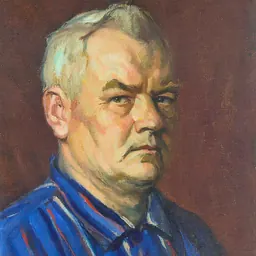
Contemporaries
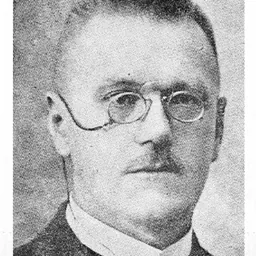
People whose lives overlapped Mira Schendel's



Frequently asked questions
Who was Mira Schendel?
Brazilian painter (1919-1988)
When was Mira Schendel born?
Mira Schendel was born on 7 June 1919 in Zurich.
When did Mira Schendel die?
Mira Schendel died on 24 July 1988 in São Paulo.
What was Mira Schendel's occupation?
Mira Schendel was a painter, sculptor, poet, writer, illustrator and artist.
What nationality was Mira Schendel?
Mira Schendel was Brazilian and Swiss.
Sources & further reading
Cite this page
APA: Biography.guide. (2026). Mira Schendel. https://biography.guide/mira-schendel/
MLA: "Mira Schendel." Biography.guide, https://biography.guide/mira-schendel/.
Chicago: "Mira Schendel." Biography.guide. https://biography.guide/mira-schendel/.
Data last updated: 2026-09-20 · Spot an error? Report a correction.
Page generated 2026-09-27 05:13 UTC