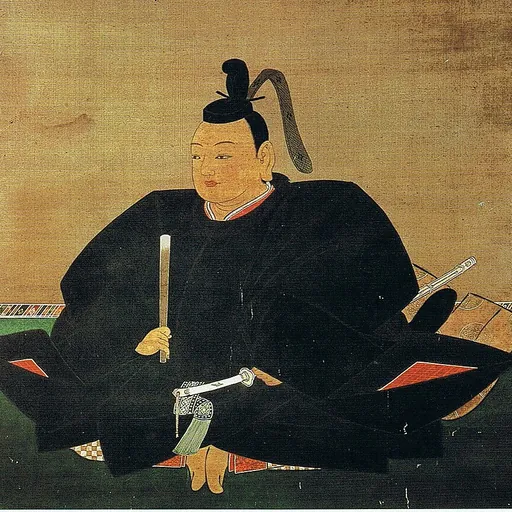
About Minamoto no Yoriie
Lived 1182 – 1204 (aged 21). Minamoto no Yoriie was a Japanese samurai and bushi.
was a Japanese samurai, daimyo and the second shōgun (1202–1203) of the Kamakura shogunate and the first son of its founder, Minamoto no Yoritomo. His Dharma name was Hokke-in-dono Kingo Da’i Zengo .
Life Yoriie was born in Kamakura at the residence of Hiki Yoshikazu. Before his birth, Yoritomo ordered construction of the Dankazura on Wakamiya Ōji at Tsurugaoka Hachimangū to pray for a safe delivery.
After Yoritomo’s death in 1199, the seventeen-year-old Yoriie succeeded as head of the Minamoto clan and was appointed sei-i taishōgun in 1202. On July 22, 1202, he was formally invested as sei-i taishōgun.
Hiki–Hōjō struggle and deposition Tensions between Yoriie’s in-laws, the Hiki clan, and his maternal relatives, the Hōjō clan, intensified after he fell seriously ill in 1203. A plan was discussed to divide authority between his son Ichiman and his younger brother Sanetomo. Yoriie was stripped of power on September 7, 1203, compelled to take Buddhist vows, and placed under confinement.
Family and issue
Yoriie was the eldest son of Minamoto no Yoritomo and Hōjō Masako.
He was married to or maintained consort relationships with: Wakasa no Tsubone, daughter of Ichibō Shōkan, mother of his heir Ichiman. Tsuji-dono, daughter of Minamoto no Yoshinaka.
His known children include: Minamoto no Ichiman (1198–1203), killed during the Hiki Incident. Kugyō (Minamoto no Yoshinari), who assassinated his uncle Sanetomo in 1219. Eijitsu Zengyō Take no Gosho (Takegosho), later consort of the fourth shōgun Fujiwara no Yoritsune; died in 1234.
Policies and administration Sources describe Yoriie’s tenure as marked by jurisdictional disputes among gokenin, efforts to regularize capital guard duties, and attempts to delimit the authority of provincial shugo, broadly continuing late-Yoritomo policies amid increased litigation after the succession. In 1200 he personally adjudicated a boundary dispute in Mutsu Province, which became a noted example of direct shogunal judgment, alongside fact-finding missions in similar cases.
Historiography The Hōjō-compiled Azuma Kagami presents a negative portrait of Yoriie, while Kyoto-side sources such as Gukanshō and Meigetsuki record differing details and chronology; modern scholarship highlights these discrepancies when assessing the Hōjō seizure of power.
Era name His tenure as shōgun fell entirely within the Kennin era (1201–1204).
Don’t just read it —
keep it.
Full-length biographies made to live with: read them, listen on the way to work, watch them tonight.
- E-book
- Audio
- Video
Instant download · yours to keep · every purchase keeps this site free
Important facts
Family & relationships
People in Minamoto no Yoriie's life
Named in this biography and alive at the same time

Related people
Same field, nearest in time

Contemporaries
People whose lives overlapped Minamoto no Yoriie's






Frequently asked questions
Who was Minamoto no Yoriie?
2nd shogun of Kamakura shogunate
When was Minamoto no Yoriie born?
Minamoto no Yoriie was born on 11 September 1182 in Kamakura.
When did Minamoto no Yoriie die?
Minamoto no Yoriie died on 14 August 1204 in Shuzen-ji Temple.
What was Minamoto no Yoriie's occupation?
Minamoto no Yoriie was a samurai and bushi.
What nationality was Minamoto no Yoriie?
Minamoto no Yoriie was Japanese.
Sources & further reading
· Wikipedia: Minamoto no Yoriie
Cite this page
APA: Biography.guide. (2026). Minamoto no Yoriie. https://biography.guide/minamoto-no-yoriie/
MLA: "Minamoto no Yoriie." Biography.guide, https://biography.guide/minamoto-no-yoriie/.
Chicago: "Minamoto no Yoriie." Biography.guide. https://biography.guide/minamoto-no-yoriie/.
Data last updated: 2026-09-23 · Spot an error? Report a correction.
Portrait: Wikimedia Commons · author & licence
Page generated 2026-09-27 05:06 UTC