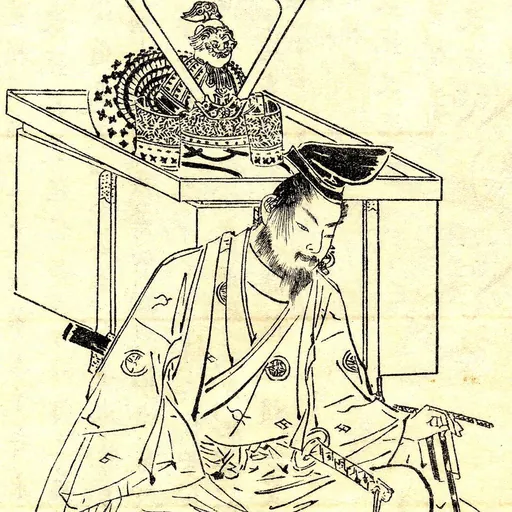
Minamoto no Yoshitsune
Samurai of the late Heian and early Kamakura period
About Minamoto no Yoshitsune
Lived 1159 – 1189 (aged 29–30). Minamoto no Yoshitsune was a Japanese samurai, bushi and military personnel.
was a Japanese samurai commander of the Minamoto clan of Japan in the late Heian and early Kamakura periods. His older half-brother was Minamoto no Yoritomo, the first shogun of the Kamakura shogunate. His common name was Kurō (; ), and his formal name was Yoshitsune.
Born as the ninth son of Minamoto no Yoshitomo of the Kawachi Genji clan, his childhood name was Ushiwakamaru. Due to his father's defeat and death in the Heiji Rebellion, he was entrusted to Kurama-dera temple. He later traveled down to Hiraizumi, where he received the protection of Fujiwara no Hidehira, the head of the Ōshū Fujiwara clan. When his half-brother Yoritomo raised an army to overthrow the Taira clan (the Jishō-Juei War), Yoshitsune rushed to join him. He became the greatest contributor to the Minamoto victory, destroying the Taira clan through the battles of Ichi-no-Tani, Yashima, and Dan-no-ura. Although Yoritomo and Yoshitsune initially had a close relationship, described as being like "father and son," Yoshitsune incurred Yoritomo's wrath by accepting court titles without permission and acting independently during the war against the Taira .
When Yoshitsune showed signs of seeking his own independence in response, he came into conflict with Yoritomo and was declared an enemy of the court. After an order for his capture was issued nationwide, he fled and once again sought refuge with Fujiwara no Hidehira. However, after Hidehira's death, Hidehira's successor, Fujiwara no Yasuhira, under pressure from Yoritomo, attacked Yoshitsune. He was forced to commit suicide at the Koromogawa-no-tachi mansion in what is now Hiraizumi, Iwate Prefecture.
He is considered one of the greatest and the most popular warriors of his era, and one of the most famous samurai in the history of Japan. Later labelled as a tragic hero, his dramatic end drew great sympathy from the public, giving rise to the term hōganbiiki (sympathy for the underdog, from one of Yoshitsune's titles, Hōgan), as well as numerous legends and stories.
Early life The fight between Ushiwakamaru and the bandit chief Kumasaka Chohan in 1174. Yoshitsune was only 15 when he defeated the notorious bandit leader. Ukiyo-e printed by Tsukioka Yoshitoshi. Warriors Trembling with Courage . Yoshitsune and Benkei defending themselves in their boat during a storm created by the ghosts of conquered Taira warriors. Made by Utagawa Kuniyoshi Yoshitsune was the ninth son of Minamoto no Yoshitomo, and the third and final son and child that Yoshitomo would father with Tokiwa Gozen. Yoshitsune's older half-brother Minamoto no Yoritomo (the third son of Yoshitomo) would go on to establish the Kamakura shogunate. Yoshitsune's name in childhood was or young bull . He was born just before the Heiji Rebellion in 1160 in which his father and two oldest brothers were killed. He survived this incident by fleeing the capital with his mother, while his half-brother Yoritomo was banished to Izu Province. When he was 10, Yoshitsune was placed in the care of the monks of Kurama temple , Not wanting to become a monk, Yoshitsune eventually left and followed a gold merchant who knew his father well, and in 1174 relocated to Hiraizumi, Mutsu Province, where he was put under the protection of Fujiwara no Hidehira, head of the powerful regional Northern Fujiwara clan.
In 1180, Yoshitsune heard that Yoritomo, now head of the Minamoto clan, had raised an army at the request of Prince Mochihito to fight against the Taira clan (also known as the Heike), which had usurped the power of the emperor. In the ensuing war between the rival Minamoto and Taira samurai clans, which is known as the Genpei War, Yoshitsune joined Yoritomo, along with Minamoto no Noriyori, all brothers who had not previously met.
Yoshitsune, together with his brother Noriyori, defeated the Taira in several key battles. He also attacked and killed his cousin Minamoto no Yoshinaka, a rival for control of the Minamoto clan, at the Battle of Awazu in Ōmi Province in early 1184 on the orders of Yoritomo.
Yoshitsune, who had by then been given the rank of general, went on to defeat the Taira at the Battle of Ichi-no-Tani in what is now Kobe in March 1184, and again at the Battle of Yashima in Shikoku in March 1185. He finally destroyed them one month later at the Battle of Dan-no-ura in present-day Yamaguchi Prefecture. His suspicious brother Yoritomo, however, opposed the presentation of these titles, and nullified them.
An ivory carving depicting Yoshitsune and his retainers looking at the rough sea while fleeing from Yoritomo's pursuers, by Ishikawa Komei, circa 1880. Walters Art Museum Yoshitsune then secured imperial authorization to ally with his uncle Minamoto no Yukiie in opposing Yoritomo. This theory was popular in Japan from the late 19th to the early 20th century. It's believed that the theory was convenient for Japan at the time, which was promoting "enriching the country, strengthening the military" as its national slogan. After World War II ended in 1945, the theory's popularity waned due to the belief that it was disrespectful to the Mongolian people.
According to the tradition of the Henshoji temple in Mooka, Tochigi, and as printed in their magazine, Hitachibō Kaison entrusted a monk Hitachi Nyūdō Nensai with a child of Minamoto no Yoshitsune, Keiwaka, as demanded by Fujiwara Hidehira. Furthermore, according to the tradition of Enmyō-ji temple in Hirosaki, Aomori, Chitose Maru, also known as Keiwakamaru, was a child of Yoshitsune, entrusted to Date Tomomune by Kaison. Kaison disappeared after the adoption.
Koshigoe Letter The "Koshigoe Letter" was written by Yoshitsune on the 24th day of the 5th month of the second year of Genryaku (June 23, 1185) as he waited in Koshigoe for approval from Yoritomo to enter Kamakura. The letter was Yoshitsune's "final appeal" to Yoritomo of his loyalty. The letter is a "mixture of bravado and an almost masochistic indulgence in misfortune." An excerpt: Then, romantic stories about his early childhood and last years of his life appeared as people began to know more about him.
The legends that deal with his public career show Yoshitsune as a great, virtuous warrior. He was often shown as kind to those around him and honorable, but was also shown to be naive.
Legends dealing with Yoshitsune's childhood show young Yoshitsune (or Ushiwakamaru) with heroic qualities. He is portrayed as a brave and skilled swordsman, despite being a young boy. He was also skilled in music and his studies, and was also said to be able to easily sway the hearts of young women. These legends delve into fantasy more so than the legends about his later life.
Legends which pertain to the time when his half-brother, Yoritomo, turned against him take away some of Yoshitsune's heroic qualities. He is no longer portrayed as a great warrior, but he retains his knowledge and skills that are valuable in the emperor's court.
Yoshitsune's escape through the Ataka barrier is the subject of Noh play Ataka and the Kabuki play Kanjinchō. Kanjinchō was later dramatized by Akira Kurosawa in the 1945 movie The Men Who Tread on the Tiger's Tail.
The Gikeiki, or "Chronicle of Yoshitsune" relates events of Yoshitsune's life after the defeat of the Heike.
Family Father: Minamoto no Yoshitomo Mother: Tokiwa Gozen Wife: Satō Gozen (1168–1189), daughter of Kawagoe Shigeyori. Concubine: Shizuka Gozen
Traditional arts In addition to The Tale of the Heike and Gikeiki, a great many other works of literature and drama feature him, and together form the sekai ("world") of Yoshitsune, a concept akin to the notion of the literary cycle.
These include: Yoshitsune Shin Takadachi (jōruri) Yoshitsune Senbon Zakura (jōruri and kabuki) Kanjinchō (kabuki)
In the visual arts, Yoshitsune is commonly depicted as a bishōnen, though this is at odds with contemporary descriptions of his appearance.
Don’t just read it —
keep it.
Full-length biographies made to live with: read them, listen on the way to work, watch them tonight.
- E-book
- Audio
- Video
Instant download · yours to keep · every purchase keeps this site free
Important facts
People in Minamoto no Yoshitsune's life
Named in this biography and alive at the same time
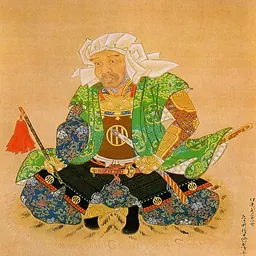

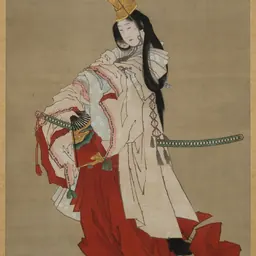
Related people
Same field, nearest in time
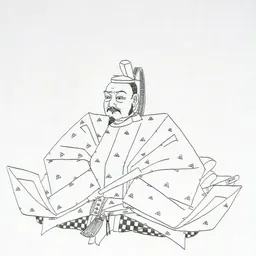


Contemporaries
People whose lives overlapped Minamoto no Yoshitsune's


Frequently asked questions
Who was Minamoto no Yoshitsune?
samurai of the late Heian and early Kamakura period
When was Minamoto no Yoshitsune born?
Minamoto no Yoshitsune was born in 1159 in Heian-kyō.
When did Minamoto no Yoshitsune die?
Minamoto no Yoshitsune died on 15 June 1189 in Takadachi Gikeidō.
What was Minamoto no Yoshitsune's occupation?
Minamoto no Yoshitsune was a samurai, bushi and military personnel.
What nationality was Minamoto no Yoshitsune?
Minamoto no Yoshitsune was Japanese.
Sources & further reading
· Wikipedia: Minamoto no Yoshitsune
· DBpedia: Minamoto no Yoshitsune
Cite this page
APA: Biography.guide. (2026). Minamoto no Yoshitsune. https://biography.guide/minamoto-no-yoshitsune/
MLA: "Minamoto no Yoshitsune." Biography.guide, https://biography.guide/minamoto-no-yoshitsune/.
Chicago: "Minamoto no Yoshitsune." Biography.guide. https://biography.guide/minamoto-no-yoshitsune/.
Data last updated: 2026-09-22 · Spot an error? Report a correction.
Portrait: Wikimedia Commons · author & licence
Page generated 2026-09-27 05:04 UTC