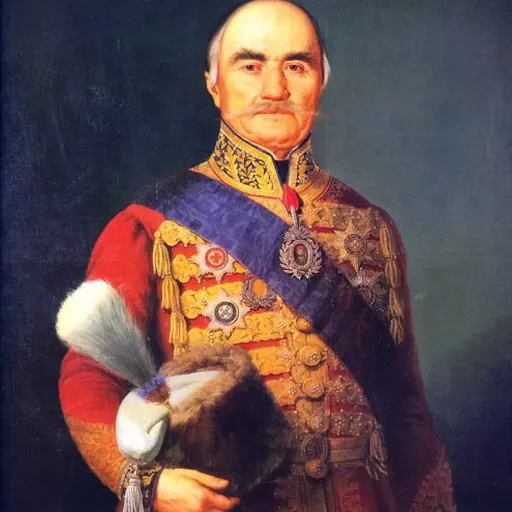
About Miloš Obrenović I
Lived 1780 – 1860 (aged 80). Miloš Obrenović I was a Turkish ruler and revolutionary.
Miloš Obrenović I (; ; 18 March 1780 – 26 September 1860), born Miloš Teodorović (; ), also known as Miloš the Great , was the Prince of Serbia twice, from 1815 to 1839, and from 1858 to 1860. He was an eminent figure of the First Serbian uprising, the leader of the Second Serbian uprising, and the founder of the house of Obrenović. Under his rule, Serbia became an autonomous principality within the Ottoman Empire. Prince Miloš was an autocrat, consistently refusing to decentralize power, which gave rise to a strong internal opposition. Despite his humble background, he eventually became the most affluent man in Serbia and one of the wealthiest in the Balkans, possessing estates in Vienna, Serbia and Wallachia. During his rule, Miloš bought a certain number of estates and ships from the Ottomans and was also a prominent trader.
Early life Miloš Teodorović was the son of Teodor "Teša" Mihailović (died 1802) from Dobrinja, and Višnja (died 18 June 1817). His family descended from the Bratonožići tribe. This was the second marriage of his mother Višnja, from which also sprung Jovan (1787–1850) and Jevrem (1790–1856).
First Serbian Uprising
Miloš fought in the First Serbian uprising until its very end in 1813. He was wounded in the battle for Užice. This name was the patronymic which his half-brother derived from Obren, the first name of his own father (Miloš's step-father).
Between the end of 1828 and the autumn of 1830, Prince Miloš created a so-called "legislative commission" to translate the Code Napoléon into Serbian and codify the laws and customs of the country. After discussing the commission, Miloš invited two distinguished legal specialists to come from Hungary to prepare a more suitable criminal and civil code of laws for Serbia. They were Vasilije Lazarević, Bürgermeister (mayor) of Zemun, and Jovan Hadžić, lawyer, poet, and member of the municipal senate of Novi Sad.
In January 1831, Prince Miloš informed a great national assembly that he had obtained an imperial edict from the Sultan ending all direct obligations of Serbian peasants to their former Turkish lords, guaranteeing Ottoman recognition of Serbian autonomy in most matters of internal administration, and offering Serbia the prospect of territorial aggrandizement, as well as the express right to institute schools, courts, and a governmental administration of her own. The Sultan's decrees of 1830 and 1833 expanded the same rights to a larger territory, and made Serbia a sovereign principality, with Miloš Obrenović as hereditary prince. A Metropolitanate of Serbia was established in Belgrade as an autonomous unit of the Patriarchate of Constantinople. Russia's status as the guarantor of Serbia's autonomy was also recognized.
Reign Miloš Obrenović, portrait probably done in Constantinople. Exposition of the Residence of Princess Ljubica (2017) The supporters of the rule of law often rebelled against Miloš's government. Following one such rebellion, he agreed to adopt a constitution, the Sretenje (or Candlemas) Constitution of 1835. The move was opposed by neighboring Austria, the ruling Ottoman Empire and Russia. It is believed that the three great empires saw the constitution as a danger to their own autocratic systems of government. Metternich's Austria particularly ridiculed the fact that Serbia had its own flag and foreign ministry. Miloš abolished the constitution at the demand of Russia and Turkey, and it was replaced by the "Turkish" Constitution of 1838.
Miloš abdicated in 1839 in favor of his sons—Milan, who died a few weeks later, and Mihailo, who then became prince. Mihailo was deposed in 1842, and the family was out of power until 1858, when it returned with Miloš restored as prince for the last two years of his life.
Thanks to his good contacts during his stay in Vienna, Johann Strauss II composed the Serben-Quadrille intended for Serbian balls.
Legacy
Miloš Obrenović was given the epithet the Great. He was proclaimed Father of the Fatherland by the National Assembly.
Things named after Miloš Obrenović Biographies and memoirs Milan Milićević published the book "Prince Miloš and His Story" in 1891. It was written with the basis of a manuscript in which Prince Miloš talked about his life. For several years his barber was Nićifor Ninković who left memoirs about it. His personal physician during his first reign was Bartolomeo Kunibert, who wrote a two-volume book translated into Serbian entitled "The Serbian Uprising and the First Reign of Milos Obrenovic 1804–1850". Part of Knez Miloš' family correspondences has been preserved with his daughter Petrija Bajić near Timișoara. In 1925 the property was bought by Joca Vujić who left the correspondences to the Belgrade University Library "Svetozar Marković", which the book "Family Correspondences of Knez Miloš Obrenović from the Archival Collection of Joca Vujić at the Belgrade University Library "Svetozar Marković"".
Enterprises and organizations Knjaz Miloš a.d. is one of the leading Serbian producers of mineral water.
Places Miloš Obrenović House in Gornja Crnuća, from which Miloš ruled Serbia for two years and in which the decision to start the Second Serbian Uprising was made, was declared a cultural monument of exceptional importance. Saint Sava Church in Šarani was founded by him. Elementary School "Miloš Obrenović" in Aranđelovac. "Knez Miloš Street" in Belgrade is named after him, as well as streets in many other Serbian cities. Along this road, numerous state institutions and embassies are located. The street was called "Miloš the Great" until it was renamed with its present name during communist Yugoslavia. "Miloš the Great" Highway, a section of Corridor XI (or A2 motorway; part of the E761 and E763 European routes) from Obrenovac to Preljina, was opened in Serbia on 18 August 2019.
Plaques and memorials Monument to Miloš Obrenović was the work of the sculptor Đorđe Jovanović. The monument was solemnly unveiled by King Aleksandar Obrenović in the presence of state officials and citizens, 24 June 1898. The Takovo Uprising monument representing him was set in front of the Government Building in Belgrade. The Takovo Uprising monument by Petar Ubavkić in Takovo.
Awards and honours
Order of the Iron Crown, Knight 1st Class Order of the Redeemer, Grand Cross Order of Glory Portrait of the Sultan with Jewels (Mahmud II) Portrait of the Sultan with Jewels (Abdülmecid I) Order of St. Anna with Crown, 1st Class
Marriage and children In 1805, Miloš married Ljubica Vukomanović (September 1785 – Vienna, 26 May 1843). The couple had eight children whose names are known. It is speculated that Ljubica had other pregnancies that resulted in miscarriages, stillbirths, or children who died shortly after birth, with some sources giving a number as high as 17 pregnancies.
Prince Peter Princess Petria (5 August 1808 – 1870) Princess Elisabeth (28 March 1814 – 5 October 1848) Milan Obrenović II, Prince of Serbia (21 October 1819 – 8 July 1839) Mihailo Obrenović III, Prince of Serbia (16 September 1823 – 10 June 1868) Marija (born and died 9 July 1830) Todor (died in childhood)
With mistress Jelenka, he had a son who died in infancy: Gavrilo (b. d. 1826)
Don’t just read it —
keep it.
Full-length biographies made to live with: read them, listen on the way to work, watch them tonight.
- E-book
- Audio
- Video
Instant download · yours to keep · every purchase keeps this site free
Important facts
People in Miloš Obrenović I's life
Named in this biography and alive at the same time

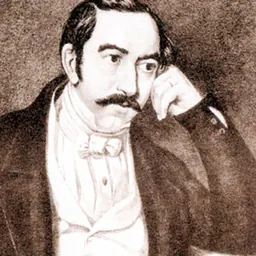
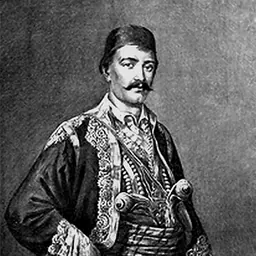
Related people
Same field, nearest in time
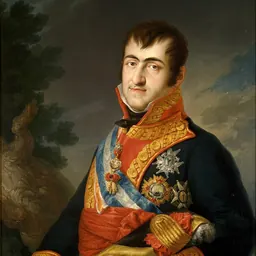

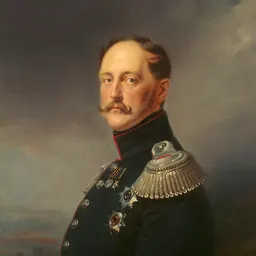
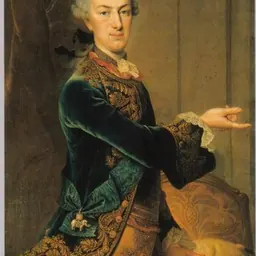

Contemporaries
People whose lives overlapped Miloš Obrenović I's

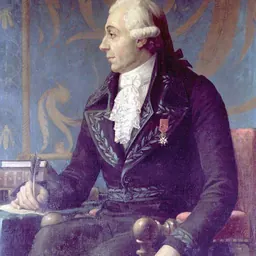
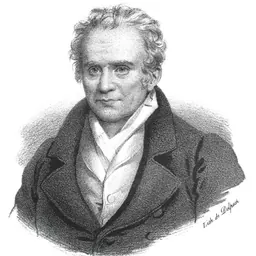

Frequently asked questions
Who was Miloš Obrenović I?
Prince of Serbia
When was Miloš Obrenović I born?
Miloš Obrenović I was born on 7 March 1780 in Gornja Dobrinja.
When did Miloš Obrenović I die?
Miloš Obrenović I died on 14 September 1860 in Belgrade.
What was Miloš Obrenović I's occupation?
Miloš Obrenović I was a ruler and revolutionary.
What nationality was Miloš Obrenović I?
Miloš Obrenović I was Turkish.
Sources & further reading
· Wikipedia: Miloš Obrenović I
Cite this page
APA: Biography.guide. (2026). Miloš Obrenović I. https://biography.guide/milos-obrenovic-i/
MLA: "Miloš Obrenović I." Biography.guide, https://biography.guide/milos-obrenovic-i/.
Chicago: "Miloš Obrenović I." Biography.guide. https://biography.guide/milos-obrenovic-i/.
Data last updated: 2026-09-20 · Spot an error? Report a correction.
Portrait: Wikimedia Commons · author & licence
Page generated 2026-09-27 04:57 UTC