
About Millard Preston Goodfellow
Lived 1892 – 1973 (aged 81). Millard Preston Goodfellow was a journalist.
Millard Preston Goodfellow, who often went by the name "Preston Goodfellow," was an American soldier, spy, diplomat, journalist, war correspondent, and newspaper publisher. A veteran of World War I, Goodfellow became a leading figure at the Office of the Coordinator of Information and the Office of Strategic Services during World War II.
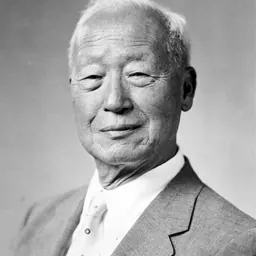
Goodfellow was a publisher of the Brooklyn Eagle, Pocatello Tribune, and the New York American. During the Korean War, he acted as Special Adviser to President Syngman Rhee, mediating on behalf of the State Department and Central Intelligence Agency between Rhee and Kim Ku. Goodfellow died in Washington, DC, in 1973, at age 81.
Early life
Goodfellow was born and raised in Brooklyn, which was an independent city and was not yet a borough of New York City.
He graduated from Public School Number 122. As was standard for all war correspondents at the time, Goodfellow took a commission as a 2nd Lieutenant, and each of his reports from the war were made in his role as an officer and under the authority of the Army.
As to the manner of his reporting, Goodfellow, while embedded with the First Cavalry and the Fourteenth Infantry in McAllen, Texas, wrote reports from the field that were sometimes extremely humorous, but always detailed, such as the following observation on a friendly fire situation:
World War I
During World War I, Goodfellow served in the US Army Signal Corps as a 2nd Lieutenant.
Goodfellow's wife, Florence, was an active member of women's groups, such as the Committee for Brooklyn Women's Day at the New York World's Fair.
On 1 August 1938, after a workers' strike organized by the Newspaper Guild, Goodfellow sold his stake in the Brooklyn Eagle to Frank D. Schroth. He formed his own business, "M.P. Goodfellow and Co."
Early World War II and the intelligence community
1941 Interwar Years
In the Summer of 1941, Goodfellow was recalled back into active service, now a Major in the US Army, he was reassigned to G-2 in Washington, DC. While stationed at G-2, Goodfellow encountered William Donovan (Wild Bill), who discussed with Goodfellow the idea of an entirely new civilian structure to be responsible for strategic operations, and Goodfellow approved. The two men were quick friends.
At this time, Goodfellow was already responsible for the deployments of soldiers and marines to the Far East, North Africa, and Europe to monitor the unfolding situation of the Axis powers. Lieutenant Colonel Warren J. Clear to the Far East and the Philippines (who narrowly escaped the Japanese invasion in a submarine, and had to recall his mission report from memory after his plane was shot down) David W. King Stafford Reid Kenneth Pendar Leland Rounds Goodfellow took a much more involved role in building Donovan's brainchild, the Office of the Coordinator of Information, and in September 1941, Goodfellow officially assumed Liaison status between Donovan and the G-2.
In February 1942, Goodfellow recruited Garland H. Williams from the Federal Bureau of Narcotics as Director of Training.
Radio stations and John Grombach Goodfellow and John "Frenchy" Grombach were good friends from New York before the war. Goodfellow had been given a directive by Donovan to establish a communications network for COI. It is unknown if Goodfellow kept tabs on his son during the war.
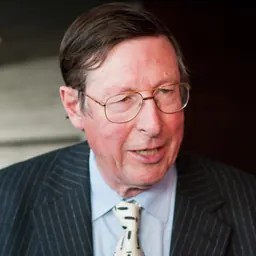
Korean War years and controversial relationship with Syngman Rhee British historian Max Hastings wrote that Goodfellow provided Rhee with the passport that allowed him to return to Korea.
Goodfellow was appointed Special Political Adviser to Lieutenant General John R. Hodge.
Goodfellow organized South Korea's democratic Council, becoming a key figure in the building of the country's new government.
Goodfellow said:
"We’ve got to turn over to the Koreans as soon as possible the job of self-government... The Koreans are ready for self-government... provincial elections should be held as soon as possible..."
He left the country in 1946.
Goodfellow continued to act as Special Adviser to President Syngman Rhee in the 1950s, advising him on tungsten purchasing, banking decisions, nuclear power status, and more. Goodfellow helped in the effort to organize the former President's exile in the United States.
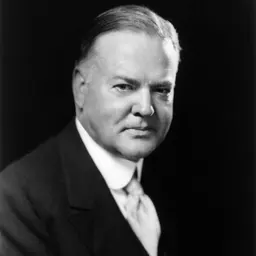
Civilian life and retirement Goodfellow joined the Board of Directors for the Boys Clubs of America, where he met Herbert Hoover, who was the Chairman of the Board.
He became the Publisher of the Pocatello Tribune.
Don’t just read it —
keep it.
Full-length biographies made to live with: read them, listen on the way to work, watch them tonight.
- E-book
- Audio
- Video
Instant download · yours to keep · every purchase keeps this site free
Important facts
People in Millard Preston Goodfellow's life
Named in this biography and alive at the same time




Related people
Same field, nearest in time




Contemporaries
People whose lives overlapped Millard Preston Goodfellow's

Frequently asked questions
Who was Millard Preston Goodfellow?
American journalist, publisher and diplomat
When was Millard Preston Goodfellow born?
Millard Preston Goodfellow was born on 22 May 1892.
When did Millard Preston Goodfellow die?
Millard Preston Goodfellow died on 5 September 1973.
What was Millard Preston Goodfellow's occupation?
Millard Preston Goodfellow was a journalist.
Sources & further reading
· Wikipedia: Millard Preston Goodfellow
· DBpedia: Millard Preston Goodfellow
Cite this page
APA: Biography.guide. (2026). Millard Preston Goodfellow. https://biography.guide/millard-preston-goodfellow/
MLA: "Millard Preston Goodfellow." Biography.guide, https://biography.guide/millard-preston-goodfellow/.
Chicago: "Millard Preston Goodfellow." Biography.guide. https://biography.guide/millard-preston-goodfellow/.
Data last updated: 2026-09-20 · Spot an error? Report a correction.
Page generated 2026-09-27 05:13 UTC