
Milada Součková
Czech writer, poet, literary theorist and bookwriter
About Milada Součková
Lived 1899 – 1983 (aged 84). Milada Součková was an Austrian and Czech writer, journalist, poet, literary historian, university teacher and librarian.
Milada Součková (24 January 1899 – 1 February 1983) was a Czech writer, literary historian and diplomat. She is known mainly for introducing to Czech literature Modernist techniques employed by English-language writers such as Laurence Sterne, James Joyce, and Virginia Woolf.
Life
Milada Součková was born into a wealthy family in Prague. She studied at the prestigious Minerva High School together with Milena Jesenská. From 1918 she studied science at Charles University in Prague, graduating in 1923 with a thesis on plant life. In 1923–24 she attended the University of Lausanne and met her future husband, the painter Zdenek Rykr. She wrote for several newspapers and journals, met the Russian linguist Roman Jakobson, and in 1936 became a member of the Prague Linguistic Circle. In 1940 her husband committed suicide to avoid falling into the hands of the Gestapo, and Součková left Prague to live in the countryside. During the occupation, she collaborated with writer Vladislav Vančura on his monumental work Obrazy z dějin národa českého (Pictures From the History of the Czech Nation) until Vančura was arrested by the Gestapo.
In 1945, after World War II, she was appointed cultural attaché at the Czechoslovak Embassy in Washington. In protest of the Czechoslovak coup d'état of 1948, she remained in the United States as an émigré. Jakobson helped her to enter an academic career in Czech studies, serving between 1950 and 1962 at Harvard University, then at the University of Chicago, and from 1970 to 1973 at the University of California, Berkeley. In 1959, she was awarded a Guggenheim Fellowship for the study of Slavic literature. For the rest of her life, she worked as a librarian at Harvard's Widener Library. In 1986, after her death, Harvard College established the Milada Součkova Bequest, "for the purchase and use of Czech and Slovak books for the Harvard University Library known as Widener Library."
Author The first literary experiments of Milada Součková were influenced by James Joyce and surrealism. Most of her prose work is stream of consciousness, imaginative, but sober. In her best works she experiments with language, but describes mostly the common daily life. In the US, she wrote mostly poetry in Czech and theoretical works in English. At home, she was unable to publish her literary work, either under the Nazis or under the Communists. Her last novel, Neznámý člověk (1962), was published in exile. Her collected works in Czech were issued in 11 volumes, from 1995 to 1997 by ERM (První písmena and Amor a Psyché), then from 1997 to 2010 by Prostor (all the rest). In 2010, Prostor received a Magnesia Litera for Publishing Achievement, in recognition of the importance of publishing Součková's work.
Publications Novels První písmena (First Letters), 1934 Amor a psyché (Amor and Psyche), 1937 Odkaz (The Legacy), 1940 Zakladatelé (The Founders), 1940 Bel canto, 1944 Hlava umělce (The Artist's Head), 1944 Neznámý člověk (The Unknown Person), 1962; Der unbekannte Mensch (German translation; Stuttgart: Deutsche Verlags-Anstalt, 1999)
Poetry Gradus ad Parnassum (Steps to Parnassus), 1957 Pastorální suita (Pastoral Suite), 1962 Sešity Josephiny Rykrové (The Notebooks of Josephina Rykrová), 1981
Literary history A Literature in Crisis: Czech Literature 1938–1950 (New York: Mid-European Studies Center, National Committee for a Free Europe, 1954) The Czech Romantics (The Hague: Mouton & Co., 1958) The Parnassian Jaroslav Vrchlický (The Hague: Mouton & Co., 1964) A Literary Satellite: Czechoslovak-Russian Literary Relations (Chicago: University of Chicago Press, 1970) Baroque in Bohemia (Ann Arbor: University of Michigan Press, 1980)
Don’t just read it —
keep it.
Full-length biographies made to live with: read them, listen on the way to work, watch them tonight.
- E-book
- Audio
- Video
Instant download · yours to keep · every purchase keeps this site free
Important facts
Family & relationships
People in Milada Součková's life
Named in this biography and alive at the same time
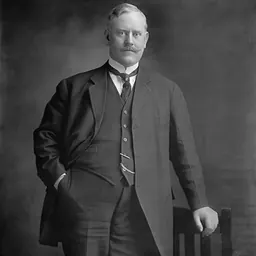


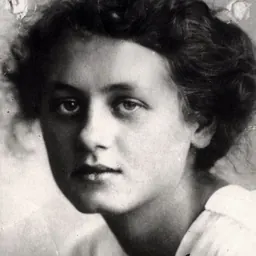

Related people
Same field, nearest in time
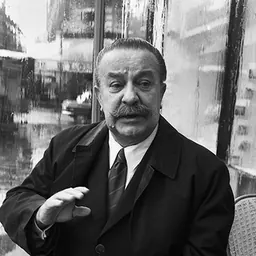



Contemporaries
People whose lives overlapped Milada Součková's

Frequently asked questions
Who was Milada Součková?
Czech writer, poet, literary theorist and bookwriter (1899-1983)
When was Milada Součková born?
Milada Součková was born on 24 January 1899 in Prague.
When did Milada Součková die?
Milada Součková died on 1 February 1983 in Boston.
What was Milada Součková's occupation?
Milada Součková was a writer, journalist, poet, literary historian, university teacher and librarian.
What nationality was Milada Součková?
Milada Součková was Austrian and Czech.
Sources & further reading
Cite this page
APA: Biography.guide. (2026). Milada Součková. https://biography.guide/milada-souckova/
MLA: "Milada Součková." Biography.guide, https://biography.guide/milada-souckova/.
Chicago: "Milada Součková." Biography.guide. https://biography.guide/milada-souckova/.
Data last updated: 2026-09-20 · Spot an error? Report a correction.
Page generated 2026-09-27 05:24 UTC