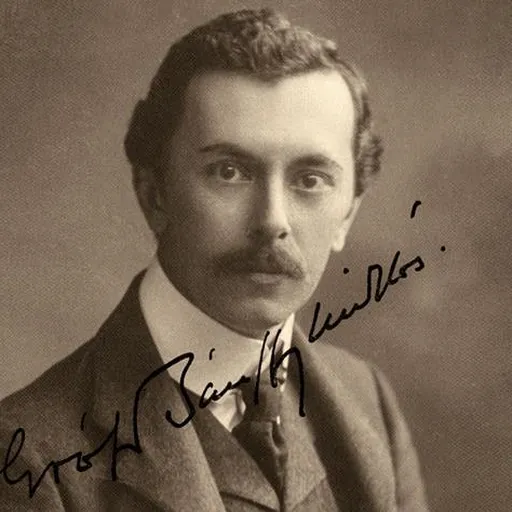
About Miklós Bánffy
Lived 1873 – 1950 (aged 76). Miklós Bánffy was a Romanian and Hungarian journalist, writer, diplomat, jurist, politician and scenographer.
Count Miklós Domokos Pál Bánffy de Losoncz (30 December 1873 – 5 June 1950) was a Hungarian nobleman, liberal politician, and novelist. His books include The Transylvanian Trilogy (They Were Counted, They Were Found Wanting and They Were Divided), and The Phoenix Land.
Biography The Bánffy family emerged in 15th-century Transylvania and established itself among the foremost dynasties of the country. They owned a grand palace in Kolozsvár (, ), one of the main cities of Transylvania and one of the province's largest castles at Bonchida. One branch was raised to a barony in the 1660s, while another became counts in 1855. The barons produced a 19th-century prime minister of Hungary (Dezső Bánffy), and the counts held important offices at court. Among the latter was Count Miklós, born in Kolozsvár on 30 December 1873, as the only son and younger child of Count György Bánffy de Losoncz (1844–1929) and his wife and cousin, Baroness Irma Mária Bánffy de Losoncz (1852–1875). He had one sister, Countess Katalin Clarisse Mária (1871–1974), married to Tamás Barcsay de Nagybarcsa (1868–1936).
Beginning his political career at the time when Hungary was a constituent of Austria-Hungary, Bánffy was elected a Member of Parliament in 1901 and became Director of the Hungarian State Theatres (1913–1918). Both a traditionalist and a member of the avant-garde, he wrote five plays, two books of short stories, and a distinguished novel. Overcoming fierce opposition, his intervention made it possible for Béla Bartók's works to have their first performance in Budapest.
Bánffy became Foreign Minister of Hungary in his cousin Count István Bethlen's government of 1921. Although he detested the politics of the Regent, Admiral Miklós Horthy, he worked to review the boundary revisions confirmed by the Treaty of Trianon after World War I through which Transylvania had been transferred to Romania. Little progress was made, and he retired from office. He returned to Transylvania in 1926, and the Romanian King Ferdinand I granted him citizenship with the condition of not engaging in revisionist politics.
His trilogy, A Transylvanian Tale, also called The Writing on the Wall, was published between 1934 and 1940. Bánffy portrayed pre-war Hungary as a nation in decline, failed by a shortsighted aristocracy.
In April 1943, Bánffy visited Bucharest to persuade Ion Antonescu's Romania together with Hungary to abandon the Axis and sue for a separate peace with the Allies (see also Romania during World War II). The negotiations with a delegation led by Gheorghe Mironescu broke down almost instantaneously, as the two sides could not agree on a future status for Northern Transylvania (which Romania had ceded to Hungary in 1940, and where Bonchida was located). Two years later, in revenge for Bánffy's actions in Bucharest, his estate at Bonchida was burned and looted by the retreating German army.
Hungary and Transylvania were soon invaded by the Soviet Union's Red Army, an event which marked an uncertain status for Northern Transylvania until its return to Romania. His wife and daughter fled to Budapest while Bánffy remained on the spot in a vain attempt to prevent the destruction of his property. Soon after, the frontier was closed. The family remained separated until 1949, when he was allowed by Romanian communist authorities to leave for Budapest, where he died the following year.
A mellowing communist regime in Hungary permitted the reissue of A Transylvanian Tale in 1982, and it was translated into English for the first time in 1999. The Castle of Bonchida is now being restored as a cultural centre. An apartment is being prepared for the use of the Count's family.
Don’t just read it —
keep it.
Full-length biographies made to live with: read them, listen on the way to work, watch them tonight.
- E-book
- Audio
- Video
Instant download · yours to keep · every purchase keeps this site free
Important facts
People in Miklós Bánffy's life
Named in this biography and alive at the same time



Related people
Same field, nearest in time
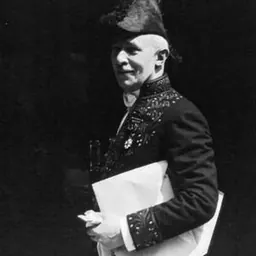
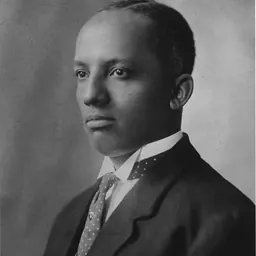

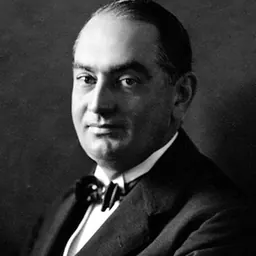

Contemporaries
People whose lives overlapped Miklós Bánffy's

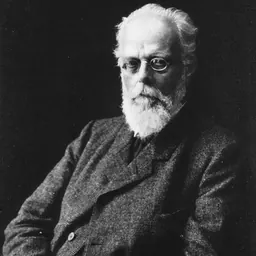

Frequently asked questions
Who was Miklós Bánffy?
Hungarian nobleman, politician, and novelist (1873–1950)
When was Miklós Bánffy born?
Miklós Bánffy was born on 30 December 1873 in Cluj-Napoca.
When did Miklós Bánffy die?
Miklós Bánffy died on 5 June 1950 in Budapest.
What was Miklós Bánffy's occupation?
Miklós Bánffy was a journalist, writer, diplomat, jurist, politician and scenographer.
What nationality was Miklós Bánffy?
Miklós Bánffy was Romanian and Hungarian.
Sources & further reading
Cite this page
APA: Biography.guide. (2026). Miklós Bánffy. https://biography.guide/miklos-banffy/
MLA: "Miklós Bánffy." Biography.guide, https://biography.guide/miklos-banffy/.
Chicago: "Miklós Bánffy." Biography.guide. https://biography.guide/miklos-banffy/.
Data last updated: 2026-09-23 · Spot an error? Report a correction.
Portrait: Wikimedia Commons · author & licence
Page generated 2026-09-27 05:07 UTC