
About Mikhail Parsegov
Lived 1899 – 1964 (aged 64). Mikhail Parsegov was a Russian military personnel.
Mikhail (Mikael) Artemievich Parsegov (; 15 June 1899 – 26 April 1964) was a Soviet military commander, colonel general of artillery, and Hero of the Soviet Union (1940).
Early service Parsegov was born in the village of Madatkent (now Kolkhozashen) in Nagorno-Karabakh, to an Armenian family. His father worked as a potter, his mother ran the household. At age 12, he was left without parents and went to work in Central Asia. He worked at a ginnery in the city of Andijan.
Parsegov was drafted into the Imperial Russian Army in 1916. From September 1916 to November 1917 he served during the First World War on the Caucasus Front, initially as a private in artillery units, then as a gun commander with the rank of senior artillery officer.
In 1918, Parsegov voluntarily joined the Red Army. In the same year he was admitted to the All-Union Communist Party (Bolsheviks). He began his service in the fortress of Andijan as an assistant platoon commander, then for some time he acted as commandant of this fortress. From November 1918 to November 1919, as a platoon commander fought on the Turkestan Front, fought against the Basmachi – in Andijan, Kokand, Namangan, Skobelevsky areas; in the spring of 1919, he was wounded. In February 1920 – July 1921, as part of the Bukhara Front, he participated in the liquidation of gangs of the Bukhara emir. Since July 1921 – the foreman of the battery. He ended the Civil War as a battery commander.
In 1922, Parsegov graduated from the Tashkent artillery command courses. He served in the Leningrad Military District: from November 1922 – gun commander of the battery; from February 1923 – Chief of Communications of the Battery of the 14th Separate Regimental Heavy Division of the 11th Rifle Corps; since November 1924 – head of the chemical battery. In 1926, he graduated from the artillery Red Banner Improvement Courses for command personnel, after which he was appointed commander of the training battery of a separate heavy artillery division, and in February 1927 – commander of the training battery of the 13th Field Heavy Artillery Division. From March 1928, he temporarily commanded the 3rd Division of the Heavy Artillery Regiment of the 13th Rifle Corps, and from April 1929, the division of the 13th Corps Regiment. Since August 1930 – commander of the 5th Separate Territorial Artillery Battalion of the Volga Military District. Since November 1931 – commander and commissar of the 57th Ural Artillery Regiment of the Transbaikal Military District.
Since 1932, Parsegov studied at the Mikhail Frunze Military Academy, which he graduated in 1936 with a gold medal. Then in May 1936, he was appointed commander of the 69th Heavy Artillery Regiment of the 19th Rifle Corps.
Winter War In July 1937, Parsegov was promoted to the post of chief of artillery of the Leningrad Military District. On 17 February 1938 he was awarded the rank of brigade commander, and on 5 November 1939 – a divisional commander. for the exemplary performance of the combat missions of the command and the courage and heroism shown to it, the commander Mikhail Artemyevich Parsegov was awarded the title Hero of the Soviet Union with the award of the Order of Lenin and the Golden Star medal. On the same day, he was awarded the rank of corps commander.
In April 1940, Parsegov participated in a meeting at the Central Committee of the All-Union Communist Party (Bolsheviks) of the commanding staff on the collection of experience in military operations against Finland, where he expressed dissatisfaction with the work of intelligence and insufficient training of reserve officers, and also noted the crucial role of artillery in breaking through fortified areas. On 4 June 1940, he was re-certified as a lieutenant general of artillery.
On 26 July 1940, Parsegov was appointed inspector general of artillery of the Red Army. At a meeting of senior management of the Red Army on 23–31 December 1940, he expressed dissatisfaction with the training of commanders. Since June 1941 – chief of artillery of the Kiev Special Military District.
Great Patriotic War At the outbreak of the Great Patriotic War, Parsegov was serving as the chief of artillery of the Southwestern Front (that is, in the same position). He participated in the Kiev Defensive Operation. Covering the retreat of the Soviet troops, the artillerymen under the able command of Parsegov caused considerable damage to the enemy's equipment and manpower. Because of this the enemy's advance on Kiev was delayed for more than two months.
In autumn 1941 Parsegov participated in the Donbas Defensive Operation. During the counterattack near Moscow, he skillfully planned and clearly guided the artillery of the forces of the right wing of the Southwestern Front in the Yelets Offensive Operation. From 24 December 1941 Parsegov was the commander of artillery of the South-West direction. He distinguished himself in the Barvenkovo–Lozovaya Offensive Operation. From 5 March 1942 he was commander of the 40th Army of the Southwestern Front, transferring in May 1942 to the Bryansk Front.
According to the chief of staff of the Bryansk Front, Mikhail Kazakov:
The 40th Army participated in the Voronezh–Voroshilovgrad Defensive Operation; on 30 June 1942, enemy forces, concentrating large forces against the right wing of the army, broke through the defense of Soviet troops in the cities of Livny and Volchansk, which led to the encirclement of many parts of the 40th Army and the rapid advance of the enemy to Voronezh. In this regard, Parsegov, who was in a state of severe psychological overstrain, was removed from his post on 3 July 1942. he was awarded the rank of Colonel General of Artillery; since August of the same year he served concurrently as a member of the Military Council of the Leningrad Military District. In May 1961, he was relieved of his posts and was at the disposal of the Commander in Chief of the Ground Forces. Since August 1961, he was appointed head of the 1st Faculty of the Mikhail Kalinin Military Artillery Academy.
Parsegov died on 27 April 1964 in Leningrad. He was buried in the city's Bogoslovskoe Cemetery, with a monument erected on his grave.
In Kolkhozashen, the native village of Mikhail Parsegov, a bust monument was erected.
Awards Gold Star Medal of the Hero of the Soviet Union (21 March 1940); Three Orders of Lenin (15 January 1940, 21 March 1940, 21 February 1945); Four Orders of the Red Banner (22 February 1938, 27 December 1942, 5 November 1944, 20 June 1949); Order of Suvorov, 2nd class (8 September 1945); Jubilee Medal "XX Years of the Workers' and Peasants' Red Army" (1938); Other medals.
Military ranks Major – 30 December 1935; Colonel – 21 December 1937; Brigade Commander – 17 February 1938; Divisional Commander – 5 November 1939; Corps Commander – 21 March 1940; Lieutenant General of Artillery – 4 June 1940; Colonel General of Artillery – 18 February 1958.
Don’t just read it —
keep it.
Full-length biographies made to live with: read them, listen on the way to work, watch them tonight.
- E-book
- Audio
- Video
Instant download · yours to keep · every purchase keeps this site free
Important facts
People in Mikhail Parsegov's life
Named in this biography and alive at the same time

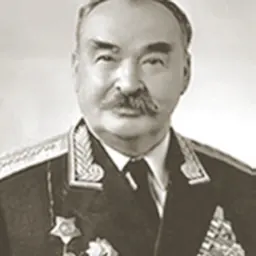
Related people
Same field, nearest in time

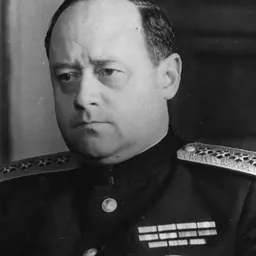




Contemporaries
People whose lives overlapped Mikhail Parsegov's
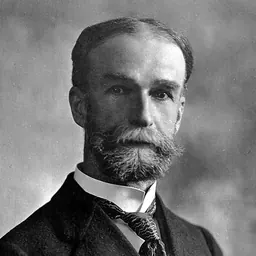
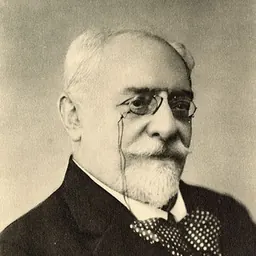

Frequently asked questions
Who was Mikhail Parsegov?
Soviet general (1899-1964)
When was Mikhail Parsegov born?
Mikhail Parsegov was born on 15 June 1899 in Elisabethpol Governorate.
When did Mikhail Parsegov die?
Mikhail Parsegov died on 26 April 1964 in Saint Petersburg.
What was Mikhail Parsegov's occupation?
Mikhail Parsegov was a military personnel.
What nationality was Mikhail Parsegov?
Mikhail Parsegov was Russian.
Sources & further reading
Cite this page
APA: Biography.guide. (2026). Mikhail Parsegov. https://biography.guide/mikhail-parsegov/
MLA: "Mikhail Parsegov." Biography.guide, https://biography.guide/mikhail-parsegov/.
Chicago: "Mikhail Parsegov." Biography.guide. https://biography.guide/mikhail-parsegov/.
Data last updated: 2026-09-20 · Spot an error? Report a correction.
Page generated 2026-09-27 05:21 UTC