
About Mihály Babits
Lived 1883 – 1941 (aged 57). Mihály Babits was a Hungarian poet, writer, translator, esperantist and literary historian.
Mihály Babits (; 26 November 1883 – 4 August 1941) was a Hungarian poet, writer, essayist, and translator. His poems are well known for their intense religious themes. His novels such as “The Children of Death” explore psychological problems.
Biography Babits was born in Szekszárd. He studied at the University of Budapest from 1901 to 1905, where he met Dezső Kosztolányi and Gyula Juhász. He worked to become a teacher and taught at schools in Baja (1905–06), Szeged (1906–08), Fogaras (1908–11), Újpest (1911), and Budapest (1912–18).
His reputation for his poems in the literary life started in 1908. He made a trip to Italy in the same year, which made him interested in Dante; he made several other trips in later years. This experience led him to translate Dante's Divine Comedy (Hell, 1913, Purgatory, 1920, and Paradise, 1923). In 1911, he became a staff writer on the magazine Nyugat.
Babits' 1918 novel The Nightmare (also known as King's Stork) is a science fiction novel about a split personality influenced by Freudian psychology.
Briefly after the Hungarian Revolution of 1919 the country's new leadership appointed him as Professor of Foreign Literature and modern Hungarian literature at the University of Budapest; he was also made a member of the Writer's Directory despite having his reservations about the revolutionary government. Babits was removed from his university post for his pacifism after the revolutionary government fell.
In 1921 he married , who later published poetry under the name Sophie Török. Two years later he moved to Esztergom. In 1927 he became a member of the "Kisfaludy Társaság" (Kisfaludy Society) and in the same year he was made a trustee of the Baumgarten Prize.
He became the editor-in-chief of Nyugat in 1929 (sharing the role until 1933 with Zsigmond Móricz), a position he held until his death. In 1933 he wrote Pilot Elza or the Perfect Society (Hungarian: Elza pilóta, vagy a tökéletes társadalom), set in a dystopian future.
In 1937, he was diagnosed as having laryngeal cancer. He died in Budapest in 1941.
Work Babits is best known for his lyric poetry, influenced by classical and English forms. He also wrote essays and translated much from English, French, German, Greek, Italian, and Latin. There is a museum in Szekszárd showcasing Mihály Babits's work and life, as well as a memorial building in Esztergom. His brother István Babits occupied the house at Szekszárd most of the time, with his two sons: István and Tibor.
A bilingual selection of his poems was published in 1988 and in 1994, titled 21 Poems (21 vers), translated by István Tótfalusi (Maecenas).
Don’t just read it —
keep it.
Full-length biographies made to live with: read them, listen on the way to work, watch them tonight.
- E-book
- Audio
- Video
Instant download · yours to keep · every purchase keeps this site free
Important facts
Family & relationships
People in Mihály Babits's life
Named in this biography and alive at the same time
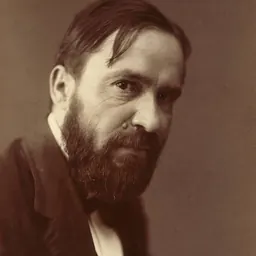

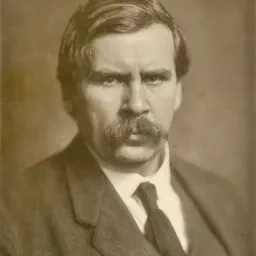

Related people
Same field, nearest in time
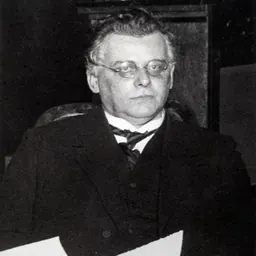
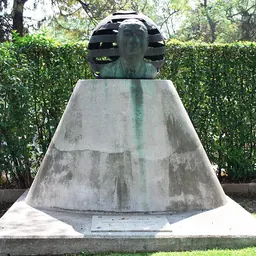

Contemporaries
People whose lives overlapped Mihály Babits's


Frequently asked questions
Who was Mihály Babits?
Hungarian poet, translator (1883-1941)
When was Mihály Babits born?
Mihály Babits was born on 26 November 1883 in Szekszárd.
When did Mihály Babits die?
Mihály Babits died on 4 August 1941 in Budapest.
What was Mihály Babits's occupation?
Mihály Babits was a poet, writer, translator, esperantist and literary historian.
What nationality was Mihály Babits?
Mihály Babits was Hungarian.
Sources & further reading
Cite this page
APA: Biography.guide. (2026). Mihály Babits. https://biography.guide/mihaly-babits/
MLA: "Mihály Babits." Biography.guide, https://biography.guide/mihaly-babits/.
Chicago: "Mihály Babits." Biography.guide. https://biography.guide/mihaly-babits/.
Data last updated: 2026-09-27 · Spot an error? Report a correction.
Page generated 2026-09-27 05:17 UTC