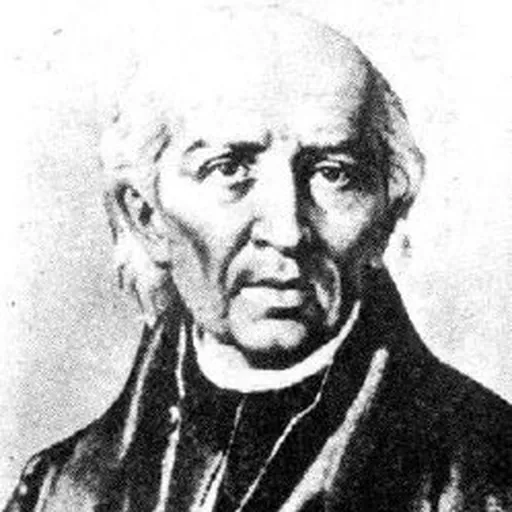
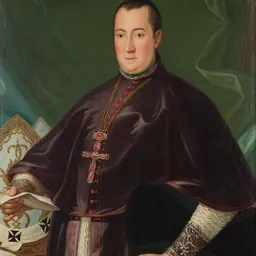
Miguel Hidalgo Y Costilla
Catholic priest, leader of the Mexican War of Independence
About Miguel Hidalgo Y Costilla
Lived 1753 – 1811 (aged 58). Miguel Hidalgo Y Costilla was a Spanish catholic priest, politician, rebel leader and theologian.
Don Miguel Gregorio Antonio Ignacio Hidalgo y Costilla Gallaga Mandarte y Villaseñor (8 May 1753 – 30 July 1811), commonly known as Miguel Hidalgo y Costilla or simply Miguel Hidalgo , was a Mexican Catholic priest and prominent leader of the Mexican War of Independence, who is recognized as the Father of the Nation.
A professor at the Colegio de San Nicolás Obispo in Valladolid, Hidalgo was influenced by Enlightenment ideas, which contributed to his ouster in 1792. He served in a church in Colima and then in Dolores. After his arrival, he was shocked by the rich soil he had found. He tried to help the poor by showing them how to grow olives and grapes, but in New Spain (modern Mexico) growing these crops was discouraged or prohibited by colonial authorities to prevent competition with imports from Spain. On 16 September 1810, he gave the Cry of Dolores, a speech calling upon the people to protect the interest of King Ferdinand VII, held captive as part of the Peninsular War, by revolting against the peninsulares who had overthrown Viceroy José de Iturrigaray.
Hidalgo marched across Mexico and gathered an army of nearly 90,000 irregulars who attacked peninsular and criollo elites. Hidalgo's insurgent army accumulated initial victories on its way to Mexico City, but his troops ultimately lacked training and were poorly armed. These troops ran into an army of well-trained and armed Spanish troops in the Battle of Calderón Bridge and were defeated. After the battle, Hidalgo and his remaining troops fled north, but Hidalgo was betrayed, captured and executed.
Early years
Hidalgo was the second-born child of Cristóbal Hidalgo y Costilla Espinoza de los Monteros and Ana María Gallaga Mandarte Villaseñor, both criollos. On his maternal side, he was of Basque ancestry. His most recent identifiable Spanish ancestor was his maternal great-grandfather, who was from Durango, Biscay. On his paternal side, he descended from criollo families native to Tejupilco, which were well-respected within the criollo community. Hidalgo's father was an hacienda manager in Valladolid, Michoacán, where Hidalgo spent the majority of his life. Eight days after his birth, Hidalgo was baptized into the Catholic faith in the parish church of Cuitzeo de los Naranjos. Hidalgo's parents had three other sons; José Joaquín, Manuel Mariano, and José María, When the Jesuits were expelled from Mexico in 1767, he entered the Colegio de San Nicolás, where he studied for the priesthood. Hidalgo's study of French allowed him to read and study works of the Enlightenment current in Europe He was a professor of Latin grammar and arts, as well as a theology professor. Beginning in 1787, he was named treasurer, vice-rector and secretary, As rector, Hidalgo continued studying the liberal ideas that were coming from France and other parts of Europe. Authorities ousted him in 1792 for revising traditional teaching methods there, but also for "irregular handling of some funds." The Church sent him to work at the parishes of Colima and San Felipe Torres Mochas until he became the parish priest in Dolores, Guanajuato, but contrary to his vow of chastity, he formed liaisons with women. One was with Manuela Ramos Pichardo, with whom he had two children, as well as a child with Bibiana Lucero.
These actions resulted in his appearance before the Court of the Inquisition, although the court did not find him guilty. He used the knowledge that he gained to promote economic activities for the poor and rural people in his area. He established factories to make bricks and pottery and trained indigenous people in the making of leather.
Cry of Dolores Hidalgo kickstarted Mexico's battle for independence on 16 September 1810. Hidalgo, like many in the movement, grew increasingly violent as resentment grew. Hidalgo quickly rose to prominence as a leader, being a respected member of the community with his educated background. While Hidalgo did lead the rebellion, independence was not the primary interest for him; he rather sought to support the well-being of parishioners.
As the rebellion grew the more Hidalgo threatened the Spanish Monarchy making Hidalgo act more cautiously. Fearing arrest, Ignacio Allende, Hidalgo's main co-conspirator in Querétaro, remained more loyal to the Querétaro group's original, criollo centered objectives. However, Hidalgo's actions and the people's response meant he would lead and not Allende. Allende had acquired military training when New Spain established a colonial militia whereas Hidalgo had none. The insurgents who followed Hidalgo also had no military training, experience or equipment. Many of these people were poor who were angry after many years of hunger and oppression. Consequently, Hidalgo was the leader of undisciplined rebels.
Hidalgo and Allende left Dolores with about 800 men, half of whom were on horseback. From Valladolid, they marched through the State of Mexico, through the cities of Maravatio, Ixtlahuaca, Toluca coming as close to Mexico City as the Monte de las Cruces, between the Valley of Toluca and the Valley of Mexico. One of the first stops was at the Sanctuary of Nuestra Señora de Guadalupe in Atotonilco, where Hidalgo affixed an image of the Virgin of Guadalupe to a lance to adopt it as his banner. For the insurgents as a whole, the Virgin represented an intense and highly localized religious sensibility, invoked more to identify allies rather than create ideological alliances or a sense of nationalism. and given the title of His Most Serene Highness, with power to legislate. With his new rank he had a blue uniform with a clerical collar and red lapels embroidered with silver and gold. His uniform also included a black baldric also embroidered with gold. There was also a large image of the Virgin of Guadalupe in gold on his chest. Hidalgo forced the Bishop-elect of Michoacan, Manuel Abad y Queipo, to rescind the excommunication order he had circulated against him on 24 September 1810. Later, the Inquisition issued an excommunication edict on 13 October 1810 condemning Hidalgo as a seditionary, apostate, and heretic. Here, insurgent forces engaged Torcuato Trujillo's royalist forces. Hidalgo's troops led the royalist troops to retreat, but the insurgents suffered heavy casualties, as they had when they engaged royalist soldiers in Guanajuato.
Retreat from Mexico City
After the Battle of Monte de las Cruces on 30 October 1810, Hidalgo had some 100,000 insurgents and was in a strategic position to attack Mexico City. One explanation is that Hidalgo's forces were undisciplined and had suffered heavy losses whenever they encountered trained troops. As the capital was guarded by some of the most trained soldiers in New Spain, moved north towards Zacatecas and Saltillo with the goal of making connections in the United States for support. His body and the bodies of Allende, Aldama and José Mariano Jiménez were decapitated, and the heads were put on display in the four corners of the Alhóndiga de Granaditas in Guanajuato. He has been hailed as the Father of the Nation The town of his parish was renamed Dolores Hidalgo in his honor and the state of Hidalgo was created in 1869.
The remains of Hidalgo lie in the column of the Angel of Independence in Mexico City. Next to it is a lamp lit to represent the sacrifice of those who gave their lives for Mexican Independence.
Don’t just read it —
keep it.
Full-length biographies made to live with: read them, listen on the way to work, watch them tonight.
- E-book
- Audio
- Video
Instant download · yours to keep · every purchase keeps this site free
Important facts
People in Miguel Hidalgo Y Costilla's life
Named in this biography and alive at the same time


Related people
Same field, nearest in time


Contemporaries
People whose lives overlapped Miguel Hidalgo Y Costilla's





Frequently asked questions
Who was Miguel Hidalgo Y Costilla?
Catholic priest, leader of the Mexican War of Independence
When was Miguel Hidalgo Y Costilla born?
Miguel Hidalgo Y Costilla was born on 8 May 1753 in Corralejo de Hidalgo.
When did Miguel Hidalgo Y Costilla die?
Miguel Hidalgo Y Costilla died on 30 July 1811 in Chihuahua City.
What was Miguel Hidalgo Y Costilla's occupation?
Miguel Hidalgo Y Costilla was a catholic priest, politician, rebel leader and theologian.
What nationality was Miguel Hidalgo Y Costilla?
Miguel Hidalgo Y Costilla was Spanish.
Sources & further reading
· Wikipedia: Miguel Hidalgo Y Costilla
· DBpedia: Miguel Hidalgo y Costilla
Cite this page
APA: Biography.guide. (2026). Miguel Hidalgo Y Costilla. https://biography.guide/miguel-hidalgo-y-costilla/
MLA: "Miguel Hidalgo Y Costilla." Biography.guide, https://biography.guide/miguel-hidalgo-y-costilla/.
Chicago: "Miguel Hidalgo Y Costilla." Biography.guide. https://biography.guide/miguel-hidalgo-y-costilla/.
Data last updated: 2026-09-20 · Spot an error? Report a correction.
Portrait: Wikimedia Commons · author & licence
Page generated 2026-09-27 04:57 UTC