
Miguel Abensour
French philosopher specializing in political philosophy
About Miguel Abensour
Lived 1939 – 2017 (aged 78). Miguel Abensour was a French philosopher, political scientist, political philosopher, editor, collection manager and university teacher.
Miguel Abensour (; 13 February 1939 – 22 April 2017) was a French philosopher specializing in political philosophy.
Beginning his academic career as a professor of political science at Dijon, then at the University of Reims, before teaching political philosophy at the Paris Diderot University (Jussieu), where he became emeritus professor. Founder and director of the editorial collection "Critique de la politique" at Payot and president of the Collège international de philosophie from 1985 to 1987, he is generally viewed as a left-libertarian thinker and as a theoretician of radical democracy.
With thinkers such as Claude Lefort, Pierre Clastres, Cornelius Castoriadis, and Marcel Gauchet, Abensour greatly contributed to the renewal of French political philosophy in the post-war period. Aware of the many controversies surrounding the legacy, history, and historiography of the French Revolution in France, he examined the contradictions of the French revolutionaries and commented their texts (especially Saint-Just). In the wake of the rediscovery of Karl Marx, notably his early writings, Abensour aimed to distinguish Marx's own thought from Marxism. After the advent of the Nazi regime and the Shoah, the Italian fascism and against Soviet totalitarianism, Abensour questioned the nature of those totalitarian experiences in which he sees the blossoming of domination and the vanishing of politics. Moreover, while several political leaders in France and worldwide have advocated for liberal democracy, Abensour emphasized the distinction between representative government and democracy.
In the same spirit of critique, Abensour has offered many studies on Theodor W. Adorno, Hannah Arendt, and Emmanuel Levinas. He examined the history of utopia and identified in it a "new utopian spirit." Finally, Abensour has developed a conception of democracy that he refers to as "insurgent democracy." This complex idea, akin to other theories of radical democracy, insists on the dissolution of the State-form and political domination as the authentic democratic moment per excellence.
Whether in his work as an editor, as a thinker, or as a public intellectual, Miguel Abensour always reflected on the emancipation of the oppressed. Acting as the guiding thread of his thought, the question posed by Étienne de La Boétie never left him: "why does the majority of the oppressed not revolt?" Eventually, he reframed this fundamental question with the terms set by Baruch Spinoza: "why do men fight for their servitude as if it were for their own salvation?"
Biography
Early life Born in February 1939 to parents who came to France from French Algeria only a few months before the beginning of World War II, Abensour had to live in hiding during the Occupation, as his father was Jewish. [fr]" In 1957, he spent part of the summer in Oran: "An atmosphere of widespread hatred prevailed there. All communities despised each other. I could also observe the humiliations that Algerians endured daily from the French colonizers. [fr]"
Academic career Holding an agrégation in political science, Abensour began his teaching career as a professor of this discipline at Dijon during the 1960s. Later, he spent some time at the CNRS. In 1973, he obtained a PhD in political science after successfully defending in 1973 a thèse d'État on utopia in the 19th century, first supervised by Charles Eisenmann and later by Gilles Deleuze.
During the 1970s, when a doctorate program in political theory was established, he was appointed as a professor of political science at the University of Reims. where Claude Lefort and Pierre Clastres came to present their works. In 1990, he joined the University of Paris VII-Denis Diderot, where he taught until the end of his career and eventually became professor emeritus of political philosophy.
Intellectual journey
From journal to journal Miguel Abensour was "an active figure in the world of journals. [fr]" His first published article, appearing in two installments in the Annales historiques de la Révolution française, was dedicated to Saint-Just. Subsequently, alongside his academic and teaching pursuits, Abensour engaged with various journals such as Textures and Libre. According to Franck Berthot, those two journals played a significant role in the resurgence of political philosophy in France during the turning point of the 1980s with critical discussion of the themes of democracy and totalitarianism, emancipation and domination.
His involvement within these journals was intense, and the debates among collaborators in the various journals were quite lively. [fr]"
In the early 1970s Abensour became involved with the journal Textures, created and led by the Belgian phenomenologist Marc Richir. In 1977, along with Cornelius Castoriadis, Pierre Clastres, Marcel Gauchet, Claude Lefort, and Maurice Luciani, he co-founded the journal Libre under the Payot editions. created and led by Claude Lefort. He also participated, as part of the editorial board, in the journal Épokhé, created and led by Marc Richir.
Finally, in 2017, just before his passing, he co-founded the journal Prismes with Michèle Cohen-Halimi, Anne Kupiec, Géraldine Muhlmann, Katia Genel, and Gilles Moutot. The inaugural volume of Prismes was published in 2018.
The Collège international de philosophie In the 1980s, Abensour was involved with the Collège international de philosophie. He chaired its collegial assembly from November 1985 to December 1987, succeeding Jacques Derrida and Jean-François Lyotard. According to Élisabeth de Fontenay, "[Abensour] displayed genuine inventiveness in democratically and effectively directing an institution that was still in the fragility and instability of its nascent state. " She points out that he was the one who "established the principle of voting, and it was under the guidance of the executive committee he chaired that the program directors were installed, and thus the new institution of the collegial assembly.
Furthermore, his presidency is remembered for the "Heidegger. Questions ouvertes" colloquium held in March 1987, where Emmanuel Levinas agreed to express his profound ambivalence toward the German philosopher and his implication in the Nazi regime.
In the case of Gauchet, the break officially occurred when Gauchet, former friend and colleague, accused Abensour of being a leader of "revoltism". Gauchet used this term to describe the paradoxical stance of a certain anti-totalitarian far-left that struggled to reconcile its love for democracy with an ultracritical posture. According to Gauchet, the aesthetics of intransigence and the cult of rupture don't coexist easily with the idea of collective self-governance. In his response, Abensour dismissed Gauchet's criticisms and embraced the label of "revoltist". While Gauchet, following the decline of the revolutionary horizon and the establishment of a certain liberal reality, saw democracy and revolution as opposed, Abensour argued that this opposition is null since, following the insight of the young Karl Marx in his critique of Hegelian political right, the essence of democracy can only be understood as a continuous effort of resistance and even destruction of the State-form, making democracy the revolutionary regime per excellence. Photomontage of Karl Marx holding the cover of Miguel Abensour and Louis Janover's book, Maximilien Rubel. Pour redécouvrir Marx. Abensour shared a path with Maximilien Rubel, publishing Rubel's Marx, critique du marxisme in his "Critique de la politique" collection. Upon the publication of Marx's complete works in the Pléiade, Abensour wrote an article titled "Pour lire Marx," defending Rubel's editorial work. He also shared with Rubel "the thesis of a Marx engaged in a unitary critique of bourgeois society, oriented toward a project of radical emancipation.
Abensour also formed a deep friendship and a true intellectual companionship with Louis Janover, who was, among other things, a collaborator with Rubel on the edition of Marx's complete works in the Pléiade. In memory of Rubel, Abensour and Janover published Maximilien Rubel. Pour redécouvrir Marx.
Death Abensour died on 22 April 2017, at the age of 78, in Paris. His body rests at the Père-Lachaise Cemetery. [fr]" As such, Abensour ensured the transmission of a considerable number of texts: over a hundred titles in his "Critique de la politique" collection at Payot. he edited a Cahier de L'Herne dedicated to Emmanuel Levinas containing numerous unpublished materials, he organized a colloquium focused on the work of Hannah Arendt at the Collège international de philosophie, he is the one who initiated the French translation of Edward P. Thompson's The Making of the English Working Class, and, as his first editorial effort, he published some texts of Auguste Blanqui.
Moreover, Abensour took it upon himself to keep alive the "Copernican Revolution" that Pierre Clastres introduced into anthropological thought. In May 1982, he organized a two-day colloquium titled "À partir de l’œuvre de Pierre Clastres : anthropologie et politique", with the proceedings published in 1987 in the book L'Esprit des lois sauvages. In November 2009, he directed a colloquium titled "Pierre Clastres et nous. La révolution copernicienne et la question de l'État." Some of the contributions from this colloquium were compiled in 2011 in an edited volume titled Pierre Clastres, which includes letters from André Du Bouchet and Paul Auster. It also features translations of Bento Prado Junior's preface to the Brazilian edition of Clastres' collection of texts Archeology of Violence, Tânia Stoize Lima & Marcio Goldman's preface to Society Against the State, and Paul Auster's introduction to Chronicle of the Guayaki Indians. Lastly, two unpublished texts by Clastres are included in this volume: "Les sauvages sont-ils heureux ?" and "Les derniers Indiens d'Amazonie."
To gauge the amount of texts that have passed through Abensour's hands, one should consult the contributions presented at two colloquia centered around his work; as well as the testimonials gathered in a collective work, Critique de la politique. Autour de Miguel Abensour, One should also explore La bibliothèque de Miguel Abensour; in this book, all the books from his personal library are listed, including those he lent to his students.
Heading a collection Abensour was the founder of the "Critique de la politique" collection at Payot publishers (from 1974 to 2015). After an editorial dispute, he continued the collection at Klincksieck publishers from 2016 until his passing in 2017, still under the name "Critique de la politique." The collection is now directed by Michèle Cohen-Halimi.
With the expression of "critique de la politique" (or "critique of politics" in English), Abensour, according to Nicolas Poirier, aimed to "designate a constellation of thinkers driven by a shared desire for freedom, as well as practices and events that demonstrate that humans can find within themselves the means to escape servitude. [fr]" Front cover of Giuseppe (Joseph) Ferrari's book Les philosophes salariés, edited by Abensour in 1983 in his collection "Critique de la politique" (with the logo "CP" appearing beneath the author's name). In addition to reissuing works by lesser-known authors (Giuseppe Pelli Bencivenni, Jean-Baptiste Cousin de Grainville, or Ferdinand Domela Nieuwenhuis) and publishing the theses of young researchers (Étienne Tassin, Géraldine Muhlmann, Blaise Bachofen, Martin Breaugh, or Nicolas Poirier), Abensour contributed to the dissemination of the writings of the Frankfurt School founders in France by offering translations of their works, Later on, he had books translated from Theodor W. Adorno, Franz Neumann, Jürgen Habermas, and Oskar Negt, as well as authors closely associated with the Frankfurt School like Ernst Bloch, Walter Benjamin, or Siegfried Kracauer.
According to Antonia Birnbaum, "It's the connection with emancipation that motivates Miguel Abensour's relationship with books. [fr]"
The edition of Étienne de La Boétie's Discourse on Voluntary Servitude has been a "symbolic and inaugural work" Furthermore, he reflected on many kinds of political institutions that embody aspects of political activity such as workers' councils, leadership, assembly, democracy, or the State. Abensour asserted that the shift in political philosophy took place during Plato's era, and since then, as an academic discipline, it consistently imposed its own categories and objectives onto "political things" (les choses politiques in English). In other words, Abensour's argument is that political philosophy has inadvertently perpetuated systems of domination while inhibiting the pursuit of genuine emancipation.
The French Revolution: a guiding light Abensour was drawn early to the study of revolutionary events: "I began my doctorate around 1965," Abensour stated. "Originally, I planned to study Jacobinism. But I realized it was unfeasible and abandoned the idea. [fr]" Jean Duplessis-Bertaux's painting, Storming of the Tuileries on 10. Aug. 1792 during the French Revolution (1793). In the constellation of thinkers discussed by Abensour, Louis Antoine de Saint-Just occupies a pivotal place. Abensour presented the French revolutionary as a perfect illustration of what he saw as the enigma of the French Revolution: "When we talk about Saint-Just, the enigma is all the more daunting because it's the enigma of the Revolution itself, and perhaps of all revolutions. [fr]" Saint-Just's writings, speeches, and sometimes ambiguous actions encapsulated specific moments, ideas, and events of the French Revolution. On one hand, there's the desire to abolish the Ancien Régime, while on the other, a certain conservative persistence. Thus, when Abensour explores the French Revolution through the lens of Saint-Just: "It's more about questioning the strange transformation of the Revolution into supreme authority, pondering how the Revolution metamorphoses into a new absolute. [fr].
However, Abensour took care to distinguish the modern hero from the ancient hero; furthermore, he established a typology of modern heroism: "anti-heroic heroism," "heroism of sincerity," "heroism of mastering appearances". [fr]" Starting with utopian socialists and a re-reading of Karl Marx, he considered utopia to be multifaceted and distinguished different periods of utopia in the 19th century:
"utopian socialism," with leading figures such as Claude-Henri de Rouvroy de Saint-Simon, Charles Fourier, Robert Owen; "neo-utopianism," represented by orthodox disciples, for example, Victor Considerant in the case of Fourier; the "new utopian spirit" of Pierre Leroux, William Morris, Edward Bellamy, Joseph Déjacque, or Ernest Cœurderoy.
Engraving by Ambrosius Holbein of the map of the island of Thomas More's Utopia for the edition of November 1518. This last period, this "new utopian spirit," continued into the 20th century, and took on a new form: "the particularity of the new utopian spirit is to produce not utopias but a discourse on utopia, a renewed thinking of utopia. The prominent names are Ernst Bloch, Martin Buber, critical theory (Marcuse, Adorno, Walter Benjamin), and also Emmanuel Levinas, [...]. One must also consider certain directions of surrealism, especially in André Breton's relationship with Fourier, and certain directions of the avant-garde, such as situationism or the Utopie magazine in France. [fr]"
More generally, Abensour believed that "just as it's mistaken to reduce utopia to a literary genre at the risk of disconnecting it from the sociopolitical and only considering it from the perspective of literary history, it's equally absurd to read utopia as if it were a portrayal of a historical society or a travelogue of a particular existing political community. [fr]" Against these reductions and interpretations of utopia, Abensour put forth a "plurality of perspectives" in his editorial collection "Critique de la politique." Among some of them, Abensour asserted that Thomas More "truly invented, with Utopia, a new rhetorical device and thus attempted an unprecedented intervention in the political field [fr]"; he viewed Pierre Leroux as "a utopian activist with a long utopian practice he considered that Walter Benjamin was "chasing down the mythology or delirium" that inhabits or ruins the utopias of the 19th century; [fr]"
On a deeper level, Abensour envisioned humans as "utopian animals": "[This expression] is an attempt to situate the human, the intricacies of the human, perhaps unsituable, unlocatable, evading assignment to a specific place and thereby gesturing towards a non-place. It's also in this sense that the human is utopian or that Levinas could speak of a utopia of the human. [fr]" And he added: "Shouldn't we go further? Isn't it because the human is anarchic that it forges connections with the non-place of utopia? [fr]" This judgment aligns with that of Jean Birnbaum, who, in a 2006 article dedicated to Abensour's collection, wrote: "Rarely, indeed, have intellectual vocation and editorial adventure converged so remarkably in a single path of ideas. [fr]" On his part, Florent Perrier emphasized that this collection has been "one of the most important in the Francophone world in the broader field of political philosophy. or like Jean-François Kervégan, questioned about the lasting impact of Habermas' introduction in French philosophy, recognized the importance of this collection for the French reception of the writings of theorists from the Frankfurt School. Louis Pinto, acknowledging Abensour's role as a mediator in the reception of Critical theory, argued that Abensour "contributed to inventing a new intellectual style in the philosophical field, a kind of 'avant-garde academism' that claimed pretensions of radical rupture distinct from those of the philosophical avant-garde of the previous generation, sometimes referred to as 'postmodern'. [fr]"
Furthermore, among Abensour's works and research, two poles have particularly attracted commentary and commentators: the utopian pole and the democratic pole. Regarding the first pole, Louis Janover recalled the context of Abensour's research and work: "It is up to him, indeed, not only to have unearthed forgotten authors at a time when utopia had been banished to that undefined space known as pre-Marxism but also to have reintroduced them into the genealogy of the labor movement. [fr]" Similarly Audric Vitiello remarked, "One can question the concrete outcome of such a conception hostile to all institutionalization: if every institution leads to the arkhè, [...], if democracy always emerges 'against the State,' it seems difficult, if not impossible, to establish a genuinely democratic regime. [fr]"
Works
In French Instructions pour une prise d'armes. L'éternité par les astres. Hypothèse astronomique et autres textes d'Auguste Blanqui établis et présentés par Miguel Abensour et Valentin Pelosse, Paris, Tête de Feuilles, 1973; re-edited by Sens & Tonka in 2000. De la compacité : architecture et régimes totalitaires, Paris, Sens & Tonka, 1997. L'Utopie de Thomas More à Walter Benjamin, Paris, Sens & Tonka, 2000. [English translation: Utopia from Thomas More to Walter Benjamin, Minneapolis, Univocal Publishing, 2017]. Le Procès des maîtres rêveurs, Arles, Sulliver, 2000. La Démocratie contre l'État : Marx et le moment machiavélien, Paris, Le Félin, 2004. [English translation: Democracy against the State: Marx and the Machiavellian Moment, Cambridge, Polity, 2011]. Rire des lois, du magistrat et des dieux : l'impulsion Saint-just, Lyon, Horlieu, 2005. Hannah Arendt contre la philosophie politique ?, Paris, Sens & Tonka, 2006. Maximilien Rubel, pour redécouvrir Marx, in collaboration with Louis Janover, Paris, Sens & Tonka, 2008. Pour une philosophie politique critique, Paris, Sens & Tonka, 2009. L'Homme est un animal utopique / Utopiques II, Arles, Les Editions de La Nuit, 2010. Le Procès des maîtres rêveurs (nouvelle édition augmentée) / Utopiques I, Arles, Les Éditions de La Nuit, 2011.
Translated texts Abensour, Miguel. A Politics of Emancipation: The Miguel Abensour Reader. Edited by Martin Breaugh and Paul Mazzocchi. Albany: SUNY Press, 2024. Abensour, Miguel. Democracy Against the State: Marx and the Machiavellian Moment. Translated by Max Blechman and Martin Breaugh. Cambridge: Polity Press, 2011 . Abensour, Miguel. "‘Savage Democracy’ and ‘Principle of Anarchy’ ." Translated by Max Blechman. Philosophy & Social Criticism 28, no. 6 (2002): 703–26. https://doi.org/10.1177/019145370202800606 Abensour, Miguel. "Utopia and Democracy ." In The Weariness of Democracy: Confronting the Failure of Liberal Democracy, edited by Obed Frausto, Jason A. Powell, and Sarah Vitale, translated by Matthew Lorenzen, 27–38. London: Palgrave Macmillan, 2020. Abensour, Miguel. Utopia from Thomas More to Walter Benjamin. Translated by Raymond N. MacKenzie. Minneapolis: Univocal, 2017 .
Don’t just read it —
keep it.
Full-length biographies made to live with: read them, listen on the way to work, watch them tonight.
- E-book
- Audio
- Video
Instant download · yours to keep · every purchase keeps this site free
Important facts
People in Miguel Abensour's life
Named in this biography and alive at the same time

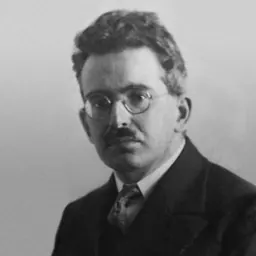
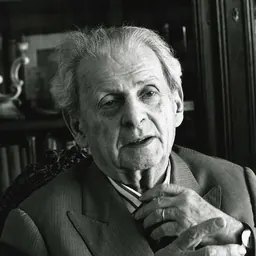




Related people
Same field, nearest in time


Contemporaries
People whose lives overlapped Miguel Abensour's


Frequently asked questions
Who was Miguel Abensour?
French philosopher specializing in political philosophy (1939-2017)
When was Miguel Abensour born?
Miguel Abensour was born on 13 February 1939 in Paris, 10ᵗʰ arrondissement of Paris.
When did Miguel Abensour die?
Miguel Abensour died on 22 April 2017 in Paris, 14th arrondissement of Paris.
What was Miguel Abensour's occupation?
Miguel Abensour was a philosopher, political scientist, political philosopher, editor, collection manager and university teacher.
What nationality was Miguel Abensour?
Miguel Abensour was French.
Sources & further reading
Cite this page
APA: Biography.guide. (2026). Miguel Abensour. https://biography.guide/miguel-abensour/
MLA: "Miguel Abensour." Biography.guide, https://biography.guide/miguel-abensour/.
Chicago: "Miguel Abensour." Biography.guide. https://biography.guide/miguel-abensour/.
Data last updated: 2026-09-20 · Spot an error? Report a correction.
Page generated 2026-09-27 05:29 UTC