
About Miers Fisher
Lived 1748 – 1819 (aged 70). Miers Fisher was an American politician.
Miers Fisher (June 21, 1748 – March 12, 1819) was a lawyer, legislator, philanthropist, and merchant from Philadelphia, Pennsylvania. He was imprisoned and exiled during the Revolutionary War because of his Quaker beliefs, and after the war served in the Pennsylvania House of Representatives.
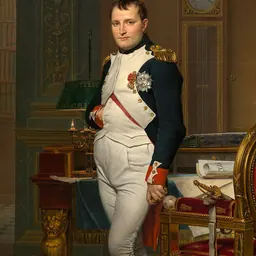
Family Miers was born in Philadelphia, the third son of Joshua Fisher, the Quaker merchant and mapmaker. In 1808, their son Miers Fisher Jr. (1786–1813), a traveler, was witness to early uprisings in the so-called Peninsular War in Spain, and to Napoleon's invasion of Russia in 1812.
In 1795, Fisher purchased an estate near Fox Chase in Philadelphia County, which he called "Ury". He learned about all aspects of the family business. The firm imported an extensive variety of goods from Europe including porcelain, silverware, and high quality craftsman tools like chisels and saws.
In 1787, Fisher advised and financed the establishment of the Gilpin family paper mill on the Brandywine River in Delaware. It was run by Joshua Gilpin and his brother Thomas Gilpin Jr., the sons of Fisher's late friend, Thomas Gilpin Sr., who died in exile during the Revolutionary War. The Gilpins became renowned for their fine paper, and the invention of the "endless paper making machine" in 1817 revolutionized the paper making industry.
Fisher was a director of the Bank of North America from 1792 to 1800, and an advocate of establishing lines of credit ("loan funds") for tradesmen, to spur economic growth.
Political career Fisher served in the "Common Council", now known as Philadelphia City Council, from 1789 to 1791. Fisher was the first counselor of the Pennsylvania Abolition Society.
He served in the Pennsylvania House of Representatives from 1791 to 1792, representing the City of Philadelphia as a member of the majority Federalist Party. During a debate in the House in January 1792, about whether to grant a request for "lottery privileges", Fisher remarked that "lotteries were like the Pope's indulgences, forgiving and permitting sins, to raise money." Fisher's remark was printed in Dunlap's American Daily Advertiser on January 6, 1792, which angered members of the Catholic community. Fisher expressed "a sensible regret that he should wound the feelings of any individual, much more of a whole Society for whose general character in this country he has very high respect".
Don’t just read it —
keep it.
Full-length biographies made to live with: read them, listen on the way to work, watch them tonight.
- E-book
- Audio
- Video
Instant download · yours to keep · every purchase keeps this site free
Important facts
People in Miers Fisher's life
Named in this biography and alive at the same time

Related people
Same field, nearest in time



Contemporaries
People whose lives overlapped Miers Fisher's




Frequently asked questions
Who was Miers Fisher?
American politician 1748-1819
When was Miers Fisher born?
Miers Fisher was born on 21 June 1748 in Philadelphia.
When did Miers Fisher die?
Miers Fisher died on 12 March 1819 in Pennsylvania, Philadelphia.
What was Miers Fisher's occupation?
Miers Fisher was a politician.
What nationality was Miers Fisher?
Miers Fisher was American.
Sources & further reading
Cite this page
APA: Biography.guide. (2026). Miers Fisher. https://biography.guide/miers-fisher/
MLA: "Miers Fisher." Biography.guide, https://biography.guide/miers-fisher/.
Chicago: "Miers Fisher." Biography.guide. https://biography.guide/miers-fisher/.
Data last updated: 2026-09-20 · Spot an error? Report a correction.
Page generated 2026-09-27 05:25 UTC