
About Mick Pendergrast
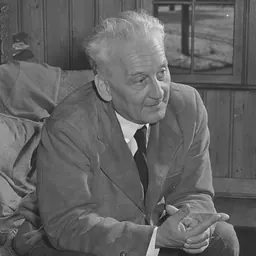
Lived 1932 – 2010 (aged 77–78). Mick Pendergrast was a New Zealand curator, researcher and writer.
Mick (Michael John) Pendergrast (1932–2010) was a New Zealand curator, researcher and writer known for his knowledge and experience in Māori fibre arts. The Pendergrast family are from Mangatāwhiri. Work and influence
Fibre arts Pendergrast's research and written outcomes is focused on the fibre arts in Māori and Pacific cultures. According to Deborah Waite, in his essay "The Fibre Arts" within Maori Art and Culture, 2nd ed. speaks to his experience as a part time Ethnology assistant at Auckland Museum (1983-85/6) and Māori Court assistant. Pendergrast uses visual elements like diagrams and photographs alongside his written components of his essay to highlight how the taonga are made and worn in a traditional sense.
Weaver Matthew McIntyre Wilson references Pendergrast's Feathers & Fibre: A Survey of Traditional and Contemporary Maori Craft 1984 in an interview on his practice. Wilson discusses how Pendergrast's emphasis on traditional techniques being present within contemporary practices is something he considers when generating ideas and bringing them to life. The idea for this space was actioned by GHD Woodhead Creative Spaces, led by Carin Wilson (Ngāti Awa) and Studio Pasifika, for the purpose of resolving the historical records of mass land loss for Māori.
As a VSA (Volunteer Service Abroad) teacher located in the Solomon Islands and Tikopia, and teacher in East Cape local groups, he learnt more about and taught plaiting as an artistic technique. This experience became a theme in his later research and publications.
Te Aho Tapu. The Sacred Thread (1987) Te Aho Tapu hybridises the exhibition catalogue of "Te Aho Tapu" which showcased Māori clothing in Auckland Museum, and information about the art of cloak making The intended readers of the work are said to be a wide range. To be a tool for teachers in their classrooms, other information and a specific study sheet were also created for Te Aho Tapu in the same year.
The Te Aho Tapu: The Sacred Thread exhibition ran from July 1987 to February 1988. The conceptual process of creating the exhibition involved Pendergrast who curated it, Raranga Whakairo Maori Plaiting Patterns, 1984 Te Mahi Kete: Maori Basketry for Beginners, Reed, 1986 2nd ed. published 2000 Fun with Flax: 50 Projects for Beginners, 1987 Te Aho Tapu. The Sacred Thread, associated with the Auckland Institute and Museum, and New Zealand Steel Limited, 1987 (photographs by Brian Brake) Pacific Tapa, 1997 2nd ed. Pacific Tapa, University of Hawai'i Press, 2004 (written with Roger Neich, photography by Krzysztof Pfeiffer) Traditional Tapa Textiles of the Pacific, Thames and Hudson, 1997, (written with Roger Neich, photography by Krzysztof Pfeiffer) Kakahu, Maori Cloaks, Bateman and Auckland Museum, 1997 (written with Maureen Lander, and Auckland Institute and Museum) Maori Art and Culture 2nd ed. (edited by D.C. Starzecka), 1998 1st ed. 1996 Tikopian Tattoo, 2000 Tapa of the Pacific, Bateman and Auckland Museum, 2001 (written with Roger Neich, photography by Krzysztof Pfeiffer) Maori Fibre Techniques: A Resource Book for Maori Fibre Arts Ka Tahi Hei Tama Tu Tama, 2005 Uhengaparaoa: Works by Tangimoe Clay: 27.05-21.06/2008, Objectspace, 2008 (written with Tangimoe Clay, and Objectspace) The Maori Collections of the British Museum, 2010 Taonga Māori in the British Museum, Te Papa Press, 2010 (written with D.C. Starzecka, and Roger Neich)
Quotes
In Maori Art and Culture, discussing the te kaitaka (the cloak): "plain; their beauty derived from the perfection of the weaving and the glossy appearance of the soft, pliable fibre." The Fearon Hay architects in collaboration with Auckland Airport's iwi relations manager Charles Berryman and daughter Taina used this quote to inspire the new, environmentally aware Te Kaitaka accommodation building located near Auckland Airport. The building's exterior design is reminiscent of korowai (a highly regarded type of Māori cloak) with its harakeke coloured mesh wrapping around the outside and swaying native plants atop the building.
Don’t just read it —
keep it.
Full-length biographies made to live with: read them, listen on the way to work, watch them tonight.
- E-book
- Audio
- Video
Instant download · yours to keep · every purchase keeps this site free
Important facts
People in Mick Pendergrast's life
Named in this biography and alive at the same time






Related people
Same field, nearest in time

Contemporaries
People whose lives overlapped Mick Pendergrast's


Frequently asked questions
Who was Mick Pendergrast?
New Zealand curator, researcher and writer (1932–2010)
When was Mick Pendergrast born?
Mick Pendergrast was born in 1932 in Pōkeno.
When did Mick Pendergrast die?
Mick Pendergrast died in 2010.
What was Mick Pendergrast's occupation?
Mick Pendergrast was a curator, researcher and writer.
What nationality was Mick Pendergrast?
Mick Pendergrast was New Zealand.
Sources & further reading
Cite this page
APA: Biography.guide. (2026). Mick Pendergrast. https://biography.guide/mick-pendergrast/
MLA: "Mick Pendergrast." Biography.guide, https://biography.guide/mick-pendergrast/.
Chicago: "Mick Pendergrast." Biography.guide. https://biography.guide/mick-pendergrast/.
Data last updated: 2026-09-20 · Spot an error? Report a correction.
Page generated 2026-09-27 05:02 UTC