
About Michel Richard Delalande
Lived 1657 – 1726 (aged 68). Michel Richard Delalande was a French composer, organist, harpsichordist and music director.
Michel Richard Delalande [de Lalande] (; 15 December 1657 – 18 June 1726) was a French Baroque composer and organist who was in the service of King Louis XIV. He was one of the most important composers of grands motets. He also wrote orchestral suites known as Simphonies pour les Soupers du Roy and ballets.
Biography Born in Paris, he was a contemporary of Jean-Baptiste Lully and François Couperin. Delalande taught music to the daughters of Louis XIV, and was director of the French chapel royal from 1714 until his death at Versailles in 1726.
Delalande was arguably the greatest composer of French grands motets, a type of sacred work that was more pleasing to Louis XIV because of its pomp and grandeur, written for soloists, choir and comparatively large orchestra. According to tradition, Louis XIV organized a contest between composers, giving them the same sacred text and time to compose the musical setting. He alone was the judge. Delalande was one of four winners assigned to compose sacred music for each quarter of the year (the other composers being Coupillet, Collasse and Minoret). Delalande's was the most important quarter of the year because of the Christmas holiday. Later he had full responsibility for the church music for the complete year. At his death, since he left no mass of his own, the 1656 requiem of the Dukes of Lorraine by Charles d'Helfer was sung.
Works Delalande left many versions of his works. His earlier versions show adherence to French Baroque style, but the later revisions incorporate more Italian melismatic lines and greater attention to polyphonic counterpoint.
Also, at least four collections of his works exist, each displaying different looks at composer's work as viewed by the people who assembled each collection.
Scholarship of Delalande's work was for many years hindered because of inconsistencies in the spelling of his last name: de Lalande, Lalande, la Lande, de la Lande, and others. The family wrote the name as 'Delalande'. Finally, in 2006 the definitive "Thematic Catalogue of the Works of Michel-Richard de Lalande (1657-1726)" by noted British musicologist Lionel Sawkins came out which runs to 752 pages containing over 3,000 music examples and details of performing requirements and of all source materials, as well as with comprehensive indexes and thematic locators.
Vocal grands motets - Latin settings of psalms including Delalande's Te Deum (1684). petits motets - shorter Latin settings for a few vocal and instrumental soloists and continuo, including élévations on an eucharistic text sung at the elevation of the communion wafers.
Instrumental Delalande was an expert organist and harpsichordist, and yet has left not a single note of keyboard music. ritournelles - twelve substantial ritournelles for François Fossard and André Danican Philidor's book of Airs italiens (1695). For example, Delalande supplies a 31-bar-long ritournelle for two violins and continuo composed before ‘Giurai di non amar’ an aria from Domenico Freschi's Olimpia vendicata of 1681.
Selected recordings Symphonies pour les soupers du Roy. Hugo Reyne (HMA) 1990 Les Folies de Cardenio. Christophe Coin (Laborie) - court ballet, "The Insanities of Cardenio", after Cervantes. 2004 Grands Motets : Te Deum, Confitebor, Super Flumina. Christie (HMA) 1991 Grands Motets : De Profundis, Miserere, Confitebor tibi. Higginbottom (Erato) 1990 Grands Motets : Dies Irae. Miserere. Herreweghe (HMC901352) 1991 Grands Motets : Beati quorum. Quam dilecta. Audite caeli. Schneebeli (Virgin) 2002 Grands Motets : Deus noster refugium Ps.46. Exaltabo te Domine. Le Parlement de Musique. Martin Gester (Opus 111) 2001 Grands Motets : Regina coeli. De Profundis. Cantate Domino. Skidmore (ASV) 1995 Petits motets: Miserere à voix seule. Vanum est vobis. Gens, Piau, Christie (HMT) 1992 3 Leçons de Ténèbres 1730. Desrochers (Astree) 1996
Don’t just read it —
keep it.
Full-length biographies made to live with: read them, listen on the way to work, watch them tonight.
- E-book
- Audio
- Video
Instant download · yours to keep · every purchase keeps this site free
Important facts
People in Michel Richard Delalande's life
Named in this biography and alive at the same time

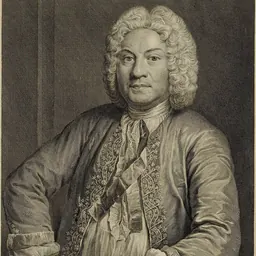


Related people
Same field, nearest in time
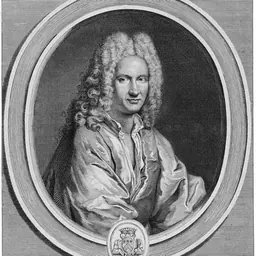

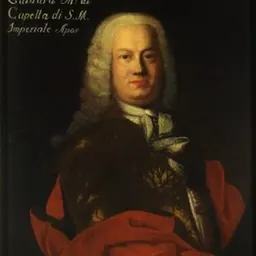
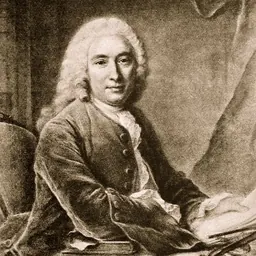

Contemporaries
People whose lives overlapped Michel Richard Delalande's




Frequently asked questions
Who was Michel Richard Delalande?
French composer
When was Michel Richard Delalande born?
Michel Richard Delalande was born on 15 December 1657 in Paris.
When did Michel Richard Delalande die?
Michel Richard Delalande died on 18 June 1726 in Versailles.
What was Michel Richard Delalande's occupation?
Michel Richard Delalande was a composer, organist, harpsichordist and music director.
What nationality was Michel Richard Delalande?
Michel Richard Delalande was French.
Sources & further reading
· Wikipedia: Michel Richard Delalande
· DBpedia: Michel Richard Delalande
Cite this page
APA: Biography.guide. (2026). Michel Richard Delalande. https://biography.guide/michel-richard-delalande/
MLA: "Michel Richard Delalande." Biography.guide, https://biography.guide/michel-richard-delalande/.
Chicago: "Michel Richard Delalande." Biography.guide. https://biography.guide/michel-richard-delalande/.
Data last updated: 2026-09-20 · Spot an error? Report a correction.
Page generated 2026-09-27 05:23 UTC