
About Michel Lullin de Châteauvieux
Lived 1695 – 1781 (aged 85). Michel Lullin de Châteauvieux was an agronomist.
Michel Lullin de Châteauvieux (15 September 1695 - 19 March 1781) was a Genevan politician, agronomist and experimenter on agriculture, known for the design of many agricultural instruments.
Biography Michel Lullin de Chateauvieux was born into a patrician family in Geneva, Republic of Geneva. He was the son of Charles Lullin de Chateauvieux (1669-1761), a councilor and syndic of Geneva, and Marthe Humbert.
Lullin began his political career as châtelain of Peney and councilor in 1738. During the riots of 1734, he, Pierre Mussard and Jean-Louis Du Pan commissioned Jean-Jacques Burlamaqui to report on the notices of appeal of the old citizens (citoyens) and of the new citizens (bourgeois). Lullin served three terms as Syndic of the Republic of Geneva in the period between 1740 and 1748, and seven terms as First Syndic between 1752 and 1777. Among the many agricultural instruments he designed and improved was a seed drill invented in 1754. He corresponded about his work with Henri Louis Duhamel du Monceau, who published some of these letters in his Traité de la culture des terres suivant les principes de M. Tull, Anglois. (Treaty of land cultivation following the principles of the English Mr. Tull) in 6 volumes, 1750-56. Voltaire, and George Washington. and the banker Michel Lullin de Chateauvieux (1754-1802). Part of the family were residents of Choully Castle.
Work Lullin successfully conducted several experiments to increase crops, particularly cabbage, lucerne, and developed several agricultural implements. He corresponded about the outcomes of his work with Duhamel, who published his letters as articles in his Traité de la culture des terres suivant les principes de M. Tull, Anglois.
One of his discoveries, according to Walter Harte (1764), was "the method of transplanting lucerne; and restoring old pasturage without laying them down in corn."
On cabbages In the 18th century cabbages had been cultivated as food for cattle. Lullin successfully conducted several experiments to increase the crops. He reported the following findings in a letter to M. Duhamel, which was translated and published in the article on cabbages in The Complete Farmer (1777):
"I began by retrenching the dung; though the spot I chose for my first trial had not received any for several years. It had indeed been well prepared by ploughing the preceding year, when one half of it bore barley, and the other oats. I now made it into a bed, the middle of which was directly over the last year's furrow. I ploughed this bed on the twenty-fifth of September, 1751, in the same manner as if it had been intended for wheat. I planted on it a single row of white cabbages, which I watered to make them take root the better. The length of this bed was one hundred and sixty feet, and its breadth six feet seven inches."
"That I might be able to make a just comparison between the cabbages of this bed, and those of the kitchen garden, I planted a spot of ground in the latter, the same day, with the same sort of plants. This spot had been extremely well dug, and plentifully dunged by the gardener, who took all possible care of these plants during the summer, and weeded them as often as was necessary.
"Instead of cabbaging, most of them ran up in height: upon which I plucked them up, and planted others in their stead."
"I bestowed the same care and culture on my row of cabbages in the bed, as if they had been wheat."
The lucerne he had planted pushed out numbers of large lateral roots, and these branched out again into others, which according to him "may be multiplied without end by frequent culture of the alleys: for the horse-hoe has the fame effect on these horizontal roots as cutting has upon the.tap-root." About the method of transplanting the lucerne, Lullin explained:
"I made several beds, some about three feet wide, (including the alleys) into, which I transplanted a single row of lucerne; others about three feet nine inches, into which I transplanted two rows and others about four feet three inches wide, in which I put three rows. The design of this variation was, to see by which of these three methods the same extent of ground would produce the greatest quantity of lucerne. I believe it will require five or six years to determine exactly which of them will be best; because, as the plants increase every year in bulk, their produce alters, and may perhaps not keep in proportion to their first years, though probably the difference would not be great."
Balfour concluded that "from the practice of the gentlemen abroad, and other instances that might be given at home, it is evident, that they have not seen the additions that Mr Tull made to his Essay, in which, besides his different method of drilling, there are several very material improvements in the manner of hoeing and cultivating wheat, and other crops; and from these last parts of his work may be also seen, that the reports of his bad success, in repeated wheat-crops, are without any just foundation." These works was later reviewed by Tobias George Smollett (1775). In his Letters concerning the present state of the French nation (1769) Arthur Young was far less positive. He criticised the design for his complex design and lack of maintainability, stating:
"The drill plough, which Lullin recommends to his readers, and which he used himself, is a most complicate [sic] machine, infinitely difficult to make, any where, [sic] and impossible to repair in a village, besides the first cost of it, being very considerable. It must surely appear from these circumstances that all Lullin proves is, that a man when he has a drill plough given him, may use it if it wants no repairs to great advantage comparatively with the common husbandry, as already set forth. But it must be very apparent that multitudes of new experiments are yet necessary to prove the New husbandry (supposing a drill plough invented as simple as possible) equal to the old, where the latter is practised in a more advantageous manner, than about Lullin."
Two years later Young (1771) explained that among his many experiments he did make a single cultivator based on Lullin's instructions with some additional improvements.
Legacy In his days Lullin's work on husbandry was often cited in du Monceau's A Practical Treatise of Husbandry,
Over half a century later, The Penny Cyclopædia (1833) gave a summary of the so-called "horse-hoeing husbandry" or "new husbandry": "The influence of the atmosphere on the soil, and the increased fertility produced by pulverizing and stirring heavy lands, has led to the notion adopted by Jethro Tull, that labour might entirely supersede the necessity of manure: hence the origin of the horse-hoeing husbandry, which at one time was so highly thought of as to be called, by way of distinction, the new husbandry. Fallows and manuring were both discarded as unnecessary; the seed was sown in rows with wide intervals, which were continually kept worked and stirred. At first the result was highly satisfactory; all the humus, by exposure to the air, was converted into soluble extract, and taken up by the plants, which throve well as long as the supply lasted: but in the end it was exhausted; and the wannest admirers and supporters of Tull's system, Du Hamel and De Chateauvieux, besides many others, found to their cost, in practice, that pulverizing alone will not restore fertility. The system of drilling and horse-hoeing, when united with judicious manuring, has, however, been found a great improvement in agriculture."
Selected publications Books: Michel Lullin de Chateauvieux. Description d'un nouveau semoir inventé - invente par M. Lullin de Chateauvieux, syndic et juge de police de la ville et de la republique de Geneve - avec figures en taille-douce.. 1754, 158 p. Michel Lullin de Chateauvieux. Expériences et réflexions sur la culture des terres, faites aux environs des Genève, dans les années 1754, 1755 et 1756.
Lullin's letters were published in: Henri Louis Duhamel du Monceau Traité de la culture des terres suivant les principes de M. Tull, Anglois. 6 vol. 1750-56
Don’t just read it —
keep it.
Full-length biographies made to live with: read them, listen on the way to work, watch them tonight.
- E-book
- Audio
- Video
Instant download · yours to keep · every purchase keeps this site free
Important facts
People in Michel Lullin de Châteauvieux's life
Named in this biography and alive at the same time


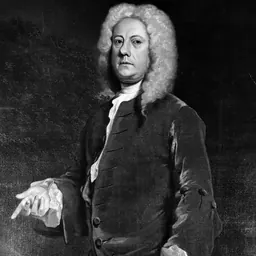


Related people
Same field, nearest in time
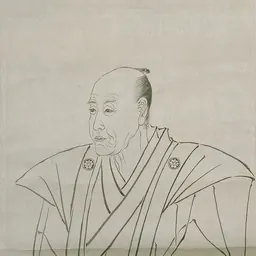
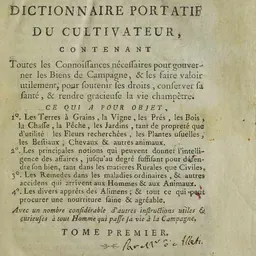
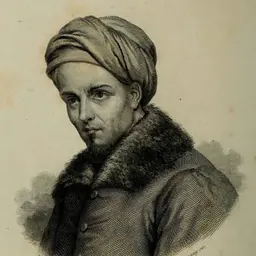


Contemporaries
People whose lives overlapped Michel Lullin de Châteauvieux's


Frequently asked questions
Who was Michel Lullin de Châteauvieux?
Genevan agronomist (1695-1781)
When was Michel Lullin de Châteauvieux born?
Michel Lullin de Châteauvieux was born on 15 September 1695 in Geneva.
When did Michel Lullin de Châteauvieux die?
Michel Lullin de Châteauvieux died on 19 March 1781 in Geneva.
What was Michel Lullin de Châteauvieux's occupation?
Michel Lullin de Châteauvieux was an agronomist.
What nationality was Michel Lullin de Châteauvieux?
Michel Lullin de Châteauvieux's recorded nationality: Republic of Geneva.
Sources & further reading
· Wikipedia: Michel Lullin de Châteauvieux
· DBpedia: Michel Lullin de Chateauvieux
Cite this page
APA: Biography.guide. (2026). Michel Lullin de Châteauvieux. https://biography.guide/michel-lullin-de-chateauvieux/
MLA: "Michel Lullin de Châteauvieux." Biography.guide, https://biography.guide/michel-lullin-de-chateauvieux/.
Chicago: "Michel Lullin de Châteauvieux." Biography.guide. https://biography.guide/michel-lullin-de-chateauvieux/.
Data last updated: 2026-09-20 · Spot an error? Report a correction.
Page generated 2026-09-27 05:25 UTC