
About Michael Sittow
Lived 1459 – 1525 (aged 65–66). Michael Sittow was an Estonian painter.
Michael Sittow ( 1469 – 1525), also known as Master Michiel, Michel Sittow, Michiel, Miguel Sithium, and several other variants, was a painter from Reval (Tallinn), now capital of Estonia, who was trained in the tradition of Early Netherlandish painting. For most of his life, Sittow worked as a court portrait painter, for Isabella of Castile and her Habsburg relatives in Spain and the Netherlands, and other prominent royal houses. He is considered one of the most important Netherlandish painters of the era.
Life Michael Sittow was born in 1468 or 1469 in the Hanseatic city of Reval (then part of the Livonian Confederation) to a wealthy family. His father was the painter and wood-carver Clawes (Claves, Claes) Sittow (also van der Sittow, or Suttow ) and his mother was Margarethe Mölner. He was the eldest of three brothers, followed by Clawes and Jasper.
The origins of Sittow's father, Clawes (van der) Sittow, are not clear – his patrilinear ancestors may have arrived in Estonia from the village of Zittow near Wismar, Germany; it has also been suggested that he may have been either of local Estonian, German, or even Flemish origin to begin with. It is known that Clawes settled in Reval (Tallinn) in 1454, and became its citizen in 1457. Sittow's father was apparently a wealthy man for an artist, owning several houses in the city, and becoming an assessor in the artists' guild of Reval in 1479.
At first Sittow studied painting and sculpture in his father's workshop, while attending the city school to learn Latin, arithmetic and singing.
Sittow became an independent master between 1488 and 1492, although he did not become a master in the local Bruges guild. Working as a portrait painter, he travelled in southern Europe, as traits of French and Italian art became apparent in his work. in the court, although letters of Emperor Maximilian and Margaret of Austria speak also of a painter Mychel Flamenco ("Michael the Fleming"), who may have been Michael Sittow.
Suggestions that Sittow may have visited London in about 1503–1505 to paint portraits of Henry VII (National Portrait Gallery, London) are no longer accepted.
When Philip died in 1506, Sittow lost his patron again. In the same year, he returned to Reval, where his stepfather, the glass-maker Diderick van Katwijk, had seized his parents' houses, as Sittow's mother had died in 1501. Van Katwijk had journeyed to the Duchy of Brabant in 1501 and offered a property settlement to Sittow that the latter refused.
According to some sources, in 1514 Sittow also painted a portrait of Mary Tudor, Queen of France (now in the Vienna Kunsthistorisches Museum), the daughter of Henry VII, as part of the betrothal negotiations. Previously this portrait has been assumed to be of Catherine of Aragon, painted in 1503–1505. Two other Sittow paintings of Mary Magdalen (Detroit) and the Virgin Mary (Berlin) may have also used the same model, or taken the portrait as their starting point – the use of members of royal households as models for sacred figures is found in court art in the Netherlands at this time. The "Berlin Virgin" formed the other half of a diptych with the Washington portrait of Diego de Guevara, a Spanish courtier with the Habsburgs, otherwise best known for giving the Arnolfini Portrait to Archduchess Margaret of Austria, governor of the Spanish Netherlands.
The reidentification of portrait as Mary Rose however does not address other two paintings nor does it go in depth over all the details in the painting itself, which brought criticism over museum's acceptance of the new alleged identity. Author of this reidentification even goes as far as to suggest that Catherine of Aragon had no reason to wear the symbol of scallops as they are not her emblem, the pomegranate is. Not considering the fact that scallops are a symbol of St. James the Great, patron saint of Spain. Notably, pilgrimage to his shrine in Santiago de Compostela was commemorated by wearing scallops, and it is known Catherine of Aragon made this pilgrimage. Credibility of this reidentification is hence questionable.
From the Netherlands, Sittow returned to Spain and worked for Ferdinand II of Aragon, followed in 1516 by the Spanish King Carlos I, the future Charles V, Holy Roman Emperor. When Charles V abdicated from power, he took Sittow's wooden sculpture of the Virgin and three paintings with him to his retirement in the monastery of Yuste. E. P. Richardson described Sittow's work "/../an artist somewhat like Anthony van Dyck in a later epoch; a brilliant painter of religious subjects, but of outstanding qualities as a portrait painter. His portraits are among the finest of their time, vivid, candid, crisply elegant and reserved." ), and the painting of the Virgin and Child which together with it once formed a diptych, are nearly certain, as Diego's illegitimate son Felipe de Guevara mentions his father's portrait by Sittow.
Most of Sittow's paintings are not signed and dated – the only painting that can be dated with certainty is the portrait of Christian II of Denmark.
A 2020 paper called "The Apelles Line. Narratives and Synergies in the Late Gothic in Castile" by Olga Pérez Monzón and Matilde Miquel Juan mentions Sittow as one of the artists involved in creating of Retablo de Santiago, ca. 1489–1490, in Capilla de Álvaro de Luna, Catedral Primada de Toledo.
List of works Virgin and Child (left wing of a diptych, possibly Catherine of Aragon), Gemäldegalerie, Berlin, now separated from the other wing, which is the next item Portrait of Diego de Guevara (right wing of a diptych), Washington, D.C., The National Gallery of Art Virgin and Child (Budapest, Szépművészeti Múzeum) Portrait of Christian II, King of Denmark (Copenhagen, Statens Museum for Kunst) Portrait of a noblewoman, possibly Mary Tudor or Catherine of Aragon, Vienna, Kunsthistorisches Museum Catherine of Aragon as the Magdalene, Detroit Institute of Arts Virgin and Child with St. Bernard (Madrid, Museo Lázaro Galdiano) Portrait of a Man with a Pearl (Madrid, Royal Collections Gallery) Christ Carrying the Cross, Moscow, Pushkin Museum Coronation of the Virgin (Paris, Louvre) Portrait of a Lady (Paris, Louvre) Passion Altarpiece (St. Nicholas' Church, Tallinn) Portrait of a Man, The Hague, Mauritshuis Nativity, Vienna, Kunsthistorisches Museum, a version of a lost work by Hugo van der Goes Assumption of the Virgin (panel from the small altarpiece of Queen Isabella of Castile) Washington, D.C., The National Gallery of Art Ascension (panel from the small altarpiece of Queen Isabella of Castile) (Private Collection) Among works no longer considered to be by Sittow are: Portrait of Henry VII, King of England (National Portrait Gallery (London)), possibly a contemporary copy of a Sittow original.
In literature
Michael Sittow (as Michel Sittow) is the main character in Jaan Kross' short story Four Monologues on St. George (, 1970). The book is written in the form of a judicial inquiry and explores such issues as nationhood, political exile and cultural assimilation. It was awarded the most prestigious short prose award in Estonia, the Friedebert Tuglas Short Story Award.
Gallery
Don’t just read it —
keep it.
Full-length biographies made to live with: read them, listen on the way to work, watch them tonight.
- E-book
- Audio
- Video
Instant download · yours to keep · every purchase keeps this site free
Important facts
more
Master Sithium, Michiel Flamenco, Miguel Sithium, Master Sittow, Michiel Flamenco Sittow, Michiel Flamenco Sithium, Michiel Sithium, Sittow, Master Michael, M. Meister, Master Michael the Fleming, MichielPeople in Michael Sittow's life
Named in this biography and alive at the same time

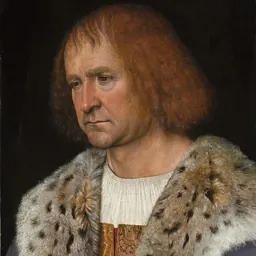

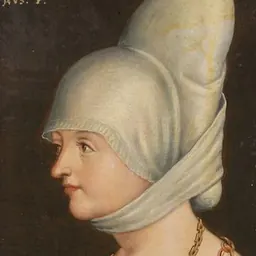
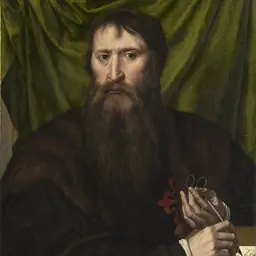

Related people
Same field, nearest in time
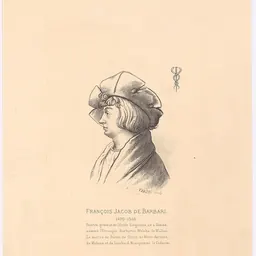


Contemporaries
People whose lives overlapped Michael Sittow's


Frequently asked questions
Who was Michael Sittow?
painter who worked in Tallinn (1459-1525)
When was Michael Sittow born?
Michael Sittow was born in 1459 in Tallinn.
When did Michael Sittow die?
Michael Sittow died in 1525 in Tallinn.
What was Michael Sittow's occupation?
Michael Sittow was a painter.
What nationality was Michael Sittow?
Michael Sittow was Estonian.
Sources & further reading
Cite this page
APA: Biography.guide. (2026). Michael Sittow. https://biography.guide/michael-sittow/
MLA: "Michael Sittow." Biography.guide, https://biography.guide/michael-sittow/.
Chicago: "Michael Sittow." Biography.guide. https://biography.guide/michael-sittow/.
Data last updated: 2026-09-20 · Spot an error? Report a correction.
Page generated 2026-09-27 05:03 UTC