
About Hugo van der Goes
Lived 1440 – 1482 (aged 41–42). Hugo van der Goes was a painter, draftsperson, artist, history painter and miniaturist.
Hugo van der Goes ( – 1482) was a Flemish painter who was one of the most significant and original Early Netherlandish painters of the late 15th century. Van der Goes was an important painter of altarpieces as well as portraits. He introduced important innovations in painting through his monumental style, use of a specific colour range and individualistic manner of portraiture. From 1483 onwards, the presence of his masterpiece, the Portinari Triptych, in Florence played a role in the development of realism and the use of colour in Italian Renaissance art.
Life Hugo van der Goes was likely born in Ghent or in the vicinity of Ghent around the year 1440. It is likely that he had trained elsewhere before he became a master in Ghent. Some historians have suggested that Dieric Bouts was possibly the master of van der Goes but there is no independent evidence for this.
In 1468 the artist was commissioned by the city of Ghent to execute some works in connection with the grant of the Great Indulgence of the city. More commissions from the city in the following years required van der Goes to create decorations for events such as papal blazons. In 1468 he was in the town of Bruges making decorations to celebrate the marriage between Charles the Bold and Margaret of York. Hugo van der Goes is recorded again on 18 October 1468 when he and other members of Ghent's painter's guild hosted painters from nearby Tournai at the guild's assembly in Ghent to celebrate St. Luke's day together. St. Luke was the patron saint of painters.
In 1469 Hugo van der Goes and Joos van Wassenhove vouched for Alexander Bening for his entry as a master in the painter's guild of Ghent. Alexander Bening married Catherina (Kathlijn) van der Goes, a cousin or sister of Hugo van der Goes, in 1480. The artist and his workshop worked on commissions of the city of Ghent to provide heraldic decorations for Charles the Bold's Joyous Entry in Ghent in 1469 and later in 1472.
When in 1470 Joos van Wassenhove left Ghent for Italy to become the court painter of Federico da Montefeltro, the Duke of Urbino, van der Goes became the leading painter in Ghent. In 1467 the Burgundian court had paid van der Goes for creating the blazons used at Philip the Good's funeral. The painter was repeatedly elected as deacon of the painter's guild of Ghent and served as its deacon from 1474 to 1476.
It was during this period that Hugo van der Goes painted the Adoration of the Magi (also known as the Monforte Altarpiece (Gemäldegalerie, Berlin)) and worked on the commission of Tommaso Portinari for the Portinari Altarpiece (Uffizi, Florence), which arrived at its destination in Florence only in 1483, when the artist had already died.
Van der Goes achieved considerable success and secured important commissions from the Burgundian court, church institutions, affluent Flemish bourgeoisie and associations of Italian business people based in the Burgundian Netherlands. On the return leg of this trip the artist suffered an acute depression and declared himself to be damned. He made a suicide attempt. His companions brought him back to Brussels and then to the Rood Klooster.
The mental breakdown of Hugo van der Goes was only rediscovered in 1863, when the Belgian historian Alphonse Wauters published the information, which he had found in Ofhuys' newly discovered chronicle. Wauters' publication inspired the late Romantic Belgian painter Emile Wauters (a nephew of Alphonse Wauters) to create his 1872 painting Portrait of Hugo van der Goes (1872, Royal Museums of Fine Arts of Belgium). This painting depicts Hugo van der Goes during his period of madness and was so successful that it was awarded a Grand Medal at the Paris Salon. In 1873 the Dutch painter Vincent van Gogh mentioned Wauters' painting in a letter to his brother Theo van Gogh. On two further occasions van Gogh likened his own appearance to that of van der Goes as recreated by Wauters, and stated that he identified emotionally with the 15th-century painter.
Work General Attribution of his work has been difficult for art historians. Many works, which in the early to mid 20th century were believed to be by his hand, are now accepted to be copies by members of his workshop or by followers. In the absence of documentary evidence, attributions have been based on a comparison with his 1470 Portinari Altarpiece (Uffizi, Florence) for which there exists a clear attribution of authorship by van der Goes.
The originals of a large portion of van der Goes's works have been lost. These works only survive through later copies made after these now lost originals. The large number of copies bears witness to the high regard in which he was held and also contributed to his important influence on early Flemish art. Martin Schongauer's prints after van der Goes's works spread the artist's influence across the Flemish borders into Germany. The prominent Bruges painter Gerard David and the assistants in his workshop clearly took their inspiration from the Ghent artist.
In the 1460s, van der Goes was commissioned to provide an altarpiece for the Church of the Holy Trinity in Edinburgh by its first provost, Edward Bonkil. The church had been founded by Scotland's queen consort, Mary of Guelders. The four surviving panels of the Trinity Altarpiece depict James III, King of Scots, flanked by St. Andrew and his son, the future James IV, and his wife, Margaret of Denmark. The donor, Edward Bonkil, also features.
The Portinari Triptych
Van der Goes's most famous surviving work is the Portinari Triptych (Uffizi, Florence). The Triptych is an altarpiece commissioned for the church of San Egidio in the hospital of Santa Maria Nuova in Florence by Tommaso Portinari, the manager of the Bruges branch of the Medici Bank.
After Hugo van der Goes's death the triptych was wrongly attributed to others, including Andrea del Castagno and Domenico Veneziano.
The side panels depict the male (left wing) and female (right wing) members of the Portinari donor family who commissioned and donated the altarpiece. The right wing also includes a scene of the annunciation to the Magi and the left wing a scene of the journey of Mary and Joseph to Bethlehem.
Portraits Hugo van der Goes is regarded as one of the most significant portrait artists of 15th-century Europe. At that time portraiture was gaining importance in art because of the renewed importance attached to the individual fostered by the rise of humanism.
No independent portraits by Hugo van der Goes have survived. His achievements in this genre are only known by the donor portraits included in his devotional diptychs and triptychs. Examples are the left wing of the Saint Hippolytus Altarpiece, the central and right panels of which are by Dieric Bouts (, Groeningemuseum, Bruges), the Portinari Alarpiece, the Trinity Altarpiece (between 1473 and 1478, Scottish National Gallery, Edinburgh) and the fragments of altarpieces such as the Portrait of a Man at Prayer with St John the Baptist (Walters Art Museum) and the Portrait of a Man.
The muted coloring of the late Adoration of the Shepherds seemed to support the interpretation of a stylistic evolution away from illusionism. A recent restoration of the Adoration has provided new visual evidence, which contradicts the earlier reading as it revealed that rather than muted the painting was bright and strongly illusionistic.
Not all scholars agree there was a stylistic development in van der Goes's work. Some insist that his career of only 15 years was too short to allow for a development to be distinguished. Other scholars regard van der Goes as an artist with an ability to create in the same period and even within a single composition very different types and styles of work. They maintain that van der Goes had the flexibility and range to use or discard techniques whenever they suited his purpose.
Works
Don’t just read it —
keep it.
Full-length biographies made to live with: read them, listen on the way to work, watch them tonight.
- E-book
- Audio
- Video
Instant download · yours to keep · every purchase keeps this site free
Important facts
more
Hugo Vander Goes, eleve de Van Eyck Hugues Vander Goes, Hugues Vander Goes, Vander Goes, van der Goes, Hugues de GandPeople in Hugo van der Goes's life
Named in this biography and alive at the same time





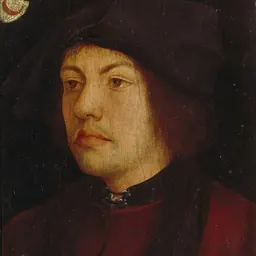

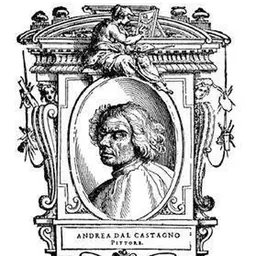
Related people
Same field, nearest in time
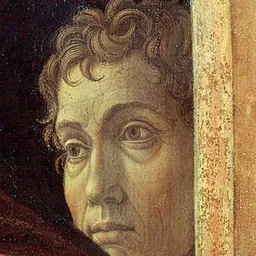
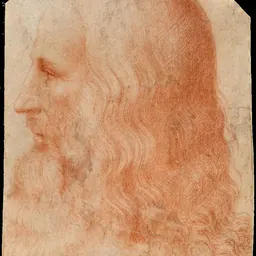
Contemporaries
People whose lives overlapped Hugo van der Goes's

Frequently asked questions
Who was Hugo van der Goes?
Flemish painter (c.1440-1482)
When was Hugo van der Goes born?
Hugo van der Goes was born in 1440 in Ghent.
When did Hugo van der Goes die?
Hugo van der Goes died in 1482 in Red Cloister.
What was Hugo van der Goes's occupation?
Hugo van der Goes was a painter, draftsperson, artist, history painter and miniaturist.
What nationality was Hugo van der Goes?
Hugo van der Goes's recorded nationality: Burgundian Netherlands.
Sources & further reading
· Wikipedia: Hugo van der Goes
Cite this page
APA: Biography.guide. (2026). Hugo van der Goes. https://biography.guide/hugo-van-der-goes/
MLA: "Hugo van der Goes." Biography.guide, https://biography.guide/hugo-van-der-goes/.
Chicago: "Hugo van der Goes." Biography.guide. https://biography.guide/hugo-van-der-goes/.
Data last updated: 2026-09-20 · Spot an error? Report a correction.
Page generated 2026-09-27 05:20 UTC