
Michael Scott
Anglican priest (20th century)
About Michael Scott
Lived 1907 – 1983 (aged 76). Michael Scott was a South African and British peace activist, anglican priest, anti-apartheid activist and cleric.
Guthrie Michael Scott (30 July 1907 – 14 September 1983), known as Reverend Michael Scott, was an English Anglican priest and anti-apartheid activist, who joined in the defiance against discriminatory laws and the apartheid system in South Africa from the 1940s, a long struggle for social justice in the country. He helped to support Namibian independence and to resist South African control of South West Africa, raising awareness internationally and becoming a spokesperson for South West African people at the United Nations, over a number of decades.
He was affiliated with religious and political leaders, NGO's, civil rights and peace activists, and co-founded the Africa Bureau with David Astor and Mary Benson, creating awareness of issues impacting Africa, and of apartheid in South Africa. He was an early advocate of nuclear disarmament, addressing the UN and co-ordinating protest activities to try and stop France testing nuclear weapons in the Sahara. He tried to help Naga nationalists with their objective of becoming independent from India, successfully contributing to negotiating a ceasefire, with the Indian government later accusing him of internationalising the matter and ending their dealings with him.
He also co-founded the Committee of 100 and was involved in the ban the bomb movement. A controversial figure and campaigner, Scott was involved in a number of demonstrations, was imprisoned in South Africa and Britain, had his religious licence revoked which was later reinstated, and was expelled from South Africa and India. Kenneth Kaunda honoured Scott, and Archbishop Desmond Tutu has paid tribute to Scott for the solidarity he showed towards poor and mis-treated African people.
Life The son of Ethel Maud Scott (née Burn) and her husband, Anglican priest Perceval Caleb Scott, Michael was born on 30 July 1907 in Lowfield Heath, Sussex, the youngest of three children who were all boys. where he performed well. Thereby, he gained a place at Cambridge University to study medicine. However, illness thwarted these plans in 1926 when he required gall-bladder surgery and was found to have tuberculosis. He travelled to Leysin, Switzerland, to recuperate before accepting an invitation from the Archdeacon of Cape Town to go to South Africa. Whilst based at All Souls in Lower Clapton, in 1934, he became more involved in political matters during the hunger marches. as Mahatma Gandhi was attempting to use non-violent means to resist colonial rule of India, by Britain. At the beginning of World War II he returned to the UK, and in 1940 he joined the RAF, but he was diagnosed with Crohn's disease and could no longer serve as a result, leaving in 1941. Later, in 1946, he became the first white man to be jailed for resisting the country's discriminatory laws, after Scott attended a demonstration of Indian resistance to the Asiatic Land Tenure and Indian Representation Act. and he was denounced by Trevor Huddleston and canon John Collins. and addressed and petitioned the United Nations, raising awareness internationally. and again in 1949, after the National Party gained control led by Daniel Malan, and introduced apartheid and the South West Africa Act that connected South West Africa with South Africa. His testimony contributed to the issues concerning South West Africa being referred to the International Court of Justice, and generated anti-apartheid commentary in the media, with the News Chronicle suggesting that Scott had "transformed the atmosphere of debate from arid legal dispute into a moral assize to which black victims have at last contributed their own evidence". and from the mid 1950s he attended with Namibians including Mburumba Kerina and Fanuel Kozonguizi who were able to appear before the UN directly.
Africa Bureau and anti-colonialism In 1950, he moved to London after he was prevented from re-entering South Africa. In the 1950s, he was assisted by Mary Benson, who also helped him to found the Africa Bureau. Africa Bureau published a bi-monthly journal covering opinions and events called Africa Digest, and a monthly newsletter about apartheid called What's Happening in South Africa. Based in Denison House at 296 Vauxhall Bridge Road, Africa Bureau was described as a leading subject matter organisation that had a number of affiliations, including with the African Development Trust, African Educational Trust, and the Anti-Slavery Society for the Protection of Human Rights, which Scott was a director of. An anti-colonialist, he met Martin Luther King Jr. during Ghana's celebration of independence in 1957, and joined the later celebrations of independence in Tanzania and Zambia.
Nuclear disarmament He petitioned the UN in 1959, on behalf of a number of anti-nuclear activists, working with Kwame Nkrumah, who were attempting to prevent France from testing nuclear weapons in Algeria, in the Sahara, with Scott communicating to the UN that "The testing of nuclear weapons anywhere, by any power, is a crime and a tragedy", he then told of his concern that this would worsen relations between white and black people, and would be deemed as "Europeans treating Non-Europeans as less than human beings." He was a member of the Sahara Protest Team that included Ntsu Mokhehle, Michael Randle, Bayard Rustin and others, who travelled over land in an attempt to take part in direct action to try and stop the tests, but they were intercepted by French soldiers. On 13 February 1960, France began the first of 17 nuclear bomb tests in Algeria with four, known as the Reggane series, being detonated during the Algerian War of Independence. With philosopher friend Bertrand Russell, he co-founded the Committee of 100, In the early 1960s, Bertrand Russell and Scott were jailed at Bow Street Magistrates' Court for their involvement in coordinating ban the bomb protests. The men were signatories of the agreement to convene a convention for drafting a world constitution. As a result, a World Constituent Assembly later convened to draft and adopt the Constitution for the Federation of Earth.
Naga ceasefire The Naga people sought his assistance in their struggle for independence which he helped with in a peace keeping capacity into the 1960s, with Scott acting as a negotiator between Naga nationalists, including Angami Zapu Phizo, and Indian Prime Minister Jawaharlal Nehru. Whilst a ceasefire was agreed in 1964, which was adhered to for eight years albeit with both sides accusing each other of breaking it, demands had been made in the media and parliament that Scott should be removed from the country, In the early 1960s he had formed a World Peace Brigade with Jayaprakash Narayan and A. J. Muste, which was sponsored by Julius Nyerere and Kenneth Kaunda, that used non-violent protest and other peaceful tactics to support African liberation efforts, with the group involved in trying to help to find a solution between the Indian government and Naga people.
Personal life and controversy Following a tradition in Parsons Pleasure for nude sunbathing, Scott was caught by police in 1955 and charged with indecent exposure.
Autobiography Scott wrote an autobiography titled A Time to Speak, that was published by Faber and Faber in the UK, and Doubleday in the US, in 1958.
Don’t just read it —
keep it.
Full-length biographies made to live with: read them, listen on the way to work, watch them tonight.
- E-book
- Audio
- Video
Instant download · yours to keep · every purchase keeps this site free
Important facts
People in Michael Scott's life
Named in this biography and alive at the same time
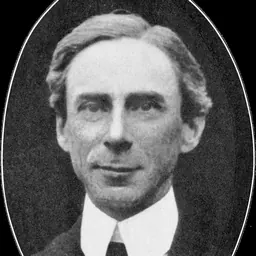
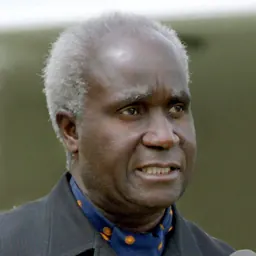

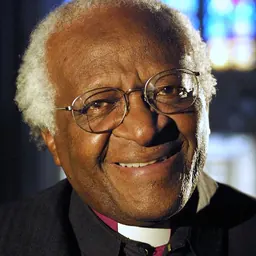


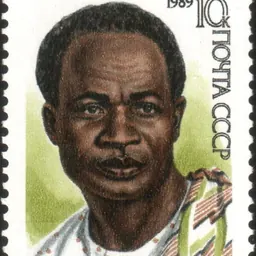
Related people
Same field, nearest in time



Contemporaries
People whose lives overlapped Michael Scott's


Frequently asked questions
Who was Michael Scott?
Anglican priest (20th century)
When was Michael Scott born?
Michael Scott was born on 30 July 1907 in Lowfield Heath.
When did Michael Scott die?
Michael Scott died on 14 September 1983.
What was Michael Scott's occupation?
Michael Scott was a peace activist, anglican priest, anti-apartheid activist and cleric.
What nationality was Michael Scott?
Michael Scott was South African and British.
Sources & further reading
· DBpedia: Michael Scott (priest)
Cite this page
APA: Biography.guide. (2026). Michael Scott. https://biography.guide/michael-scott-peace-activist/
MLA: "Michael Scott." Biography.guide, https://biography.guide/michael-scott-peace-activist/.
Chicago: "Michael Scott." Biography.guide. https://biography.guide/michael-scott-peace-activist/.
Data last updated: 2026-09-20 · Spot an error? Report a correction.
Page generated 2026-09-27 05:29 UTC